 Back
BackAnatomy & Physiology: Skeletal, Histology, and Blood Cells
 06:37
06:37
Terms in this set (20)
Tuberosity is a raised, roughened area on a bone serving as a site for muscle attachment.
Fossa is a basin-like depression in a bone, often serving as an articular surface.
Foramen is a hole in a bone that allows passage of nerves and blood vessels.
All cervical vertebrae have transverse foramina for vertebral artery passage.
Male pelvis has a pubic angle less than 90° and a smaller pelvic outlet compared to female pelvis.
Key landmarks include head, olecranon fossa, capitulum, lateral and medial epicondyles, trochlea, coronoid fossa, greater and lesser tubercles.
Simple columnar epithelium lines the digestive tract, aiding absorption and secretion.
Stratified squamous epithelium is found in the esophagus, providing protection against abrasion.
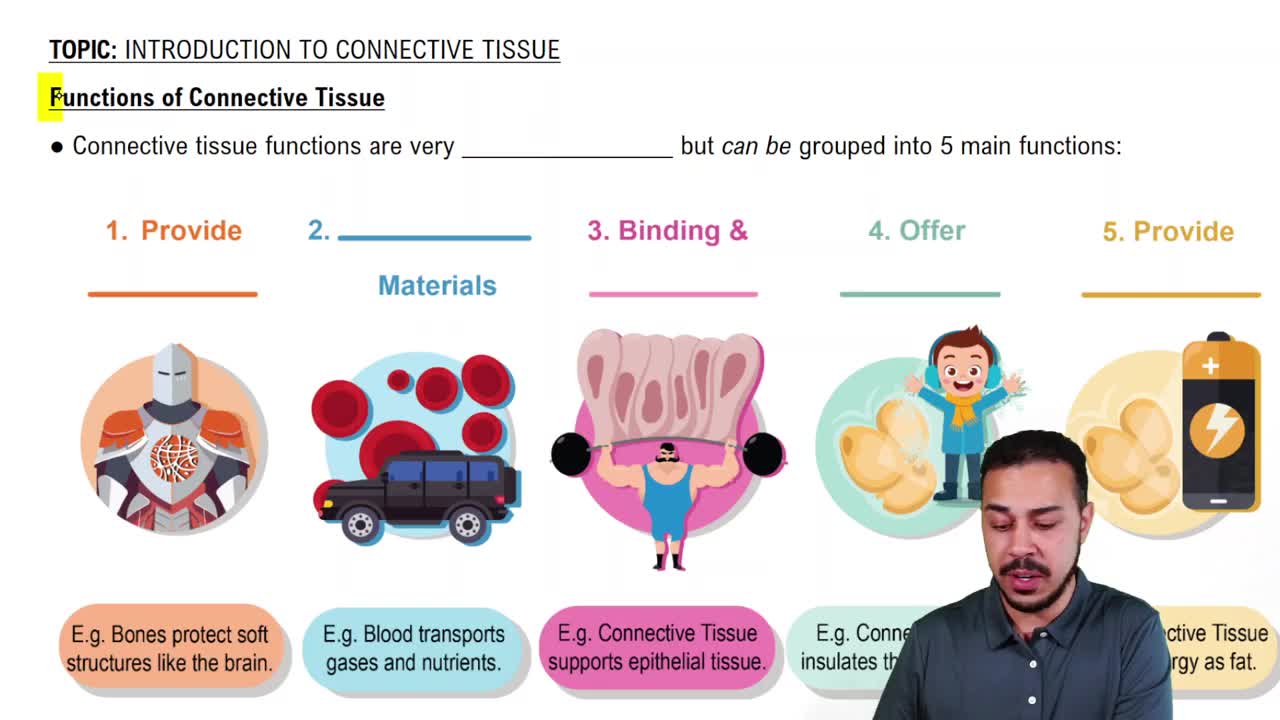
Dense regular connective tissue forms tendons and ligaments, providing strong, unidirectional tensile strength.
Hyaline cartilage is found in the embryonic skeleton and at the ends of long bones.
Erythrocytes transport oxygen throughout the body using hemoglobin.
Types include monocytes, eosinophils, basophils, lymphocytes, and neutrophils, each with immune functions.
Skeletal muscle fibers are striated, multinucleated, and voluntary for body movement.
Cardiac muscle is striated, involuntary, and has intercalated discs for synchronized heart contractions.
Smooth muscle is non-striated, involuntary, and found in the walls of the digestive tract for peristalsis.
Neurons have a cell body with dendrites and an axon, transmitting electrical signals in the nervous system.
Includes spine, acromion, coracoid process, glenoid cavity, suprascapular notch, supraspinous fossa, infraspinous fossa, subscapular fossa.
Has greater and lesser trochanters, a linea aspera, and patellar surface unique to femur.
Key parts include head, tubercle, shaft, and subcostal groove.
Consists of manubrium, body, and xiphoid process.