 Back
BackAnatomy & Physiology: Skeletal System and Axial Skeleton
 3:56
3:56
Terms in this set (35)
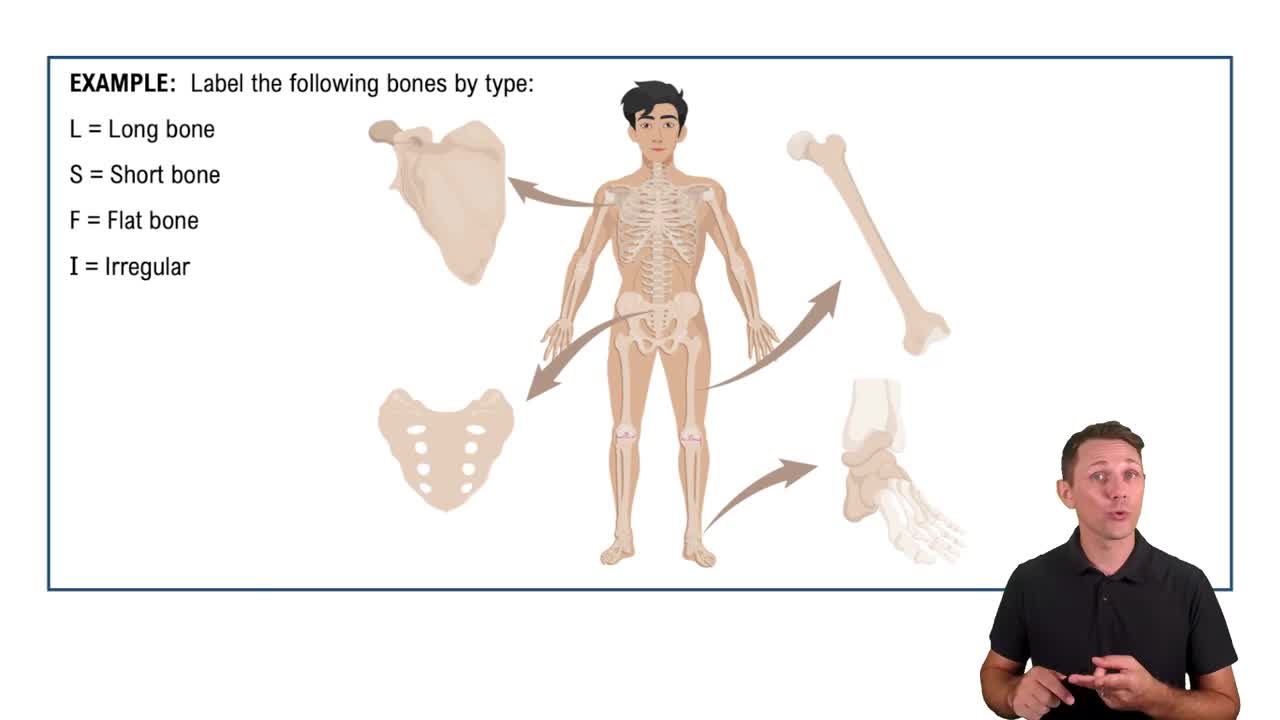
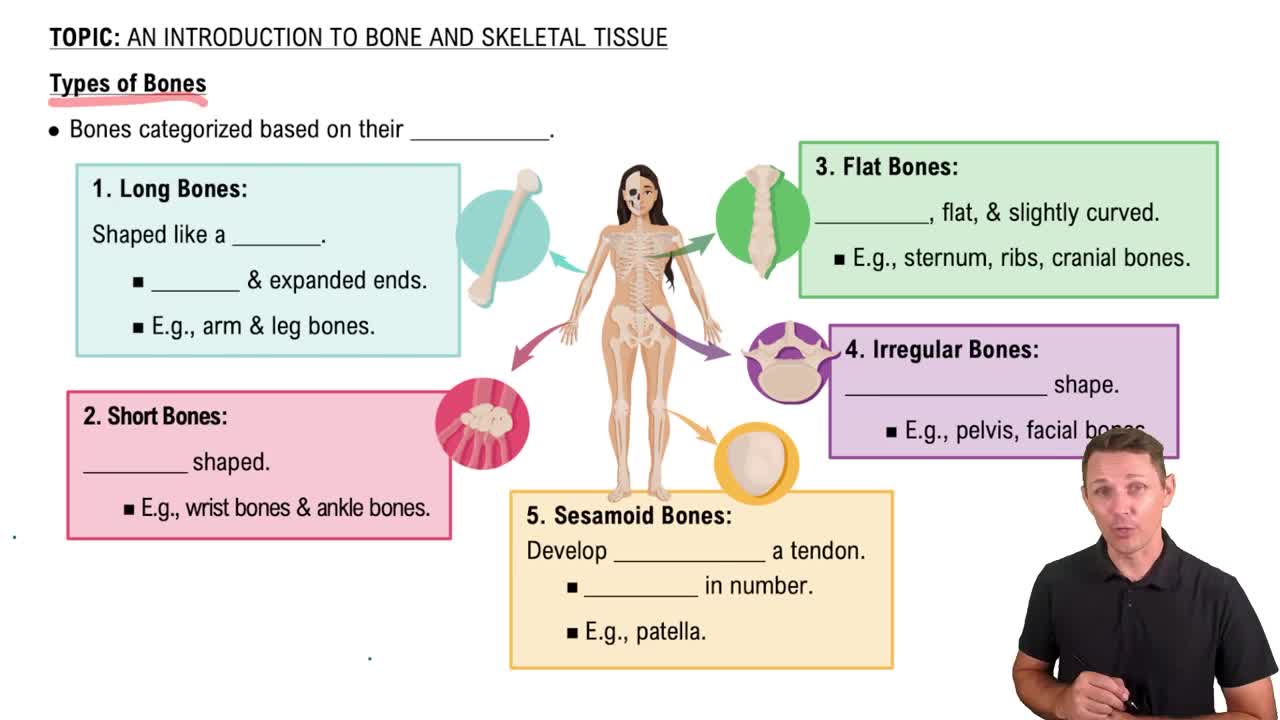
Long, short, flat, and irregular are the four main bone shapes.
Compact bone is the dense, hard outer layer of bone that provides strength.
Spongy bone is the porous, inner bone tissue that contains trabeculae and red bone marrow.
The epiphysis is the rounded end of a long bone, usually covered with articular cartilage.
The diaphysis is the shaft or central part of a long bone.
Articular cartilage covers the epiphysis and reduces friction at joint surfaces.
The medullary cavity is the central cavity of bone shafts where yellow bone marrow is stored.
The epiphyseal plate is a growth plate of hyaline cartilage; the epiphyseal line is the remnant after growth ends.
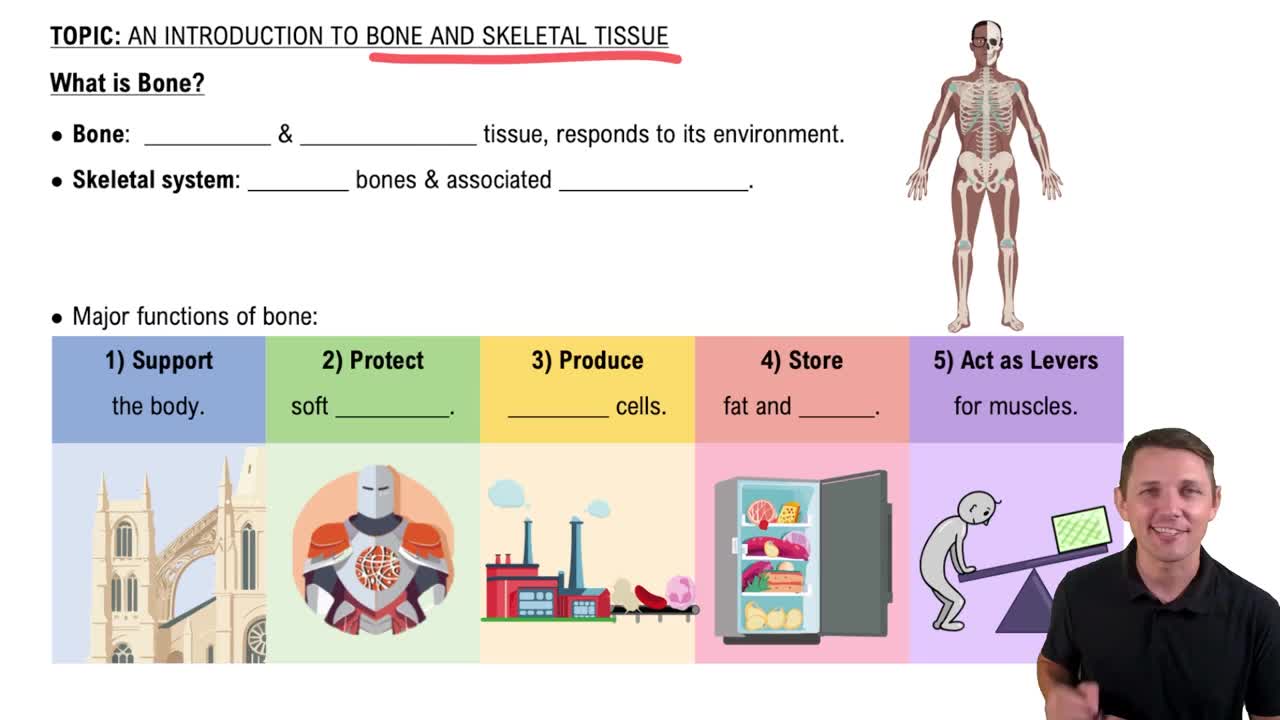
Red bone marrow produces blood cells and is found in spongy bone.
Yellow bone marrow stores fat and is found in the medullary cavity.
The periosteum is a dense connective tissue layer covering the outer surface of bone.
The endosteum lines the inner surfaces of bone, including the medullary cavity.
An osteon is the structural unit of compact bone, consisting of concentric lamellae around a central canal.
The central canal runs through the osteon and contains blood vessels and nerves.
Perforating canals connect central canals of different osteons and the periosteum.
Lacunae are small spaces housing osteocytes, the mature bone cells.
Canaliculi are tiny channels connecting lacunae, allowing nutrient and waste exchange.
Trabeculae are the lattice-like network of bone in spongy bone providing structural support.
Bone is composed of organic components (collagen fibers) and inorganic components like hydroxyapatite for hardness.
A canal or meatus is a tubular passage or tunnel in bone.
A condyle is a rounded articular projection on a bone.
A crest is a narrow, prominent ridge of bone.
An epicondyle is a projection above a condyle.
A facet is a smooth, nearly flat articular surface.
A fissure is a narrow, slit-like opening in bone.
A foramen is a round or oval opening through a bone.
A fossa is a shallow depression or cavity in bone.
The spinous process is a bony projection off the posterior of each vertebra.
The transverse processes are lateral projections on vertebrae for muscle attachment.
The vertebral foramen is the opening through which the spinal cord passes.
The dens is a peg-like projection on the axis (C2) vertebra that allows head rotation.
True ribs attach directly to the sternum; false ribs attach indirectly; floating ribs have no anterior attachment.
The sternum consists of the manubrium, body, and xiphoid process.
The six cranial bones are frontal, parietal, occipital, temporal, sphenoid, and ethmoid bones.
Facial bones include maxilla, zygomatic, mandible, vomer, nasal, inferior nasal conchae, lacrimal, and palatine bones.