Support, protection, assistance in movement, blood cell production, storage of minerals and triglycerides, and mineral homeostasis.
Difference between red and yellow bone marrow
Red bone marrow is the site of hemopoiesis producing RBCs, WBCs, and platelets. Yellow bone marrow stores triglycerides.
Composition of bone matrix
Bone matrix is about 50% \(Ca_3(PO_4)_2\), 25% water, and 25% collagen fibers which provide flexibility and mineral support.
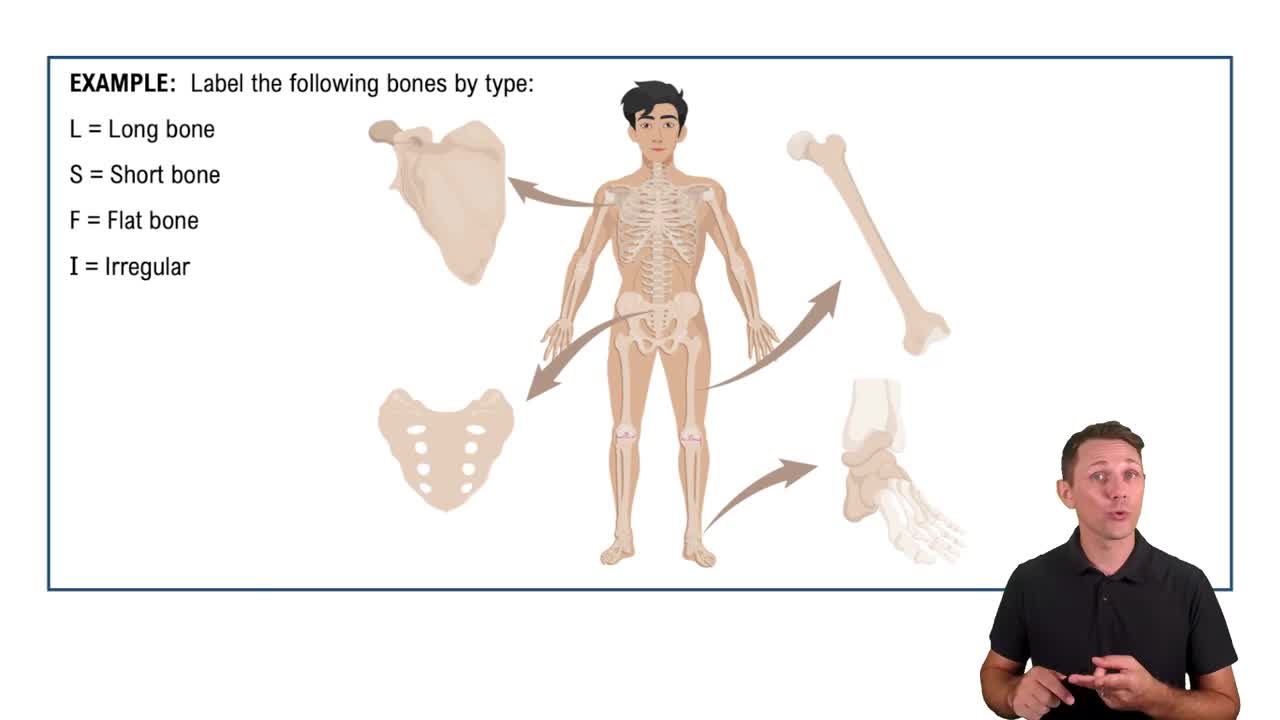
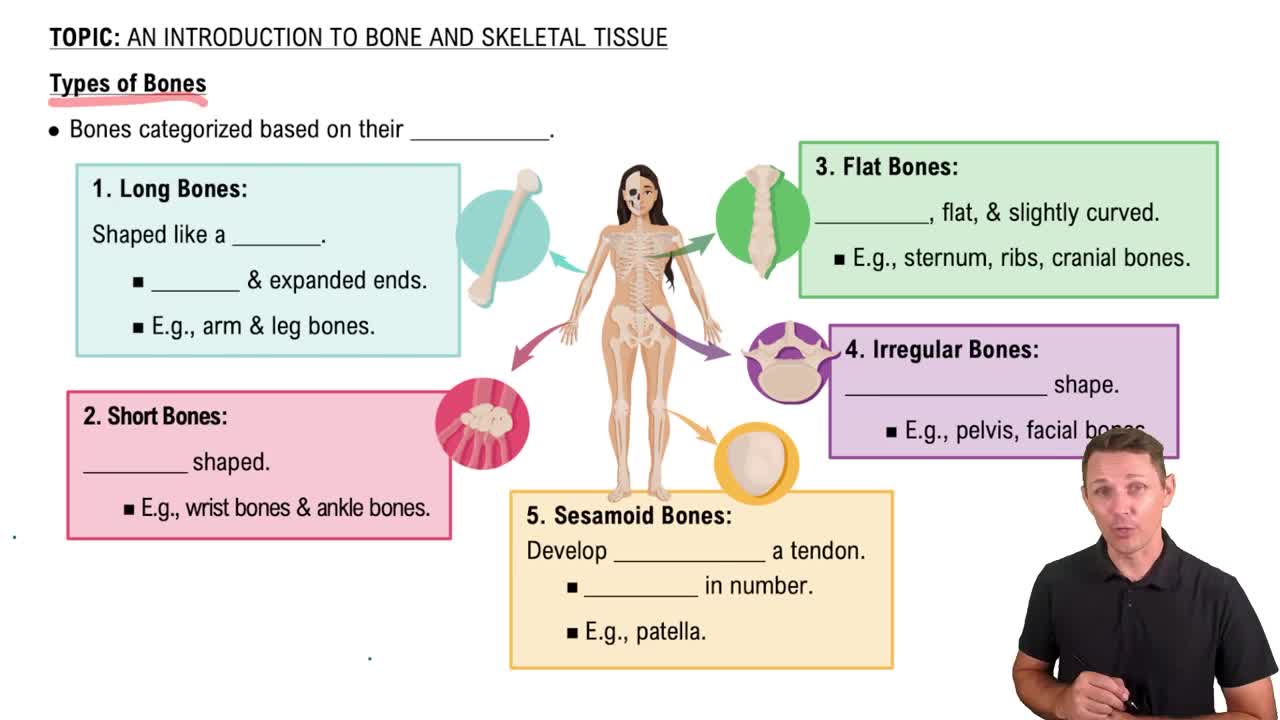
Four classifications of bones by shape
Long bones (longer than wide), short bones (length and width about equal), flat bones (broad and flat), and sesamoid bones (round bones embedded in tendons).
Anatomy of a long bone
Includes diaphysis (shaft), epiphysis (ends), medullary cavity (marrow cavity), metaphysis (between diaphysis and epiphysis), and epiphyseal plate (growth plate).
Periosteum and endosteum
Periosteum is the dense irregular connective tissue covering the outer bone surface; endosteum lines the inner surface adjacent to the medullary cavity.
Bone cell types and functions
Osteogenic cells are immature stem cells; osteoblasts build bone matrix; osteocytes maintain bone; osteoclasts resorb bone releasing calcium.
Compact vs spongy bone structure
Compact bone is dense and forms the outer layer; spongy bone is porous, found inside bones, and contains red bone marrow.
Cartilage cell types
Chondroblasts produce cartilage matrix; chondrocytes maintain cartilage and reside in lacunae.
Cartilage growth types
Interstitial growth increases length by chondrocyte mitosis inside cartilage; appositional growth increases width by stem cells in perichondrium producing new cartilage.
Initial bone formation process
Bone forms by replacing cartilage or connective tissue through ossification involving osteoblasts depositing bone matrix.
Bone growth at epiphyseal plate
Cartilage grows, calcifies, is resorbed by osteoclasts, and replaced by bone from osteoblasts, allowing lengthening of long bones.
Bone remodeling
Bone is continuously reshaped by balanced activity of osteoblasts (bone formation) and osteoclasts (bone resorption) to maintain strength and calcium levels.
Common bone disorders
Osteoporosis is weak, porous bones due to excessive resorption; osteomalacia is soft, flexible bones due to poor mineralization.
 Back
Back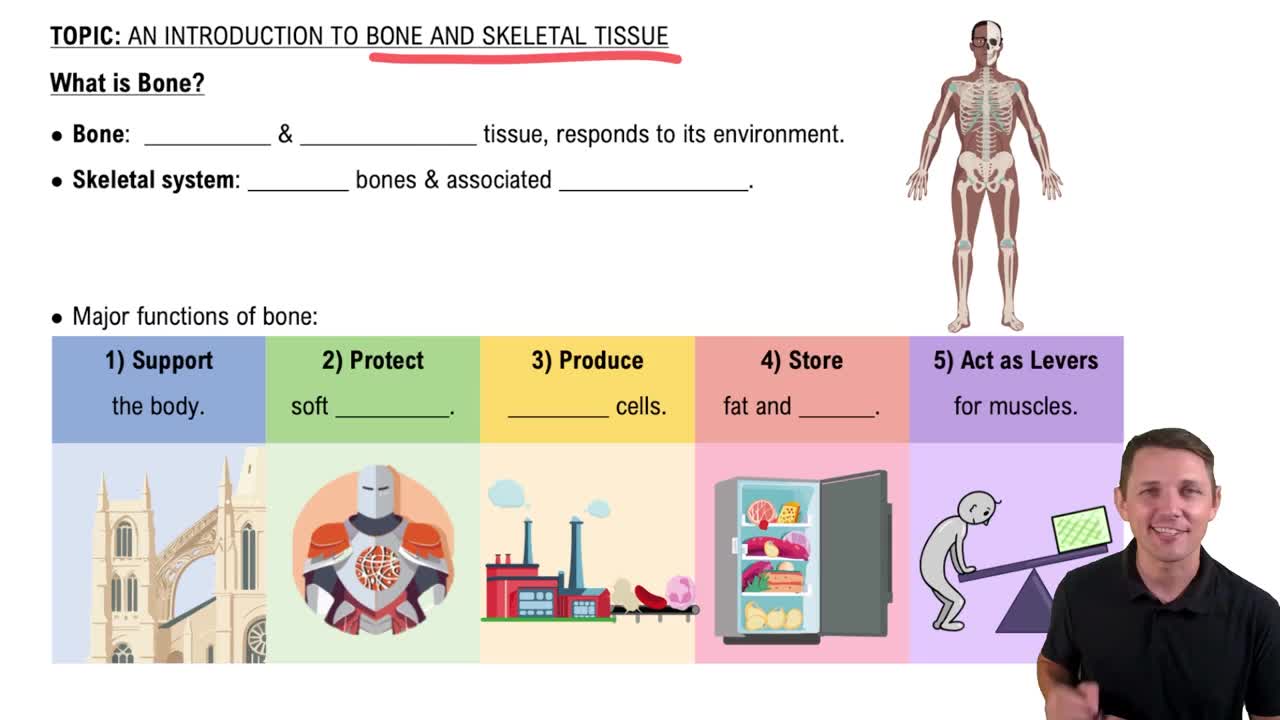
 3:56
3:56