 Back
BackAnatomy & Physiology: Skin Structure and Function
 06:54
06:54
Terms in this set (20)
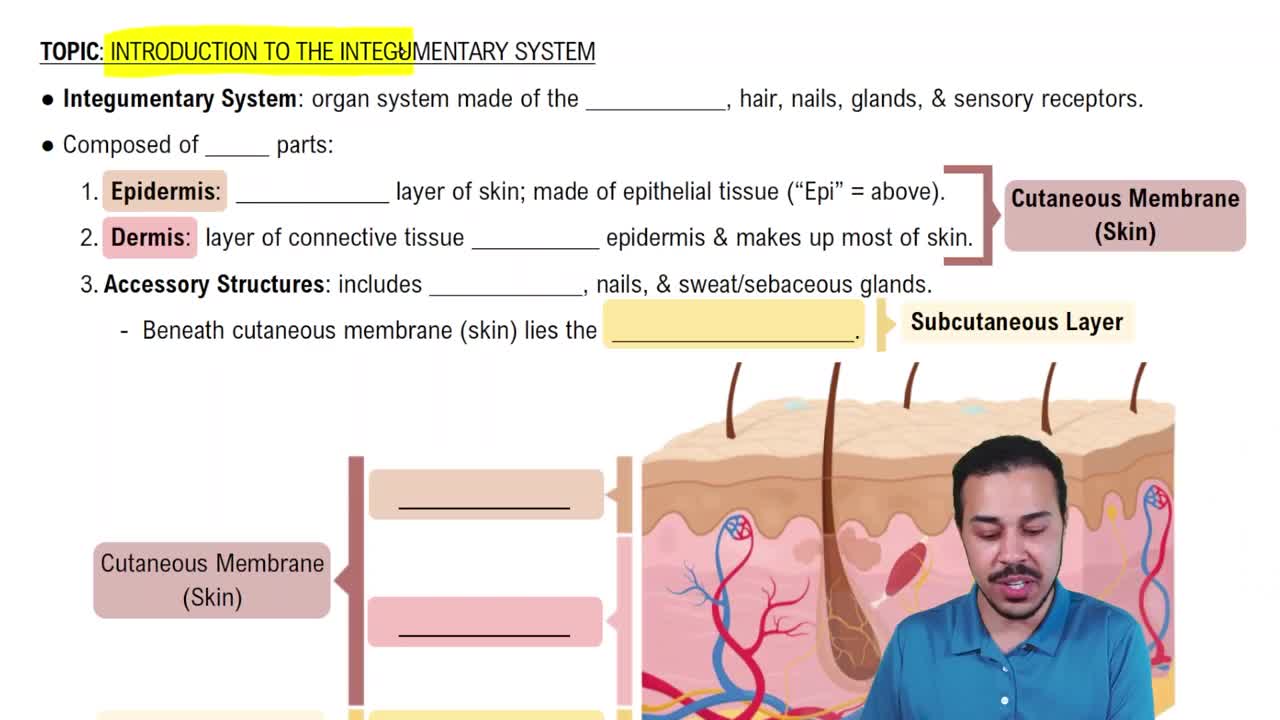
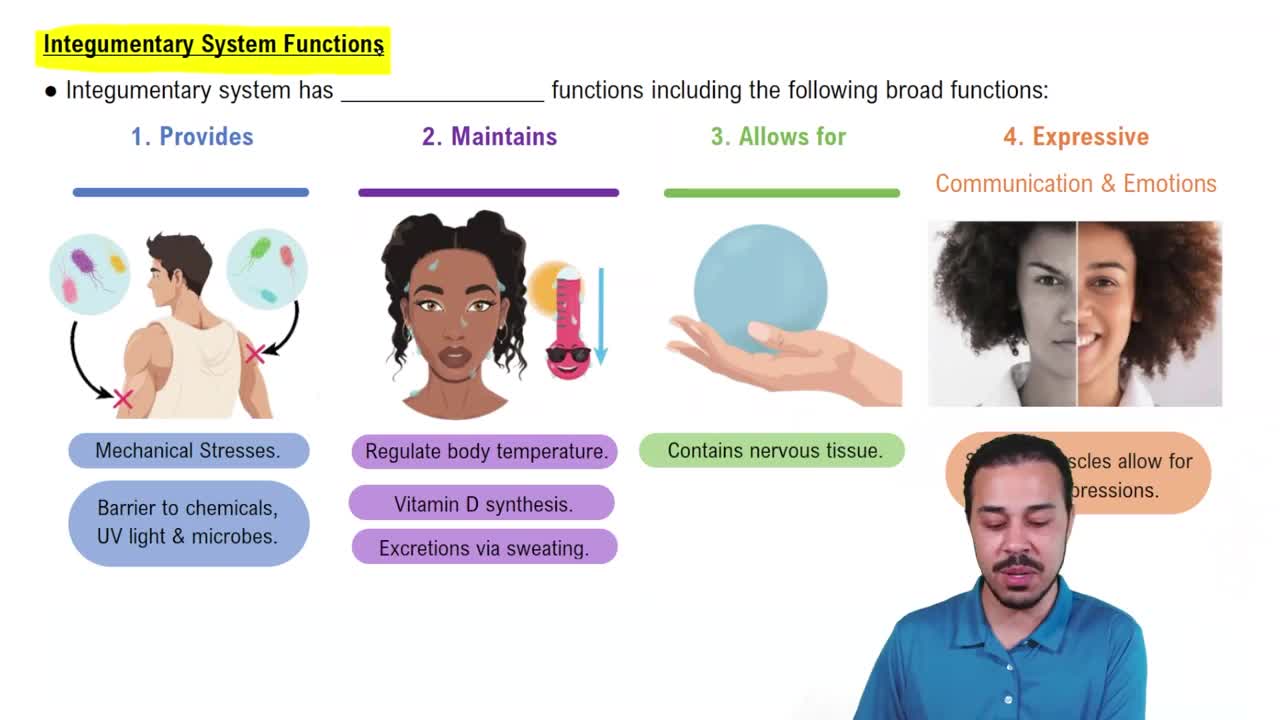
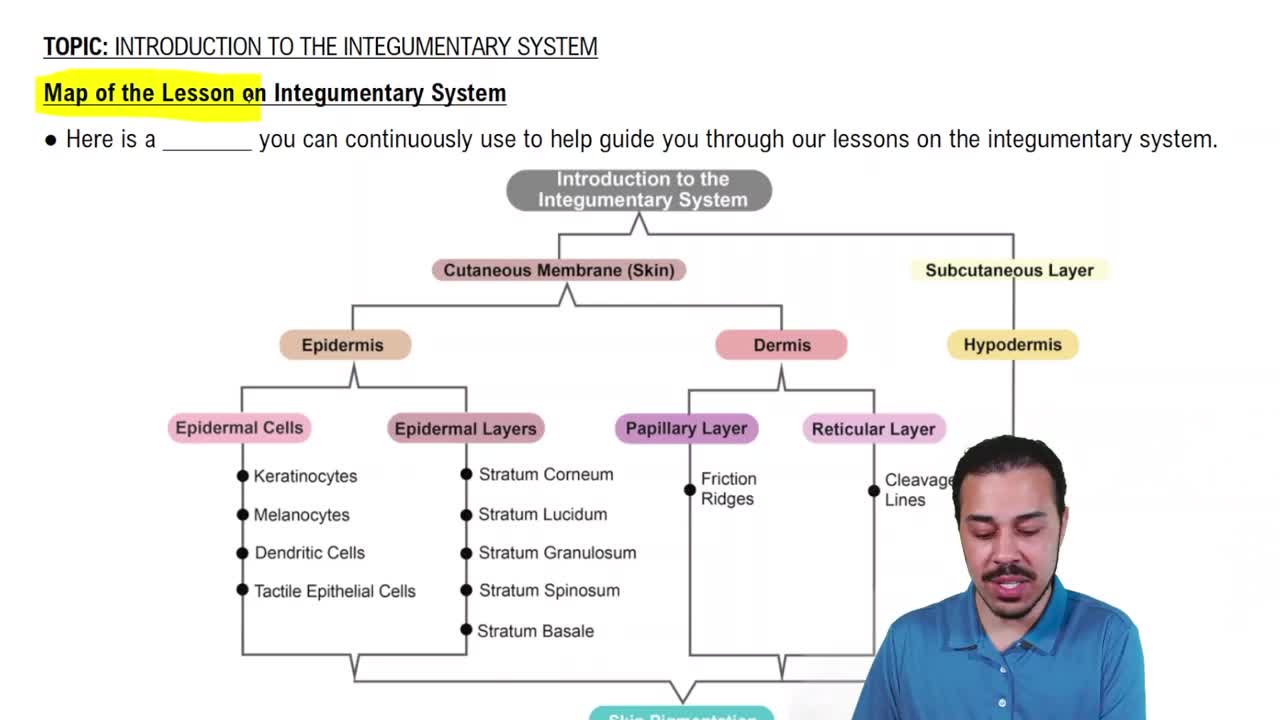
The skin consists of two layers: the epidermis (outer, avascular epithelial tissue) and the dermis (underlying, vascular dense connective tissue). The subcutaneous tissue (hypodermis) lies beneath but is not part of the skin.
Anchors skin loosely to underlying muscles and structures; composed mostly of adipose and areolar connective tissue; part of the integumentary system.
Keratinocytes, melanocytes, dendritic (Langerhans) cells, and tactile (Merkel) epithelial cells.
Produce fibrous keratin, the protein that protects skin; major epidermal cells; renew epidermis every 25–45 days.
Spider-shaped cells in deepest epidermis; produce melanin pigment packaged in melanosomes; melanin protects keratinocyte nuclei from UV damage.
Star-shaped macrophages in deep epidermis; ingest foreign substances and activate the immune system.
Touch receptors located at the epidermal-dermal junction.
Stratum basale, stratum spinosum, stratum granulosum, stratum lucidum (only in thick skin), and stratum corneum.
Thick skin has all five epidermal layers including stratum lucidum; found on palms, fingertips, soles. Thin skin lacks stratum lucidum.
Deepest epidermal layer; single row of mitotic stem cells; attached to dermis; produces daughter cells that migrate upward and die.
Several layers thick; keratinocytes have pre-keratin filaments attached to desmosomes; cells appear spiky (prickle cells); contains melanosomes and dendritic cells.
4-6 flattened cell layers; keratinization begins; cells accumulate keratohyaline granules and lamellar granules (water-resistant glycolipid); cells above die.
Only in thick skin; thin, translucent layer of 2-3 rows of clear, flat, dead keratinocytes above stratum granulosum.
20-30 rows of flat, anucleated, keratinized dead cells; protects deeper cells, prevents water loss, resists abrasion, and acts as a barrier.
Strong, flexible connective tissue with fibroblasts, macrophages, mast cells, and white blood cells; contains nerves, blood vessels, hair follicles, oil and sweat glands.
Thin, superficial layer of areolar connective tissue with loose collagen and elastic fibers; contains dermal papillae with capillaries, free nerve endings, and tactile corpuscles.
Fingerlike projections into epidermis; contain capillary loops and sensory receptors; form friction ridges that enhance grip and touch sensitivity.
Ridges formed by dermal papillae and epidermal ridges; enhance gripping and touch; sweat pores in ridges create unique fingerprint patterns.
Thick layer of dense irregular connective tissue with coarse collagen and elastic fibers; provides strength, resiliency, and stretch-recoil properties.
Network of blood vessels between reticular dermis and subcutaneous tissue supplying skin with nutrients and oxygen.