 Back
BackAnatomy & Physiology: Tissue and Histology
 03:32
03:32
Terms in this set (19)
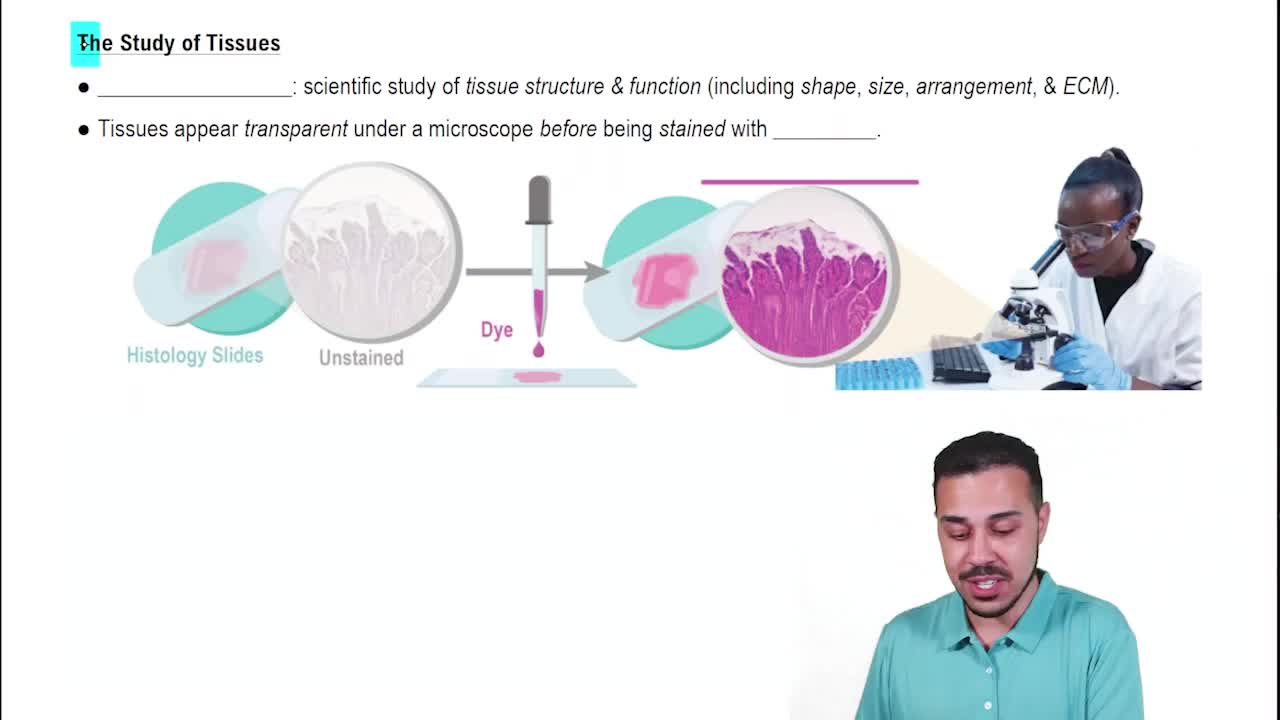
Histology is the study of tissues, the living fabric of the body.
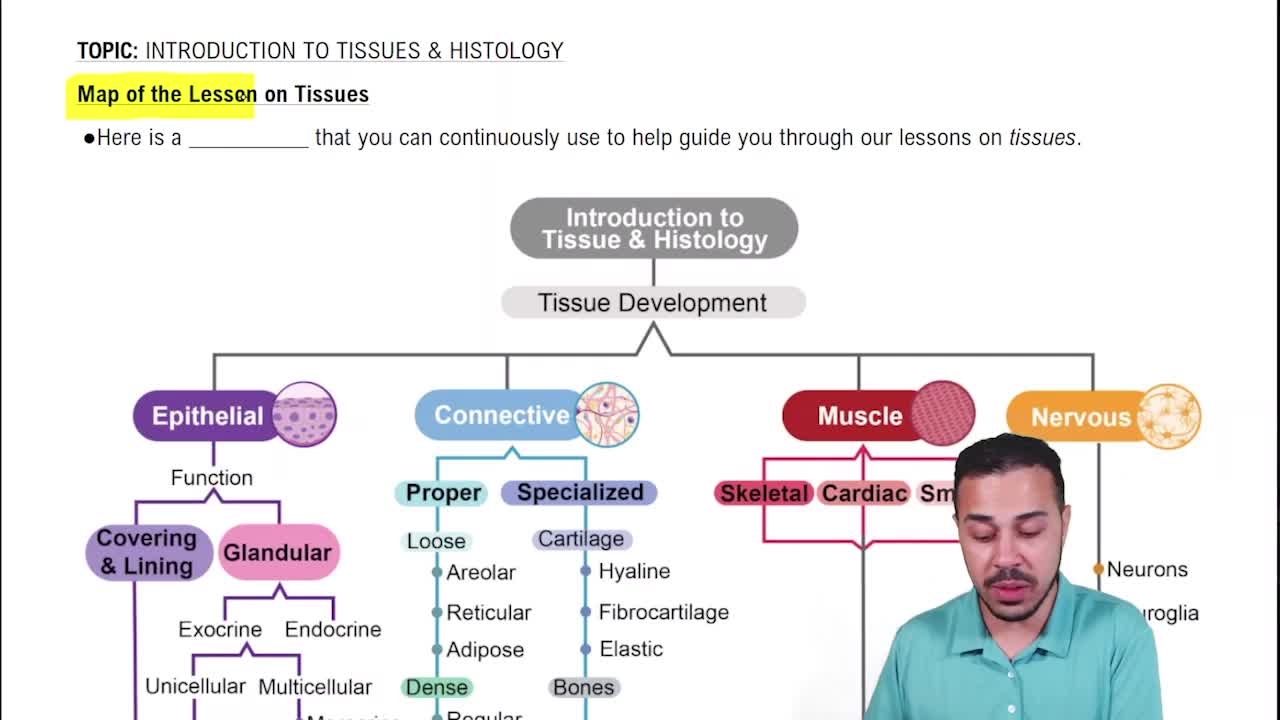
Epithelial tissue has polarity, specialized contacts, avascularity, regeneration, and is supported by connective tissue.
By the number of cell layers (simple or stratified) and the shape of cells (squamous, cuboidal, or columnar).
Simple epithelial tissue consists of a single layer of cells, specialized for absorption, secretion, and filtration.
Stratified epithelial tissue has multiple layers of cells, providing protection against abrasion.
Glandular epithelium forms glands that secrete substances like hormones or enzymes.
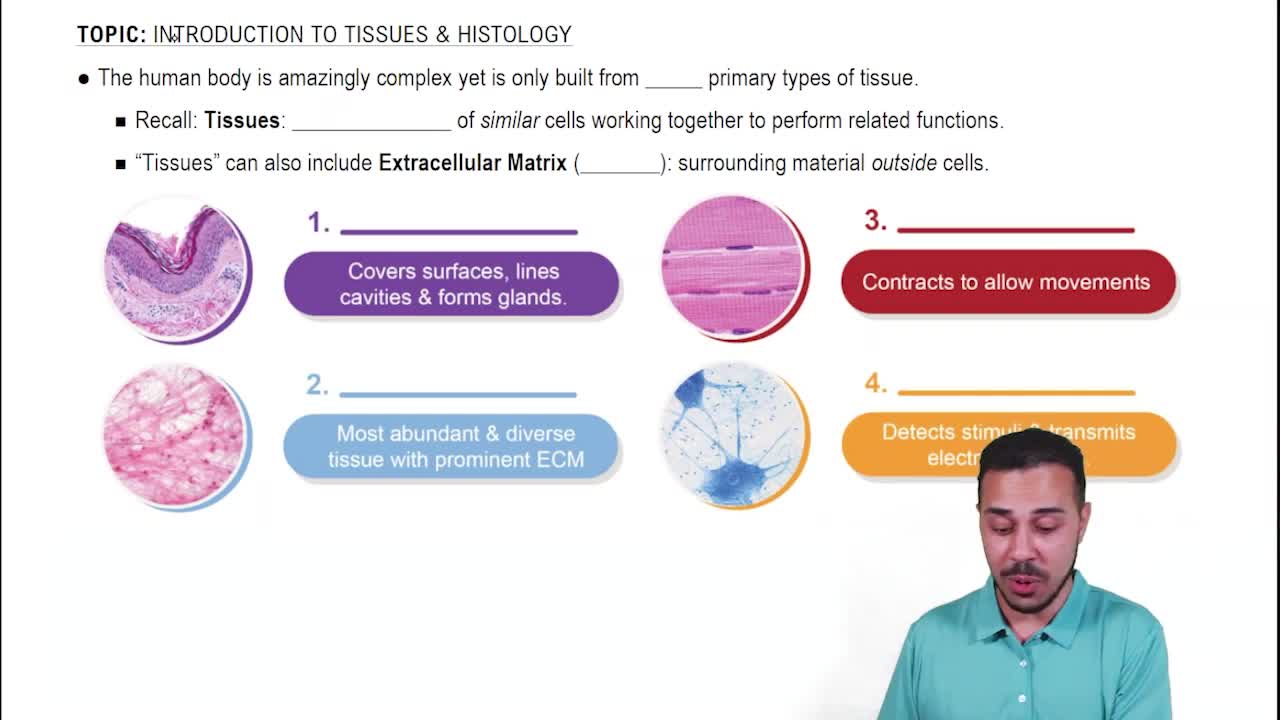
Connective tissue classes include connective tissue proper, cartilage, bone, and blood.
Connective tissue proper has a gel-like matrix with various fibers and cells, divided into loose and dense types.
Loose connective tissue types include areolar, adipose, and reticular tissues.
Dense connective tissue has thick collagen fibers and is subdivided into regular and irregular types.
Specialized connective tissues include cartilage, bone, and blood.
Cartilage types are hyaline, elastic, and fibrocartilage.
Bone provides support, protection, and serves as a reservoir for minerals.
Blood has a liquid matrix called plasma and functions in transport and immune defense.
Muscle tissue types are skeletal, cardiac, and smooth muscle.
Nervous tissue transmits electrical signals to coordinate body functions.
A neuron is a nerve cell that transmits electrical impulses.
Serous membranes are thin layers that line body cavities and cover organs, producing serous fluid to reduce friction.
Serous membranes are found in the pleura (lungs), pericardium (heart), and peritoneum (abdominal cavity).