 Back
BackAnatomy & Physiology: Tissue Structure and Function
 03:32
03:32
Terms in this set (27)
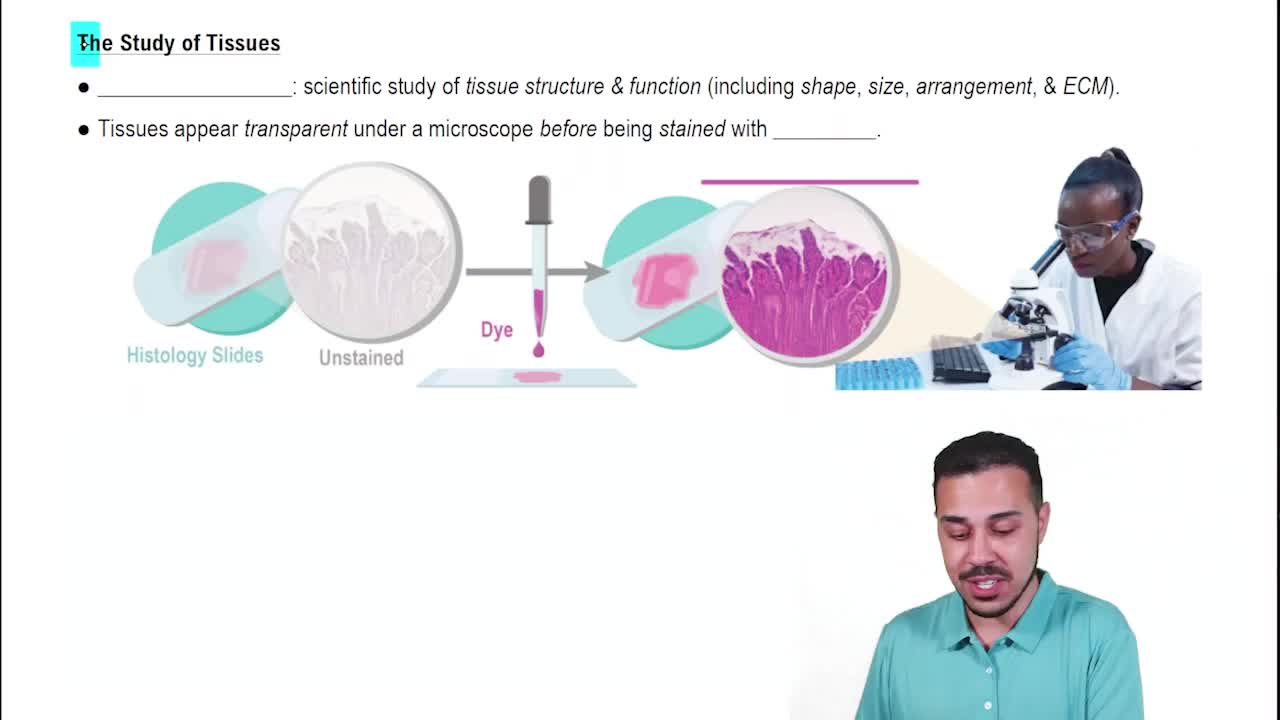
Histology is the study of the normal structure of tissues.
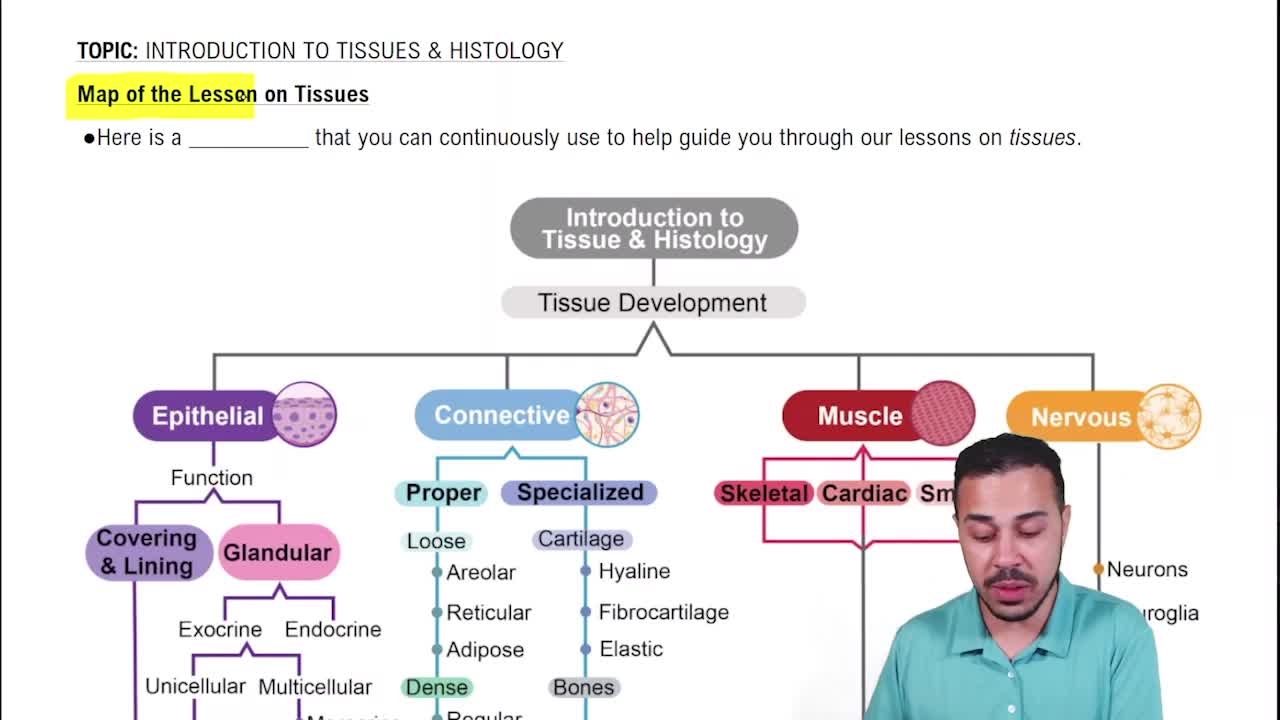
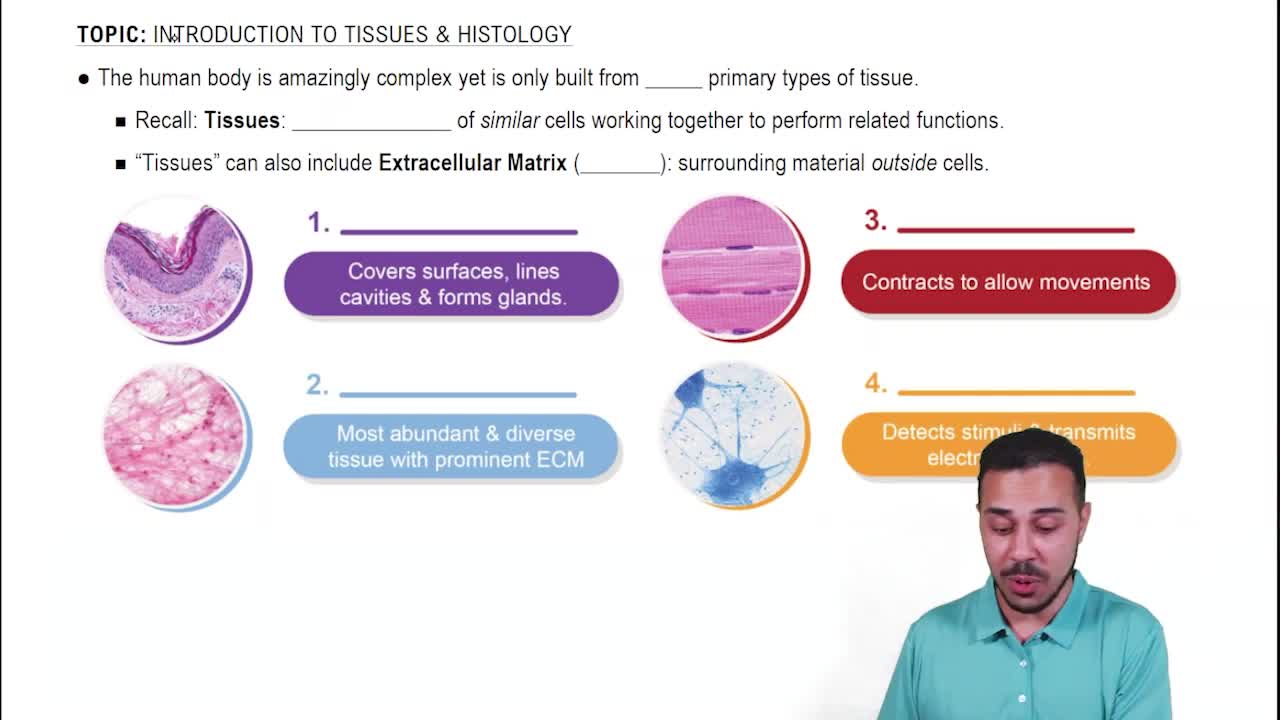
The four classes of tissues are epithelial, connective, muscle, and nervous tissue.
The ECM is composed of ground substance and three types of protein fibers: collagen, elastic, and reticular fibers.
The ECM provides strength, regulates cell activity, and anchors cells in place within tissues.
Tight junctions make spaces impermeable; desmosomes anchor cells to resist mechanical stress; gap junctions allow small substances to pass between adjacent cells.
Epithelial tissues function in protection, immune defense, secretion, transport, and sensation.
Epithelial cells are closely packed and joined by tight junctions and desmosomes.
Simple epithelia have one cell layer; stratified epithelia have two or more layers.
Epithelial cells may be squamous (flat), cuboidal, or columnar.
Simple epithelia are thin and allow rapid substance crossing via paracellular or transcellular transport.
Stratified epithelia include stratified squamous, cuboidal, columnar, and transitional epithelium, providing a protective barrier.
Exocrine glands release products through ducts to epithelial surfaces; endocrine glands release products into the bloodstream for distant targets.
Merocrine: exocytosis; holocrine: cell ruptures; apocrine: cytoplasm portion pinched off with product.
Connective tissues function in connecting and binding, support, protection, and transport.
The two types are connective tissue proper and specialized connective tissue.
Loose (areolar), dense irregular, dense regular collagenous, and dense regular elastic connective tissues.
Hyaline: ends of bones, nose, respiratory passages; fibrocartilage: joints, intervertebral discs; elastic: ear, parts of larynx.
Bone contains collagen fibers, ground substance, and calcium phosphate crystals. Osteoblasts build ECM; osteoclasts break down bone.
Blood's ECM is plasma. Main cells are erythrocytes and leukocytes.
Skeletal: voluntary, striated, multinucleated; cardiac: involuntary, striated, branched, intercalated discs; smooth: uninucleate, non-striated, found in hollow organs.
Neurons are excitable cells that send nerve impulses. They have a cell body, axon (carries impulses away), and dendrites (receive impulses).
Neuroglial cells are the supporting cells of nervous tissue.
Membranes anchor organs, serve as barriers, function in immunity, and secrete substances.
Serous membranes secrete serous fluid; synovial membranes secrete synovial fluid.
Mucous membranes secrete mucus and line passages open to the outside; cutaneous membrane is the skin, composed of epidermis and dermis.
Regeneration replaces damaged cells with the same type; fibrosis fills defects with dense irregular connective tissue forming scar tissue.
Epithelial, most connective, and smooth muscle tissues regenerate; nervous tissue generally does not. Cartilage, skeletal, and cardiac muscle heal by fibrosis.