 Back
BackCardiovascular and Blood System Fundamentals
 02:29
02:29
Terms in this set (30)
Transport of oxygen, nutrients, and waste; regulation of temperature, pH, and fluid balance; protection against pathogens and blood loss.
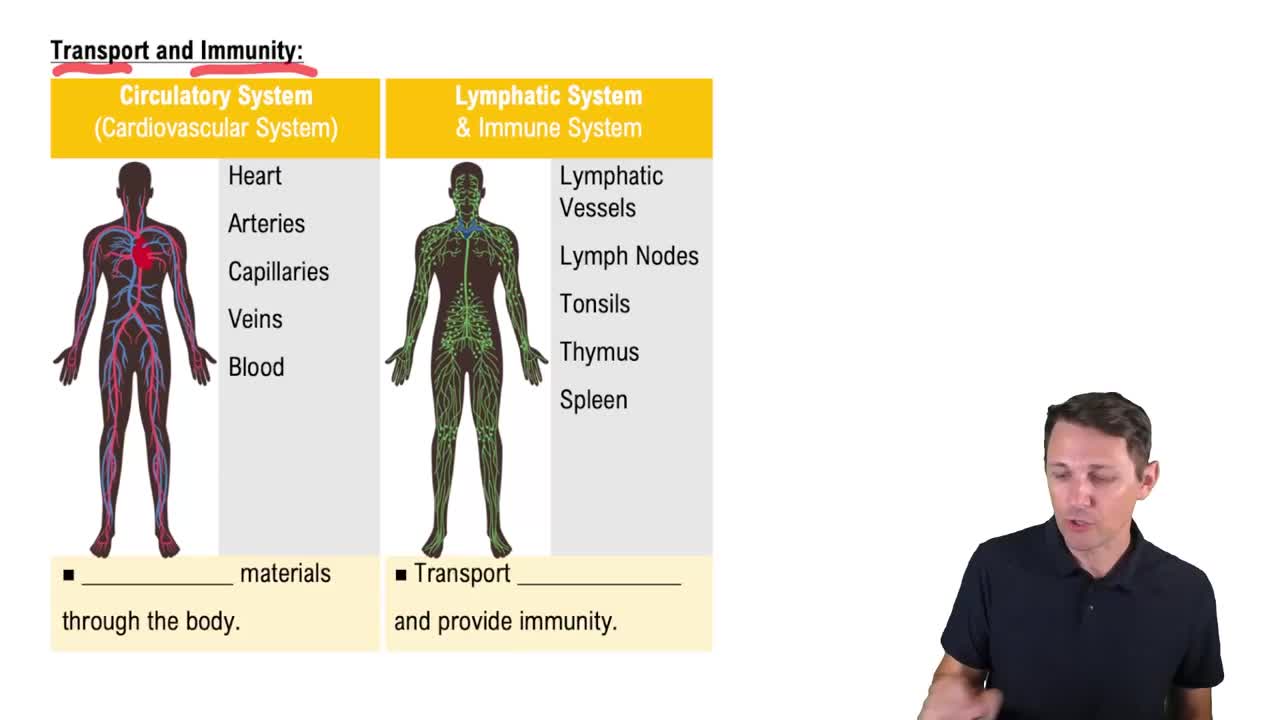
The heart (pump), blood vessels (arteries, veins, capillaries), and blood (fluid medium).
Lymph fluid, lymphatic vessels, lymph nodes, and organs like the spleen, thymus, and tonsils.
Systemic arteries carry oxygenated blood from the heart; systemic veins return deoxygenated blood; capillaries are sites of exchange in tissues.
Pulmonary arteries carry deoxygenated blood from the heart to lungs; pulmonary veins return oxygenated blood to the heart.
Plasma (liquid portion) and formed elements (red blood cells, white blood cells, platelets).
Red blood cells (erythrocytes), white blood cells (leukocytes), and platelets (thrombocytes).
Biconcave shape for surface area, no nucleus in mature cells, and contain hemoglobin for oxygen transport.
Transport oxygen to tissues and remove carbon dioxide from the body.
A protein with iron that binds oxygen in red blood cells for transport.
Occurs in bone marrow, stimulated by erythropoietin, maturing from stem cells to erythrocytes.
Old RBCs removed by spleen and liver macrophages; hemoglobin is broken down.
Neutrophils, eosinophils, basophils, lymphocytes, and monocytes.
Most abundant WBC; perform phagocytosis to destroy pathogens.
Defend against allergies and parasites.
Release histamine to promote inflammation.
Mediate immune responses, including B and T cells.
Perform phagocytosis and differentiate into macrophages.
Occurs in bone marrow, regulated by growth factors, maturing from stem cells to leukocytes.
Cell fragments from megakaryocytes that aid in blood clotting.
Platelets adhere to damaged vessels, become activated, and aggregate to form a temporary plug.
Classified by antigens on RBCs and antibodies in plasma; includes ABO and Rh systems.
Blood types based on presence of A and/or B antigens on RBCs and corresponding antibodies in plasma.
Classifies blood as Rh positive (presence of D antigen) or Rh negative (absence).
Mostly water, with proteins like albumin, globulins, fibrinogen, and solutes such as electrolytes and nutrients.
Involves vasoconstriction, platelet plug formation, and the coagulation cascade leading to fibrin clot formation.
Anticoagulants prevent clotting, procoagulants promote clotting, and fibrinolysis dissolves clots.
Activation of plasmin breaks down fibrin to dissolve blood clots.
Condition with low red blood cell count or hemoglobin, reducing oxygen-carrying capacity and causing symptoms like fatigue.
Low white blood cell count, increasing risk of infections due to weakened immune defense.