 Back
BackChapter 14
 3:32
3:32
Terms in this set (19)
A foreign microorganism that may cause disease in humans is called a(n)
pathology.
antibody.
antigen.
pathogen.
plaque.
Pathogen
What binds to specific chemical targets called
antigens?
pathogens
interferons
complement proteins
antibodies
antibodies
________ are clusters of lymphoid nodules located beneath the epithelial lining of the intestines.
Vermiform appendices
Lingual tonsils
Adenoids
Peyer patches
Palatine tonsils
Peyer patches
The wall structure of lymphatics and the flow of lymph through them are comparable to those of
the vena cava.
elastic arteries.
veins.
muscular arteries.
arterioles.
Veins
Swelling, redness, heat, and pain are classical characteristics of which of the following defense mechanisms?
fever
interferons
inflammation
complement system
Inflammation
The ability of certain cells to respond to chemicals in their environment is called ________.
necrosis
complement
regeneration
phagocytosis
chemotaxis
Chemotaxis
During inflammation, clotting does
not
occur at the actual site of injury due to the presence of ________.
heparin
pyrogens
perforins
histamine
pus
Heparin
Which of the following is an example of naturally acquired active immunity?
a mother nurturing her sick child
developing immunity after getting infected by a pathogen
a mother passing antibodies to her child through breastfeeding
receiving the flu vaccine
developing immunity after getting infected by a pathogen
Cells that secrete cytokines, which coordinate specific and nonspecific defenses, are called
plasma cells.
helper T cells.
B cells.
mast cells.
NK cells.
Helpter T cells
Inappropriate or excessive immune responses to antigens are defined as
allergies.
characteristics of HIV infection.
immunodeficiency diseases.
characteristics of AIDS.
common in the elderly.
Allergies
How does lymph fluid get transported into the lymph node for filtration?
lymph node artery and vein
afferent vessels
efferent vessels
medullary sinus
Afferent vessels
Inflammation is considered what type of defense?
specific
passive
adaptive
innate
Innate
Which kinds of T cells are called CD8 cells, and destroy their targets by secreted factors like perforin, lymphotoxin, or cytokines?
memory
B
cytotoxic
helper
Cytoxic
Which plasma protein is a major contributor to osmotic pressure?
albumin
fibrinogen
urea
platelet
Albumin
What is the function of the cardiovascular system?
it directs long-term changes in activities of other organ systems.
it transports cells and dissolved materials, including nutrients, wastes, oxygen, and carbon dioxide.
it transports cells and dissolved materials, including nutrients, wastes, oxygen, and carbon dioxide.
What is the name of the lipid with both hydrophobic and hydrophilic regions that makes up the bilayer of the plasma membrane?
phospholipid
triglyceride
trans fatty acid
steroid
Phospholipid
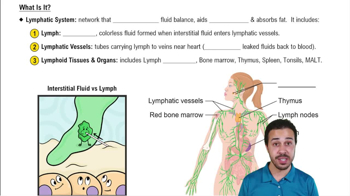
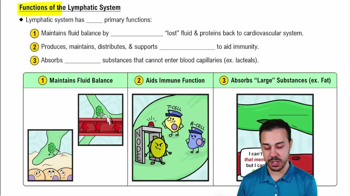
Which of the following is NOT a direct function of the lymphatic system?
Return excess tissue fluid to the circulatory system
Provide adaptive defenses against infection
Provide a physical barrier to the entrance of pathogens
Produce lymphocytes
Provide a physical barrier to the entrance of pathogens
Which organ system transports antibodies to where they are needed?
Cardiovascular system
Skeletal system
Nervous system
Endocrine system
Muscular system
Cardiovascular system
Which of the following is one way the muscular system aids the lymphatic system?
Helps propel lymph through the lymphatic vessels
Produces thymosins
Produces lymphocytes
Uses microglia to stimulate adaptive defenses
Produces cytokines
Helps propel lymph through the lymphatic vessels
Produces thymosins