 Back
BackChapter 5 Power Point A&P I
 06:54
06:54
Terms in this set (38)
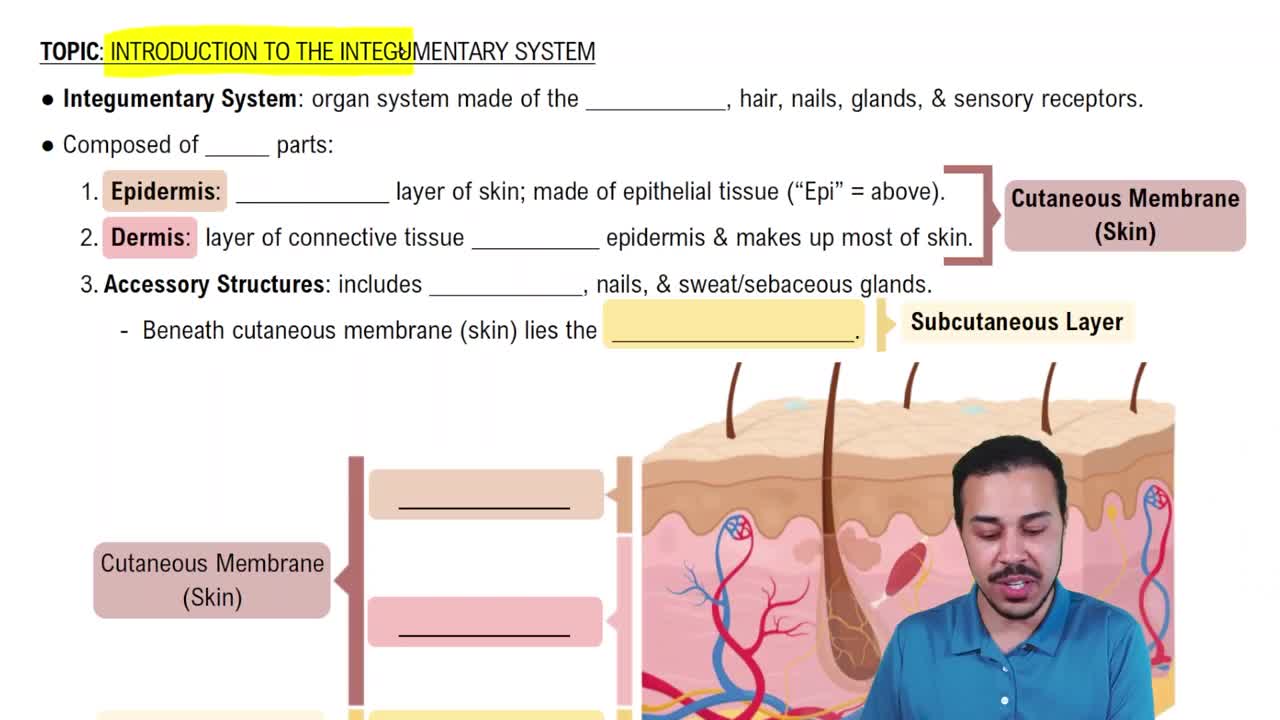
What is the integumentary system made of?
Hair, skin, nails, glands
What are the layers of the skin? (superficial to deep)
Epidermis, Dermis, Subcutaneous Layer (hypodermis)
What is the job of the subcutaneous layer?
Attach the dermis to underlying tissues
Stores fat
Insulates
Contains Pacinian corpuscles that detect pressure
What is the epidermis composed of?
Keratinized stratified squamous epithelium
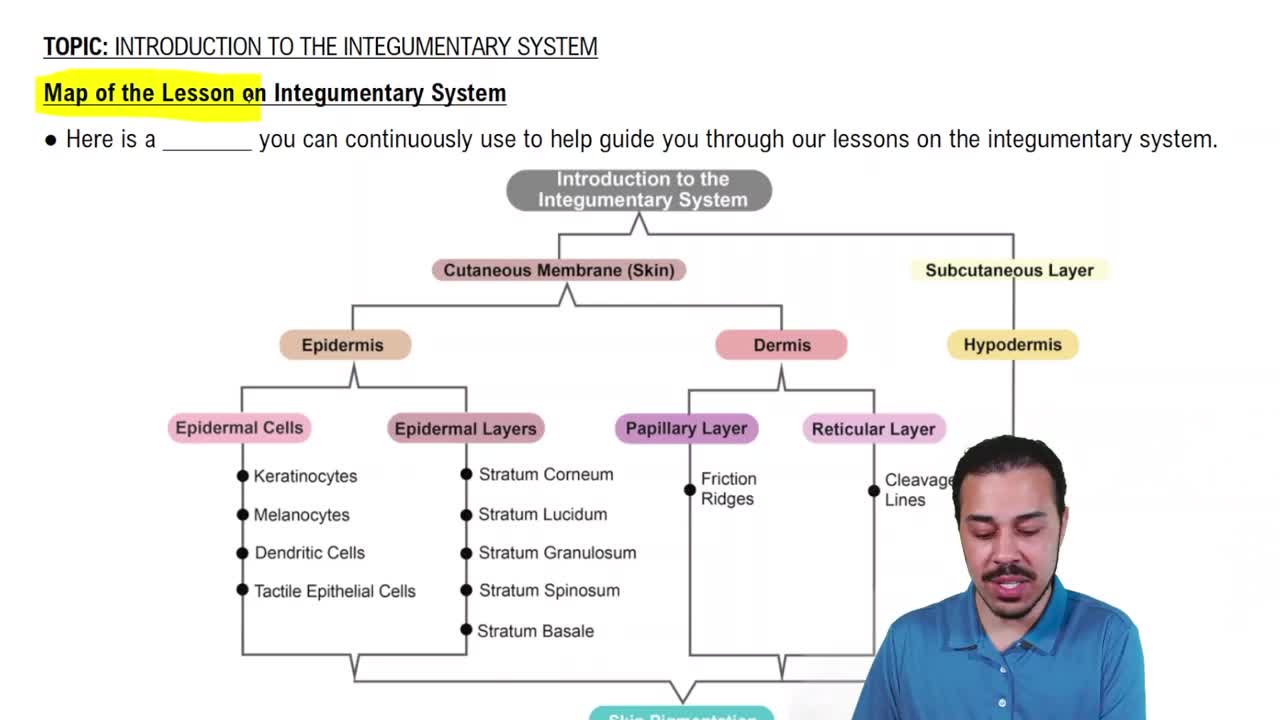
What is the primary cell type in the epidermis and what does it produce?
Keratinocytes
Produces keratin
What is the function of keratin?
Toughens skin and makes it waterproof
What is the second cell type in the Epidermis and what do they produce?
Melanocytes
Produces Melanin
What is the purpose of melanin?
Absorbs UV light
Contributes to skin color
What is the third type of cell in the epidermis and what is its function?
Langerhans cells
Aid in immune response
What is the fourth type of cell in the epidermis and what is its function?
Merkel Cells
Detect Touch
What are the Epidermal Layers (deep to superficial)?
Beautiful Skin Glows Like Crystals
Stratum Basale
Stratum Spinosum
Stratum Granulosum
Stratum Lucidum
Stratum Corneum
What type of tissue is the dermis made of?
Mostly Connective Tissue
Does the Dermis have a blood supply?
Does the Dermis have nerves?
Yes it have nerves and is vascular
What are the two layers of the Dermis?
Papillary Region
Reticular Region
What does the papillary region contain?
Dermal Papillae
What does the Reticular region contain?
Sebaceous glands
Sudoriferous glands
Collagen
Elastic Fibers
Epidermal Ridges
What does collagen and elastic fibers provide?
Extensibility
Elasticity
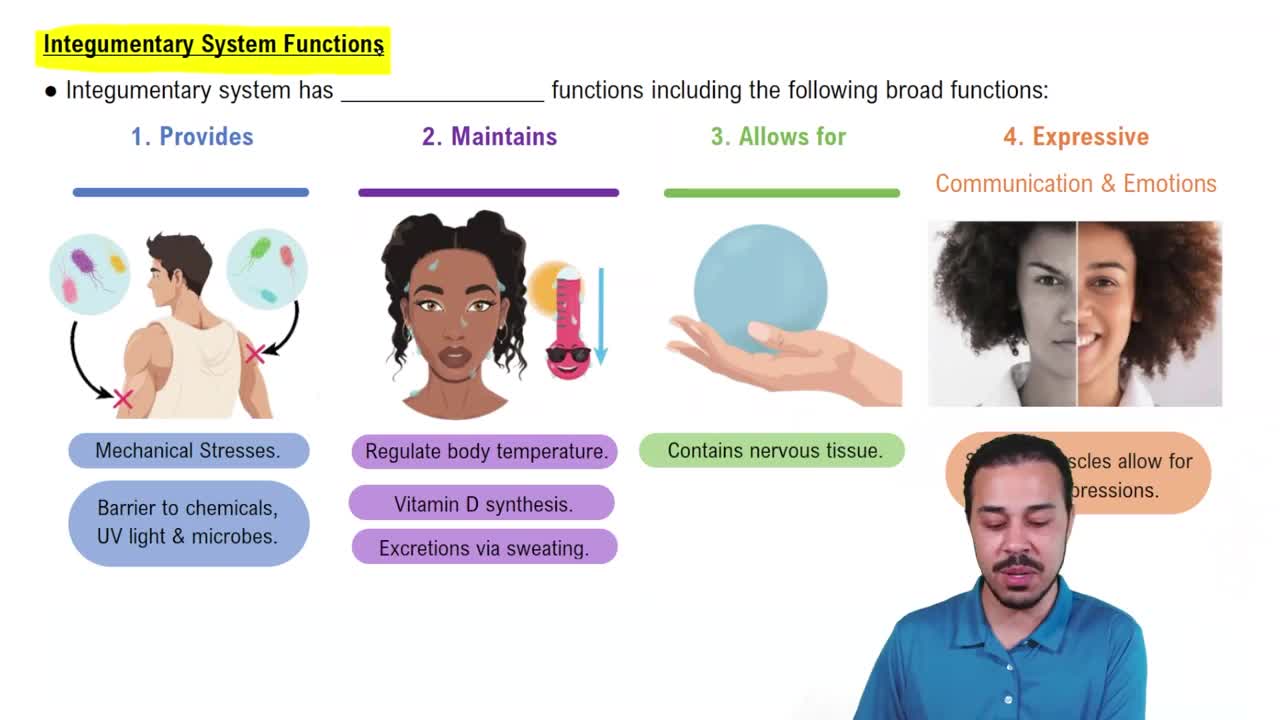
What are the six functions of the skin?
Temperature Regulation
Blood Reservoir
Protection
Cutaneous Sensations
Excretion and Absorption
Synthesis of Vitamin D
How does sweat contribute to temperature regulation of the body?
Sweat evaporates off the skin cooling the body
What are three things in the skin that protect the body?
Keratin
Lipids
Sebum
What are the 2 places thick skin is found?
Palms and soles of feet
What layer of skin does thick skin have that thin skin doesnt?
Stratum Lucidum Layer
Thick skin is absent of what?
Hair follicles, arrector pili (goosebumps), sebaceous glands
Thick skin has lots of what?
Sudoriferous glands (memory trick see and hear odor in the word and sweat has an odor)
What are the accessory structures?
Hair
Glands
Nails
What are 3 glands found in skin and what do they contain?
Sebaceous glands- Sebum (Oil)
Sudoriferous glands- Sweat
Ceruminous glands- Cerumen (ear wax)
Where do we not have Sebaceous glands?
Palms and soles of our feet
What is the purpose of Sebaceous Glands?
Soften skin and hair
inhibits bacterial growth
What are Sebaceous Glands made of?
triglycerides, cholesterol, proteins, pheromones, salts
What skin color is an indication of Jaundice?
Yellow Skin (liver disease)
What skin color is an indication of Erythema?
Redness of skin (heat or infection)
What skin color is an indication of Cyanosis?
Blue skin (lack of oxygen)
What skin color is an indication of Pallor?
Pale Skin (anemia and shock)
What are the A,B,C,D,E warning signs of cancer?
A- Asymmetry
B- Border
C- Color
D- Diameter
E- Elevation
Burn that involves only the epidermis
First Degree Burn
Burn that destroys the epidermis and part of the dermis
Second Degree Burn
Burn that destroys the epidermis, dermis and underlying tissue
Third Degree Burn
Burn that destroys all skin layers and underlying tissue
Fourth Degree Burn