 Back
BackChapter 6 Power Point A&P I
 3:56
3:56
Terms in this set (53)
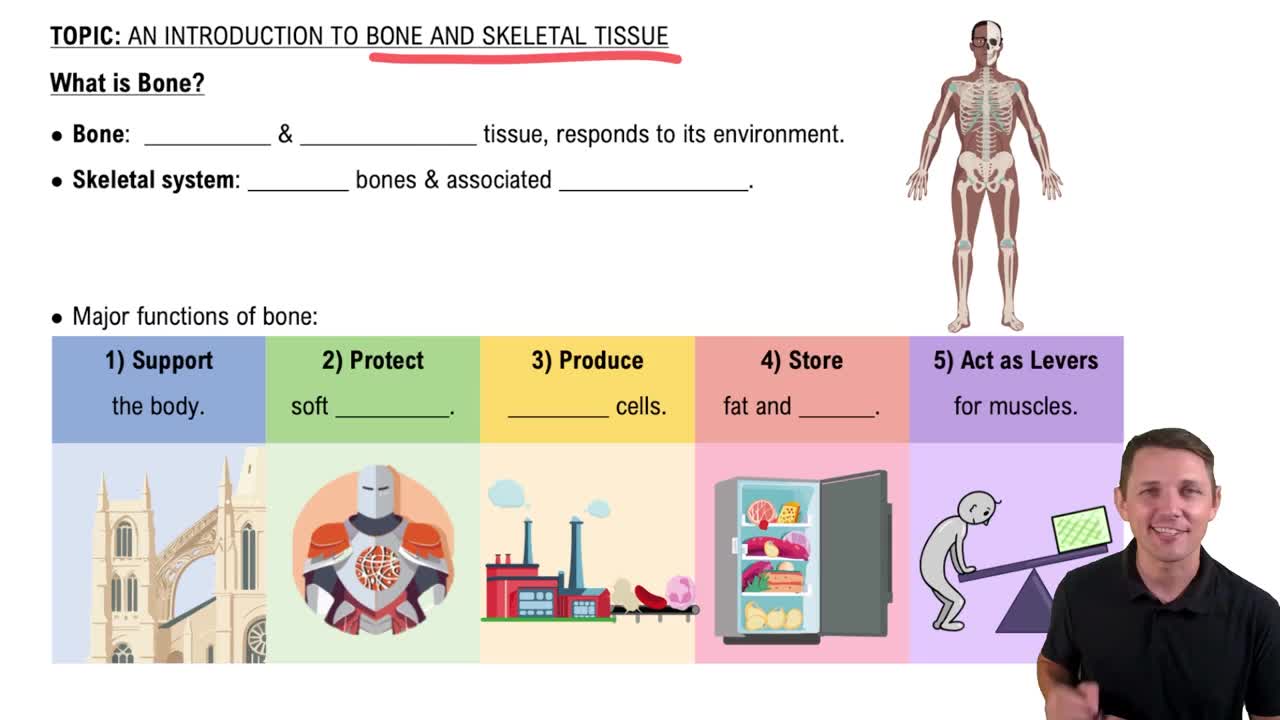
What is the skeletal system made of?
Bones
Joints
Associated Supporting Tissues
What are the main organs of the skeletal system?
Bones
Bones are made up of what tissue?
Osseous Tissue
What are the six functions of the skeletal system?
Protection
Mineral Storage and Acid-base homeostasis
Blood Cell Formation
Fat Storage
Movement
Support
What bones provide protection to underlying organs?
Skull
Sternum
Ribs
Pelvis
What marrow do bones house?
Red Bone Marrow
What is Hematopoiesis?
Blood cell formation
What is yellow bone marrow?
Made of fat cells (adipocytes)
Stores triglycerides
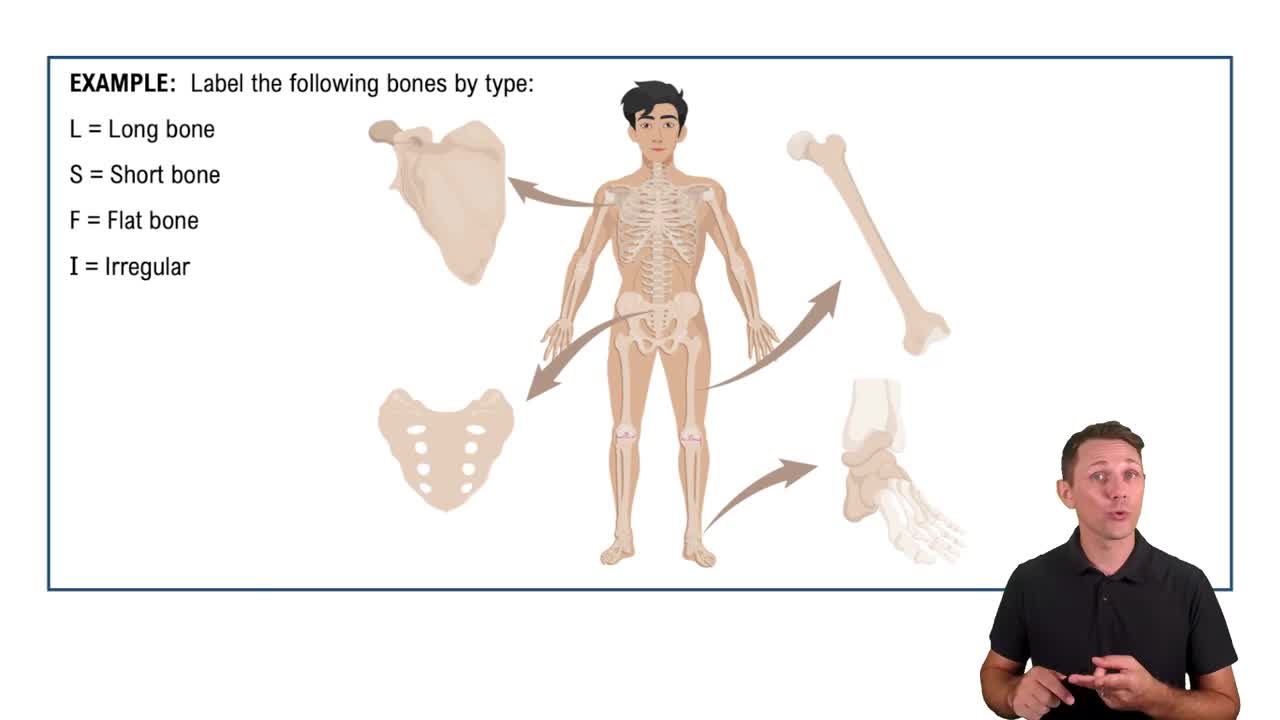
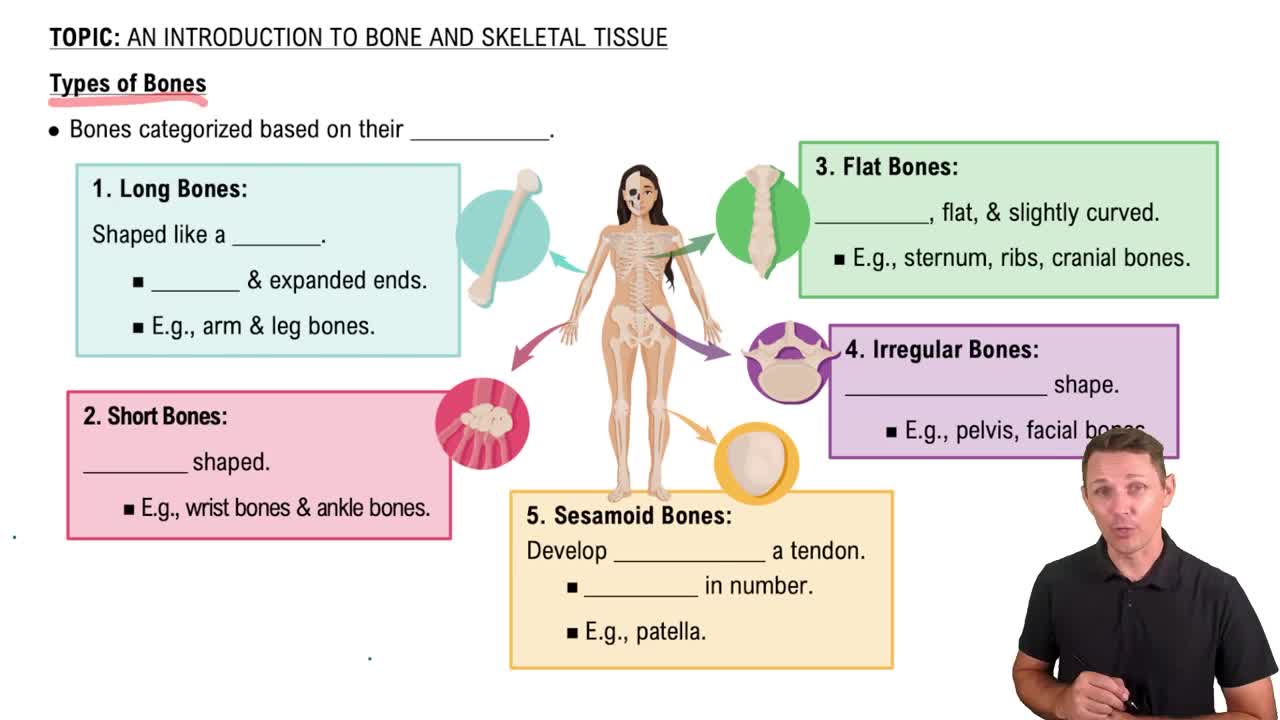
What are the 5 classes of bones?
Long Bones
Short Bones
Flat Bones
Irregular Bones
Sesamoid bones
What is the structure of a long bone?
Periosteum
Diaphysis
Epiphysis
Medullary Cavity
Endosteum
Epiphyseal Lines
What is the membrane that surrounds the bone?
Periosteum
What is the shaft of a long bone called?
Diaphysis
What are the ends of a long bone called?
Epiphysis
What is the Epiphysis covered with?
Hyaline Cartilage (articular cartilage)
What is the purpose of hyaline cartilage?
Absorb shock
Provide smooth surface
Reduce friction
What is the center of the diaphysis called?
Medullary Cavity
What does the type of bone marrow does the Medullary cavity contain?
Yellow bone marrow
What is the membrane that lines the medullary cavity called?
Endosteum
What line separates the proximal and distal epiphyses from the diaphysis?
Epiphyseal Lines
What is the line of hyaline cartilage found in developing bones called?
Epiphyseal plate
What is the bone tissue that is hard and allows bone to resist stresses?
Compact Bone
Unit of compact bone tissue
Osteons
What are two types of bone tissue?
Compact Bone
Spongy Bone
What is the bone tissue that lines compact bone and provides cavity for bone marrow
Spongy Bone
Unit of spongy bone
Trabeculae
Short, Flat, Irregular, and Sesamoid bones do NOT have what?
Diaphysis
Epiphyses
Reduces the weight of the bone
Sinuses
Bones are rich of what?
Nerves
Blood Supply
Bone tissue is composed mostly of what?
Extracellular Matrix
What are two types of extracellular matrix?
Inorganic Matrix
Organic Matrix
Mostly made up of hydroxyapatite crystal (calcium and phosphorus salts)
Makes bones strong and resistant to compression
Makes up 65% of bone's total weight
Inorganic Matrix
Consists of collagen fibers and usual ECM components
Makes up 35% of bone's total weight
Organic Matrix
Most abundant protein in the body that gives bones strength and flexibility
Collagen
What are four types of bone cells?
Osteogenic
Osteoblasts
Osteocytes
Osteoclasts
Osteogenic Cells
Flattened cells
turn into osteoblasts when stimulated by specific chemical signals
Osteoblast Cells
Immature bone cells
lay down bone matrix (collagen)
Perform bone Deposition
Osteocyte Cells
Mature Bone cells
Maintain bone extracellular matrix
Osteoclast Cells
responsible for bone resorption
use enzymes to break down bone matrix
The process of bone formation
Ossification
What are the two types of Ossification?
Intramembranous Ossification
Endochondral Ossification
Intramembranous Ossification are built on model made of _______, and form many ____ bones and _____ and _____.
Membrane of Embryonic Connective Tissue
Flat
Skull
Clavicles
Endochondral Ossification are built on model made of _______, and form _______ bones.
Hyaline Cartilage
All remaining
Incomplete ossification is called
Fontanels
Bones grow in length by _____
Longitudinal growth (epiphyseal plate)
Bones grow in width by _____
Appositional Growth (no epiphyseal plate)
Continuous process of bone formation and loss
Bone Remodeling
When new bone is formed it is called _____
bone deposition
When old bone is removed it is called _____
bone resorption
Skin and tissue around fracture remain intact
Simple fracture
Bone protrudes through the skin and tissues
Compound fracture
What are the four steps in bone repair?
Hematoma forms
Forms soft Callus
Osteoblasts build bony callus (Hard Callus)
Bony Callus is remodeled
Which bone stops growing last in the human body?
Clavicle
Which of the following is not a characteristic of compact bone?
Is the site of hemopoiesis