What is the primary function of the endocrine system?
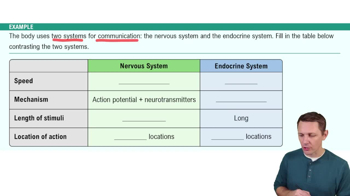
To control and coordinate body activities and maintain homeostasis by releasing hormones that regulate metabolic functions of other cells.
How do the endocrine and nervous systems differ in chemical messenger release?
Hormones are released into the bloodstream by the endocrine system, while neurotransmitters are released into synapses by the nervous system.
Name the four mechanisms of intercellular communication.
Direct communication, paracrine communication, endocrine communication, and neural communication.
What are the three main chemical classes of hormones?
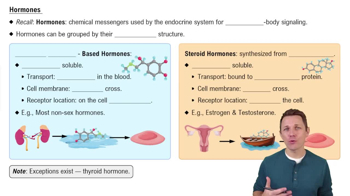
Amine hormones, peptide hormones, and lipid derivatives (including steroid hormones).
Describe the pathway of lipid-soluble hormone action.
Lipid-soluble hormones diffuse through the cell membrane, bind to cytosolic receptors, form a receptor–hormone complex, enter the nucleus, and regulate gene transcription.
How do water-soluble hormones exert their effects on target cells?
They bind to surface receptors, activate G proteins, increase cAMP, and activate protein kinases that phosphorylate proteins to change cell activity.
What is downregulation in hormone receptor activity?
Target cells decrease receptor numbers in response to high hormone levels, reducing cell sensitivity.
Define antagonistic hormone interaction with an example.
One hormone inhibits the effect of another; e.g., insulin lowers blood sugar while glucagon raises it.
What is the role of the hypothalamus in endocrine control?
It integrates nervous and endocrine systems by controlling the pituitary gland and directly stimulating adrenal medulla cells.
What hormones are stored and secreted by the posterior pituitary?
Antidiuretic hormone (ADH) and oxytocin (OXT).
Name two functions of oxytocin.
Stimulates uterine contractions during childbirth and milk ejection during nursing.
What hormone stimulates the thyroid gland to release T3 and T4?
Thyroid-stimulating hormone (TSH) from the anterior pituitary.
What are the main effects of thyroid hormones T3 and T4?
Increase basal metabolic rate, stimulate red blood cell production, increase heart rate, and enhance sensitivity to sympathetic stimulation.
What hormone do parafollicular (C) cells of the thyroid produce and what is its function?
Calcitonin, which lowers blood calcium levels by increasing calcium excretion and bone deposition.
What hormone does the parathyroid gland produce and what is its effect?
Parathyroid hormone (PTH), which increases blood calcium levels by activating osteoclasts, increasing intestinal absorption, and promoting kidney reabsorption.
List the three zones of the adrenal cortex and their primary hormone products.
Zona glomerulosa: mineralocorticoids (aldosterone); Zona fasciculata: glucocorticoids (cortisol); Zona reticularis: androgens (testosterone).
What hormones are released by the adrenal medulla and their main effects?
Epinephrine and norepinephrine; they increase heart rate, blood pressure, blood glucose, and prepare the body for fight-or-flight.
What is the primary hormone produced by the pineal gland and its role?
Melatonin; it regulates circadian rhythms and acts as an antioxidant protecting the CNS.
What hormones do the ovaries produce and their functions?
Estrogen, which regulates female secondary sex characteristics, and progesterone, which prepares the uterus for pregnancy.
What hormones do the testes produce and their functions?
Testosterone, which stimulates male secondary sex characteristics and sperm production, and inhibin, which inhibits FSH and GnRH release.
What are the main hormones produced by the pancreatic islets and their effects?
Alpha cells produce glucagon (raises blood glucose); Beta cells produce insulin (lowers blood glucose); Delta cells produce somatostatin (inhibits insulin and glucagon).
How do insulin and glucagon maintain blood glucose homeostasis?
Insulin lowers blood glucose by promoting uptake and storage; glucagon raises blood glucose by stimulating glycogen breakdown and glucose synthesis.
Name two hormones secreted by the heart and their function.
Atrial natriuretic peptide (ANP) and brain natriuretic peptide (BNP); they inhibit aldosterone release to reduce blood volume and pressure.
What hormone does the thymus produce and its role?
Thymosin, essential for T lymphocyte development and immune response.
How does aging affect the endocrine system?
Hormone production and gland function decline, e.g., reduced cortisol, aldosterone, sex hormones, and altered pituitary structure.
 Back
Back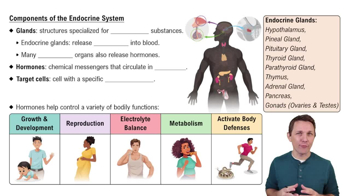
 7:06
7:06