 Back
BackEndocrinology and Hormone Function - Anatomy & Physiology
 7:06
7:06
Terms in this set (23)
Gap junctions, Neurotransmitters, Paracrines, and Hormones.
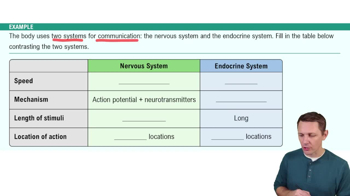
Nervous system uses electrical impulses and neurotransmitters for fast, local effects; endocrine system uses hormones in the bloodstream for slow, widespread effects.
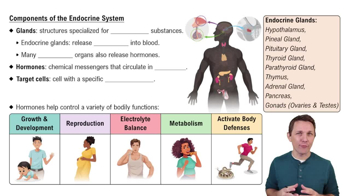
Endocrine glands secrete hormones into the bloodstream affecting distant targets; exocrine glands secrete substances through ducts to external or internal surfaces.
Endocrine (distant targets), Paracrine (nearby cells), and Autocrine (self-targeting) signaling.
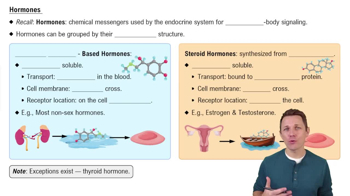
Amine hormones, Peptide hormones, Protein hormones, and Steroid hormones.
By binding to receptor proteins on the plasma membrane, activating enzymes and second messengers inside the cell.
Steroid hormones enter the cell, bind to cytoplasmic receptors, form a hormone-receptor complex, enter the nucleus, and activate gene transcription.
Located at the base of the brain; it regulates the pituitary gland and controls hormone secretion.
Anterior pituitary (adenohypophysis) is glandular tissue; Posterior pituitary (neurohypophysis) is neural tissue and an extension of the hypothalamus.
Dwarfism and Hypothyroidism.
Antidiuretic hormone (ADH) leading to Inappropriate ADH syndrome.
Located anterior to the trachea below the larynx; shaped like a butterfly with two lobes connected by an isthmus.
Triiodothyronine (T3), Thyroxine (T4), and Calcitonin.
C-cells (parafollicular cells) produce calcitonin.
Clusters of endocrine cells: β cells produce insulin, α cells produce glucagon, and δ cells produce somatostatin.
To lower blood glucose by stimulating muscle and adipose tissue to store glycogen and fat after meals.
It raises blood glucose by stimulating gluconeogenesis and glycogenolysis in the liver between meals.
It inhibits secretion of insulin and glucagon and regulates digestive functions locally.
Sex hormones like estrogen, progesterone, and testosterone regulate reproductive functions and secondary sexual characteristics.
Secretion of Atrial Natriuretic Peptide (ANP) which regulates sodium excretion, urine output, and blood pressure.
Angiotensinogen, a precursor in the renin-angiotensin system regulating blood pressure.
Erythropoietin (EPO), which stimulates red blood cell production.
Estrogen and progesterone to regulate pregnancy.