 Back
BackEpithelial Tissues in Anatomy & Physiology
 07:25
07:25
Terms in this set (21)
Single layer of thin, flat cells that reduce friction, control permeability, and allow absorption, secretion, and diffusion. Found in mesothelium, endothelium, nephron portions, cornea, and alveoli.
Multiple layers of thin, flat cells providing physical protection against abrasion, pathogens, and chemical attacks. Keratinized forms epidermis; non-keratinized lines mouth, esophagus, vagina, and tongue.
Single layer of cube-shaped cells involved in secretion, absorption, and limited protection. Located in kidney tubules, glandular ducts, thyroid gland, and pancreas.
Multiple layers that stretch and recoil to accommodate volume changes and protect underlying tissues from urine toxins. Found in urinary tract, renal calyces, ureters, bladder, and part of urethra.
Single layer of tall, column-shaped cells with nuclei aligned at the same height. Functions in absorption and secretion. Lines stomach, intestines, and parts of female reproductive tract.
Single layer appearing stratified due to nuclei at different levels. Secretes mucus and ciliated types move mucus. Found in respiratory tract and some male reproductive regions.
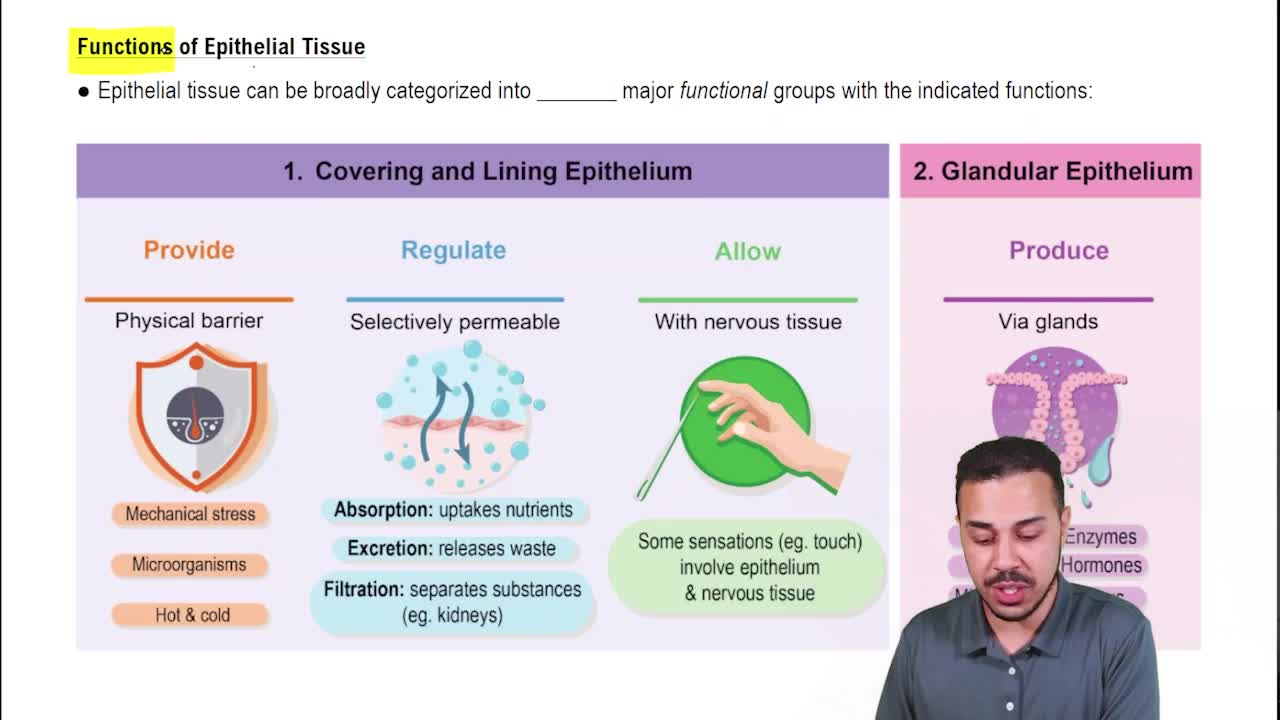
Simple epithelium is a single layer for secretion, absorption, and filtration; stratified epithelium has multiple layers for protection against abrasion.
Forms the epidermis providing a tough, water-resistant barrier against environmental damage.
Lines wet, high-friction surfaces like mouth, esophagus, vagina, and tongue, protecting against abrasion without a tough keratin layer.
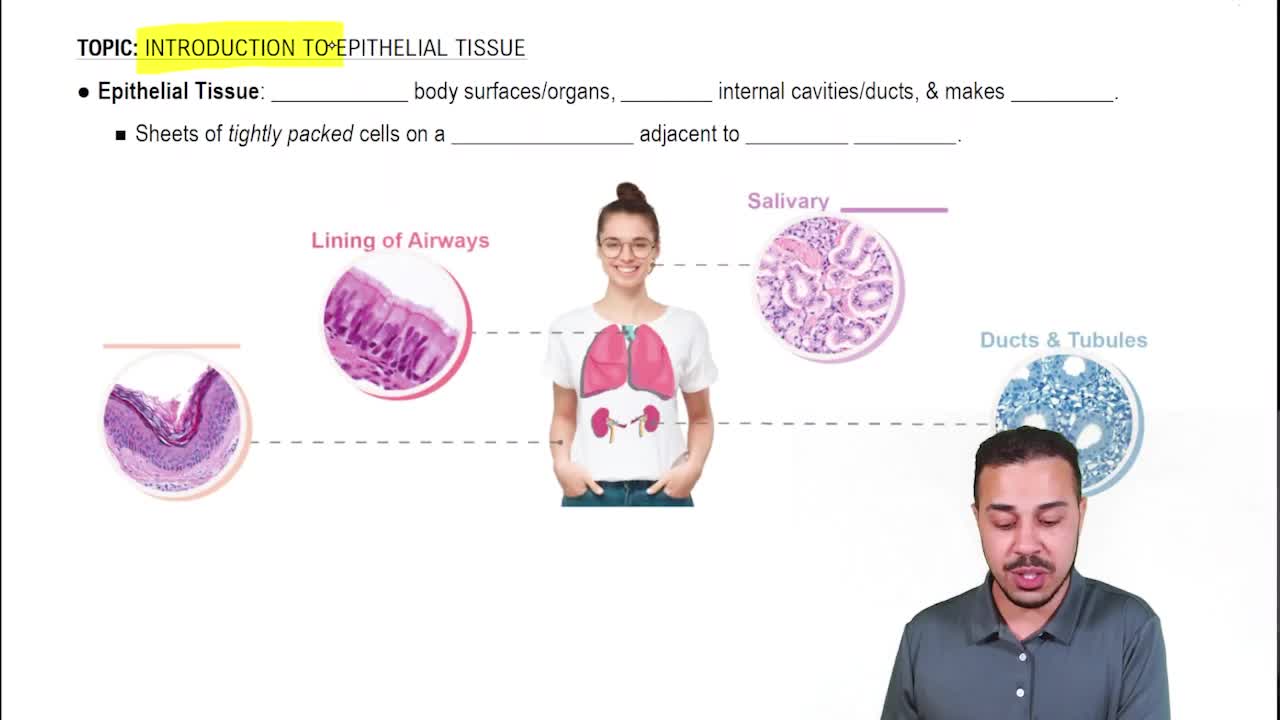
Mesothelium, endothelium, portions of nephron, cornea, and alveoli in lungs.
Skin epidermis (keratinized) and lining of mouth, esophagus, vagina, and tongue (non-keratinized).
Kidney tubules, glandular ducts, thyroid gland, and pancreas.
Urinary tract including renal calyces, ureters, urinary bladder, and part of urethra.
Lines stomach, small and large intestines, and parts of female reproductive tract like fallopian tubes.
Respiratory tract (nasal cavity, trachea, bronchi) and some male reproductive tract regions (epididymis, larger gland ducts).
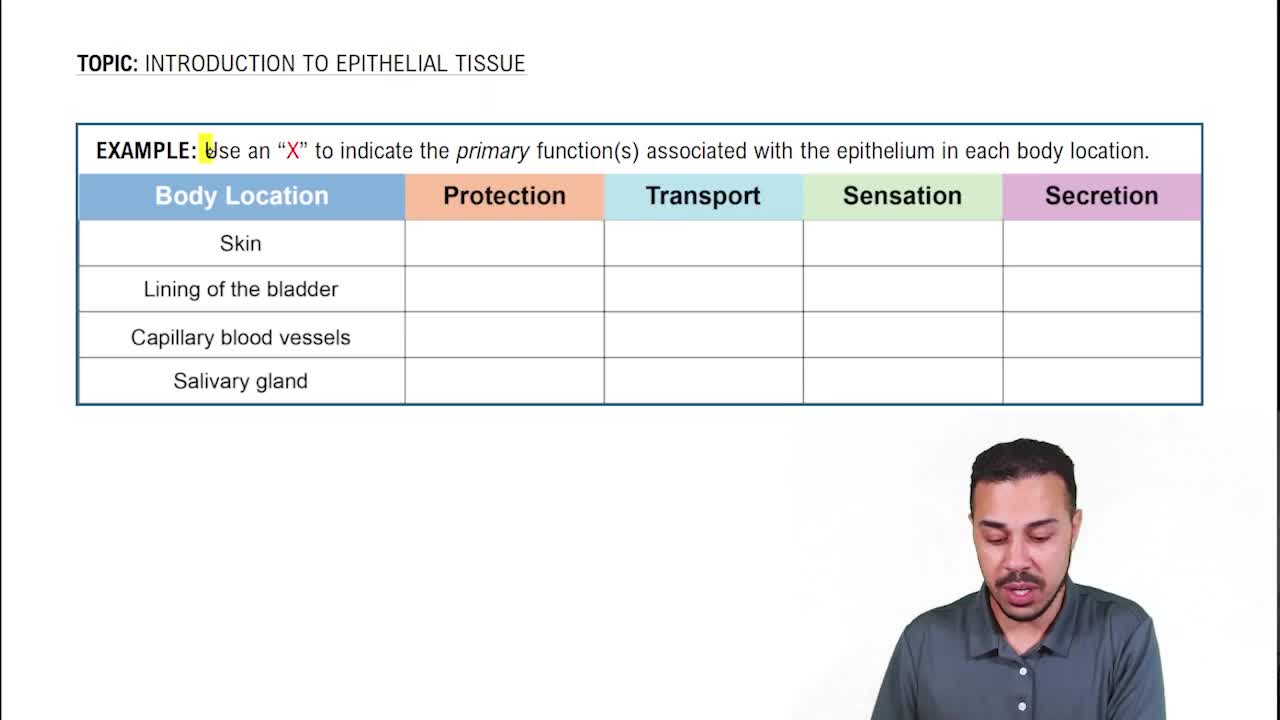
Facilitates diffusion and controls permeability with minimal friction.
Provides protection against physical and chemical damage.
Involved in secretion and absorption with some protection.
Allows stretching and recoiling to accommodate volume changes in urinary organs.
Specialized for absorption and secretion in digestive and reproductive tracts.
Secretes mucus and uses cilia to move particles, especially in respiratory tract.