 Back
BackFundamentals of Anatomy & Physiology: Chemical Level of Organization
 02:13
02:13
Terms in this set (29)
Matter is anything that takes up space and has mass, made up of atoms that join to form chemicals with different characteristics.
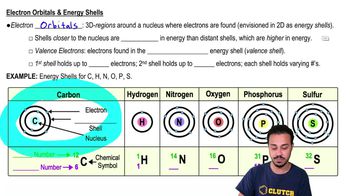
Protons (positive charge), neutrons (neutral), and electrons (negative charge).
The atomic number is the number of protons in the nucleus of an atom.
An isotope is a version of an element with the same number of protons but different numbers of neutrons, affecting the mass number.
The valence shell is the outermost electron shell that determines an atom's bonding behavior.
A molecule is two or more atoms joined by strong bonds; a compound is a molecule with atoms of different elements.
Ionic bonds, covalent bonds, and hydrogen bonds.
By attraction between cations (positive ions) and anions (negative ions) after electron transfer.
A covalent bond is a strong bond formed by sharing one or more pairs of electrons between atoms.
Nonpolar covalent bonds share electrons equally; polar covalent bonds share electrons unequally, creating partial charges.
Weak polar bonds between molecules based on electrical attractions between slight positive and negative charges.
Solid (constant volume and shape), liquid (constant volume, changes shape), and gas (changes volume and shape).
Breaks chemical bonds, splitting a molecule into smaller parts (catabolism).
Forms chemical bonds by combining smaller molecules into larger ones (anabolism).
Involves decomposition followed by synthesis, exchanging parts between molecules.
A reaction where products can revert to reactants, seeking equilibrium with balanced reaction rates.
Enzymes are protein catalysts that lower activation energy, speeding up reactions without being consumed.
Exergonic reactions release energy; endergonic reactions absorb energy.
Inorganic compounds lack carbon-hydrogen bonds (e.g., water, salts); organic compounds contain carbon and hydrogen (e.g., carbohydrates, proteins).
Because it dissolves many molecules due to its polar nature, forming hydration spheres around ions and polar molecules.
Electrolytes are inorganic ions that conduct electricity in solution and are vital for body functions.
Hydrophilic compounds interact with water (ions, polar molecules); hydrophobic compounds repel water (nonpolar molecules, fats).
pH is the negative logarithm of hydrogen ion concentration, indicating acidity or alkalinity of a solution.
Between 7.35 and 7.45, slightly basic.
Buffers stabilize pH by neutralizing strong acids or bases, often involving weak acids and their salts.
Monomers are small, identical molecules that join to form polymers, large macromolecules.
Carbohydrates contain carbon, hydrogen, and oxygen in a 1:2:1 ratio.
Fatty acids, eicosanoids, glycerides, steroids, phospholipids, and glycolipids.
Primary (amino acid sequence), secondary (alpha helix or beta sheet), tertiary (3D folding), and quaternary (multiple polypeptide subunits).