 Back
BackIntegumentary System - Anatomy & Physiology
 06:54
06:54
Terms in this set (24)
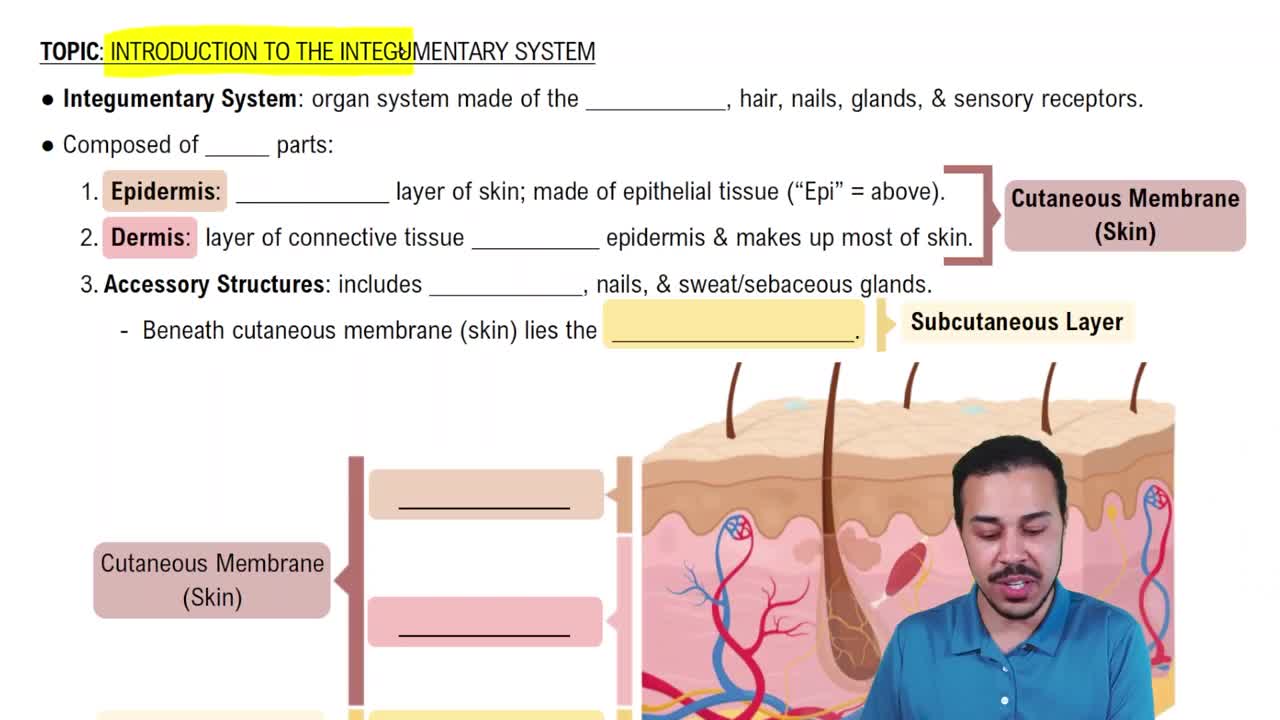
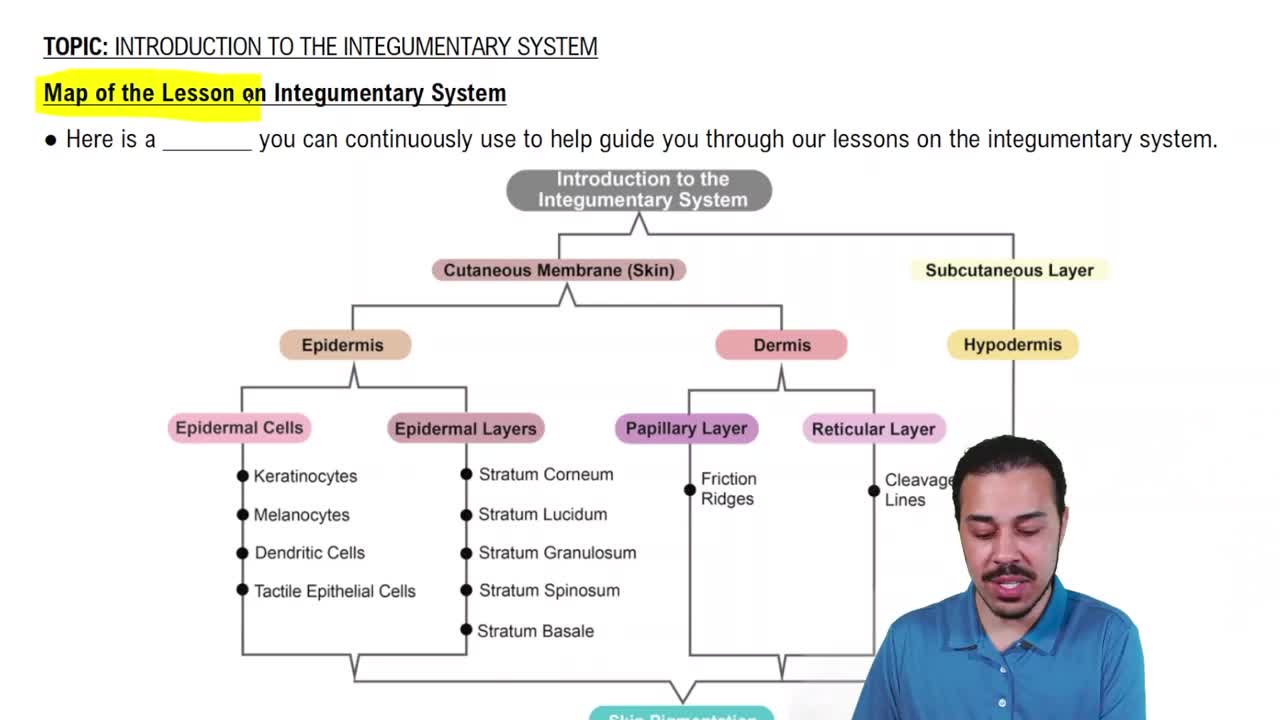
The epidermis (most superficial) and the dermis.
The epidermis is made of epithelial tissue.
Keratinocytes and melanocytes.
Stratum basale; contains cells that divide to replace others and melanocytes for pigment.
Stratum spinosum.
Stratum granulosum.
Stratum lucidum.
Stratum corneum; cells continuously shed and are multiple layers of dead cells for protection.
The dermis is located deep to the epidermis.
1. Papillary layer: superficial, contains capillaries and elastic fibers.
2. Reticular layer: deeper, dense irregular connective tissue with collagen fibers.
Located below the dermis, it anchors skin to underlying tissues, stores fat, and provides insulation.
Melanin (amount produced varies), carotene (yellow-orange), and hemoglobin (gives pinkish color).
Sweat glands (eccrine and apocrine) and sebaceous (oil) glands.
Secrete mostly water directly onto the skin surface.
Secrete into hair follicles; secretion may develop odor due to bacterial action.
Secrete sebum which softens hair and skin; secrete into hair follicles.
Hair is made of dead cells containing keratin. Functions include protection from UV light and physical damage.
Muscles extending from dermis to hair follicle; cause hair to stand up (goosebumps) for insulation.
Nail plate (visible), nail root (buried in epidermal fold), and nail matrix (growth area). The lunula is the crescent-shaped, pale area.
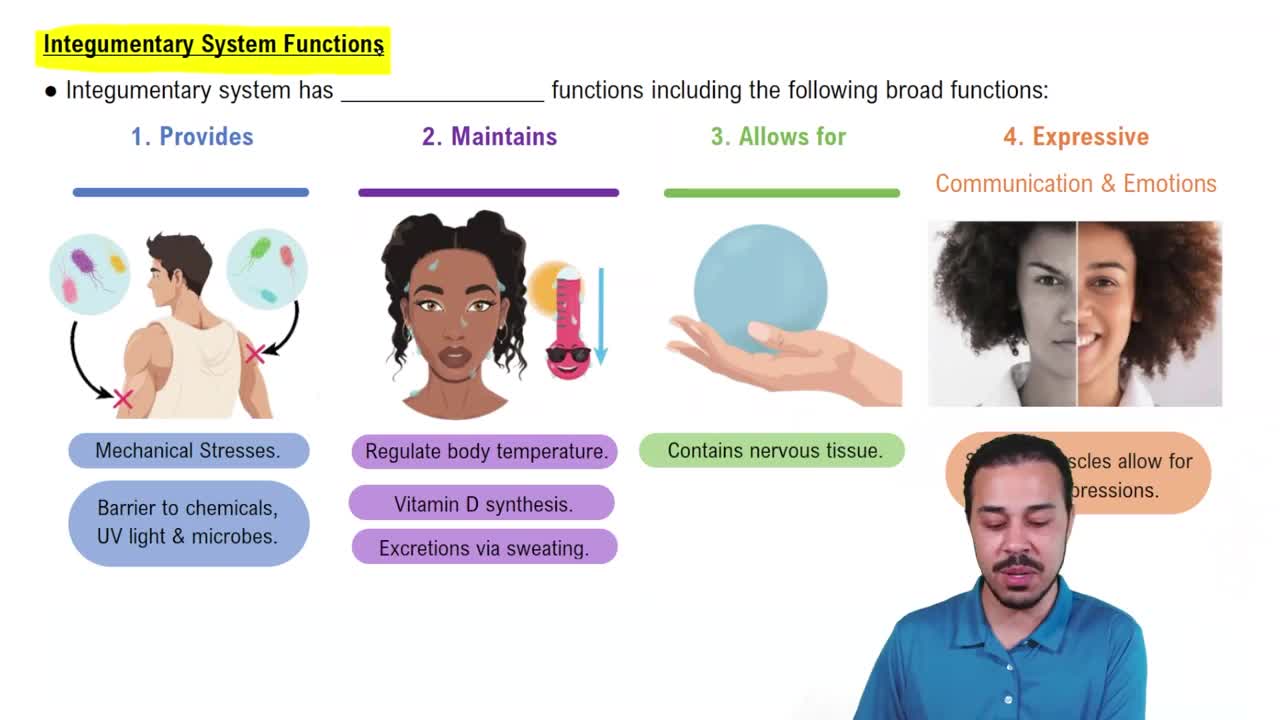
Thermoregulation, protection, and cutaneous sensations.
Stage 1: Reddened skin.
Stage 2: Partial thickness skin loss.
Stage 3: Full thickness skin loss.
Stage 4: Full thickness with tissue damage.
Affect only the epidermis. Symptoms include redness and pain.
Affect the epidermis and upper dermis. Symptoms include redness, pain, and blisters.
Affect the epidermis, entire dermis, and possibly deeper tissues. Symptoms include white or charred skin and numbness; usually require grafting.