Skip to main content
Anatomy & Physiology
My Course
Learn
Exam Prep
AI Tutor
Study Guides
Textbook Solutions
Flashcards
Explore
Try the app
My Course
Learn
Exam Prep
AI Tutor
Study Guides
Textbook Solutions
Flashcards
Explore
Try the app
Back
Integumentary System - Anatomy & Physiology
You can tap to flip the card.
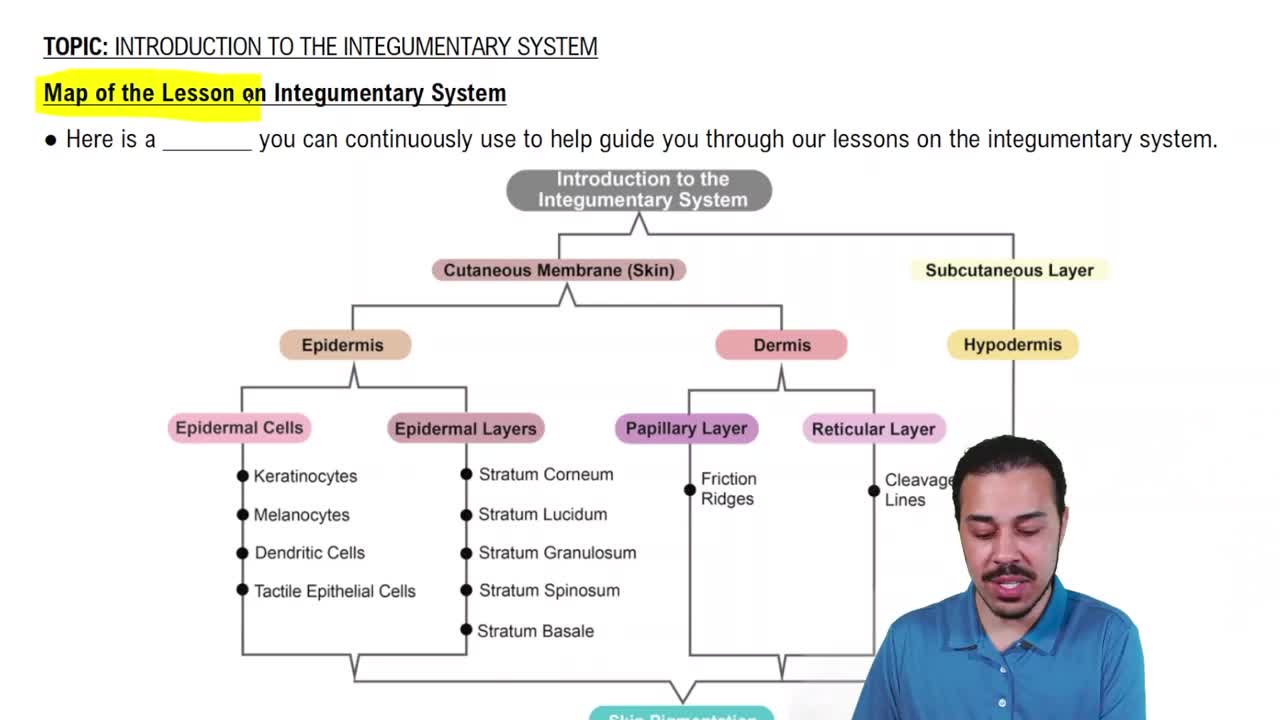
Layers of the skin
You can tap to flip the card.
👆
Layers of the skin
The skin consists of the superficial
epidermis
, the deeper
dermis
, and the underlying
hypodermis
.
Track progress
Control buttons has been changed to "navigation" mode.
1/22
Recommended videos
06:54
Introduction to the Integumentary System
19316
views
652
rank
3
comments
03:40
Integumentary System Functions
12589
views
322
rank
1
comments
02:47
Map of the Lesson on Integumentary System
10986
views
508
rank
2
comments
Terms in this set (22)
Hide definitions
Layers of the skin
The skin consists of the superficial
epidermis
, the deeper
dermis
, and the underlying
hypodermis
.
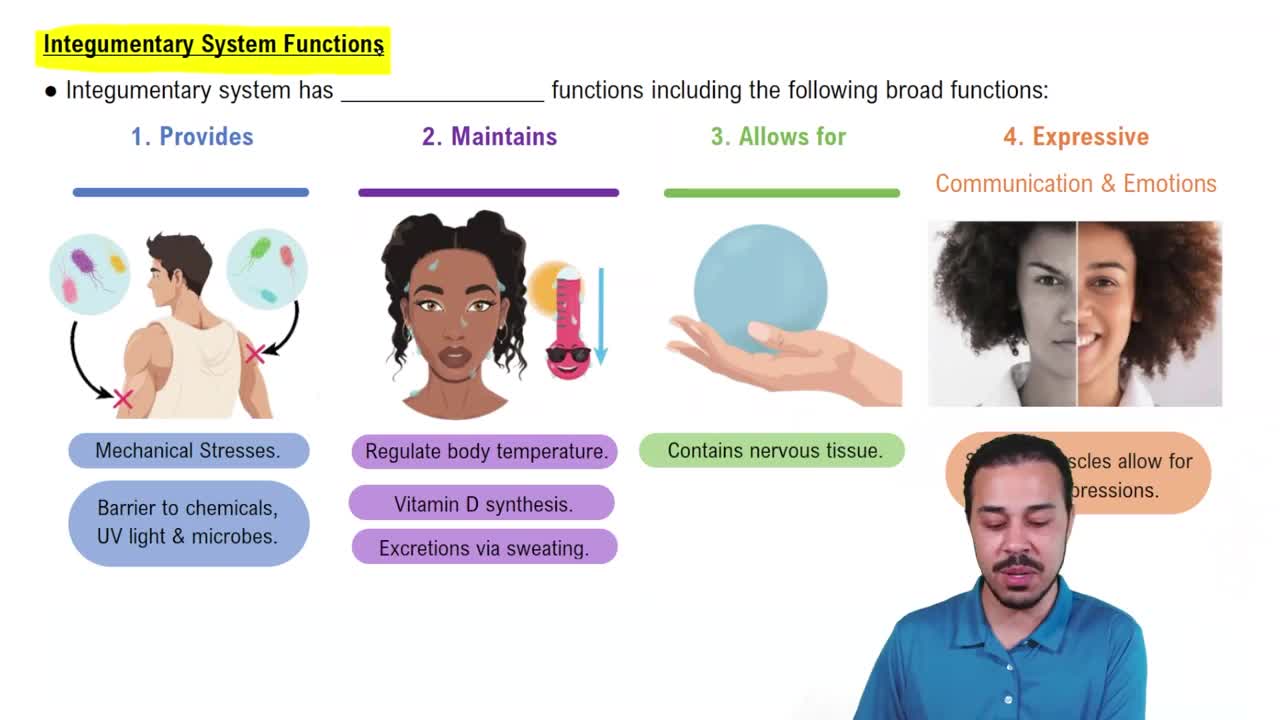
Functions of the integument
The integument provides
protection
,
sensation
,
thermoregulation
,
excretion
, and
vitamin D synthesis
.
Main cell type in the epidermis
Most epidermal cells are
keratinocytes
, which produce the protein
keratin
.
Role of dendritic cells in the epidermis
Dendritic cells are
phagocytes
located in the
stratum spinosum
that help defend against pathogens.
Function of tactile cells
Tactile cells are
sensory receptors
found in the
stratum basale
that detect touch.
Difference between thick and thin skin
Thick skin has all five epidermal strata including a thick
stratum corneum
, while thin skin lacks the
stratum lucidum
and has thinner layers.
Layers of the dermis
The dermis has two layers: the superficial
papillary layer
and the deeper
reticular layer
.
Structures in the papillary layer
The papillary layer contains
dermal papillae
and
epidermal ridges
that increase surface area for attachment.
Cause of tension (cleavage) lines in skin
Tension lines are caused by gaps between collagen fibers in the
reticular layer
of the dermis.
Primary pigment influencing skin color
The main pigment affecting skin color is
melanin
.
Other substances affecting skin color
Besides melanin,
carotene
and
hemoglobin
also influence skin color.
Composition and function of hair
Hair (pili) is made of dead, keratinized keratinocytes and serves protective and sensory functions.
Origin of nails
Nails are derived from the
epidermis
and are located at the ends of digits.
Location and secretion type of sweat glands
Sweat glands are in the dermis and secrete sweat by
merocrine secretion
.
Most common type of sweat gland
The
eccrine sweat gland
is the most common sweat gland.
Other types of sweat glands
Other sweat glands include
apocrine glands
,
ceruminous glands
, and
mammary glands
.
Secretion method of sebaceous glands
Sebaceous glands secrete
sebum
into hair follicles by
holocrine secretion
.
Types of skin pathologies
Skin pathologies include
wounds
,
burns
, and
cancer
.
Rule of nines
The rule of nines estimates the percentage of body surface area affected by burns.
Basal cell carcinoma origin
Basal cell carcinoma arises from keratinocytes in the
stratum basale
.
Squamous cell carcinoma origin
Squamous cell carcinoma originates from keratinocytes in the
stratum spinosum
.
Malignant melanoma origin and behavior
Malignant melanoma arises from melanocytes in the
stratum basale
and is highly aggressive.
 BackBack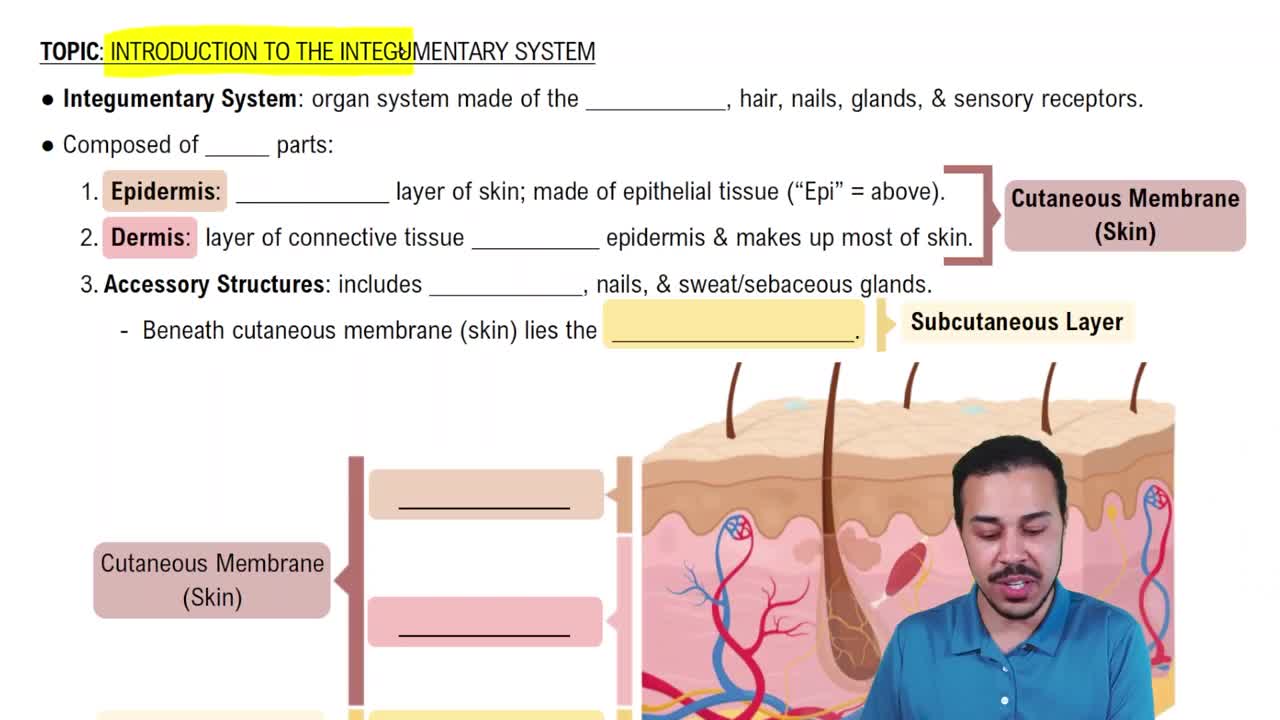
 06:54
06:54