 Back
BackIntegumentary System - Anatomy & Physiology
 06:54
06:54
Terms in this set (21)
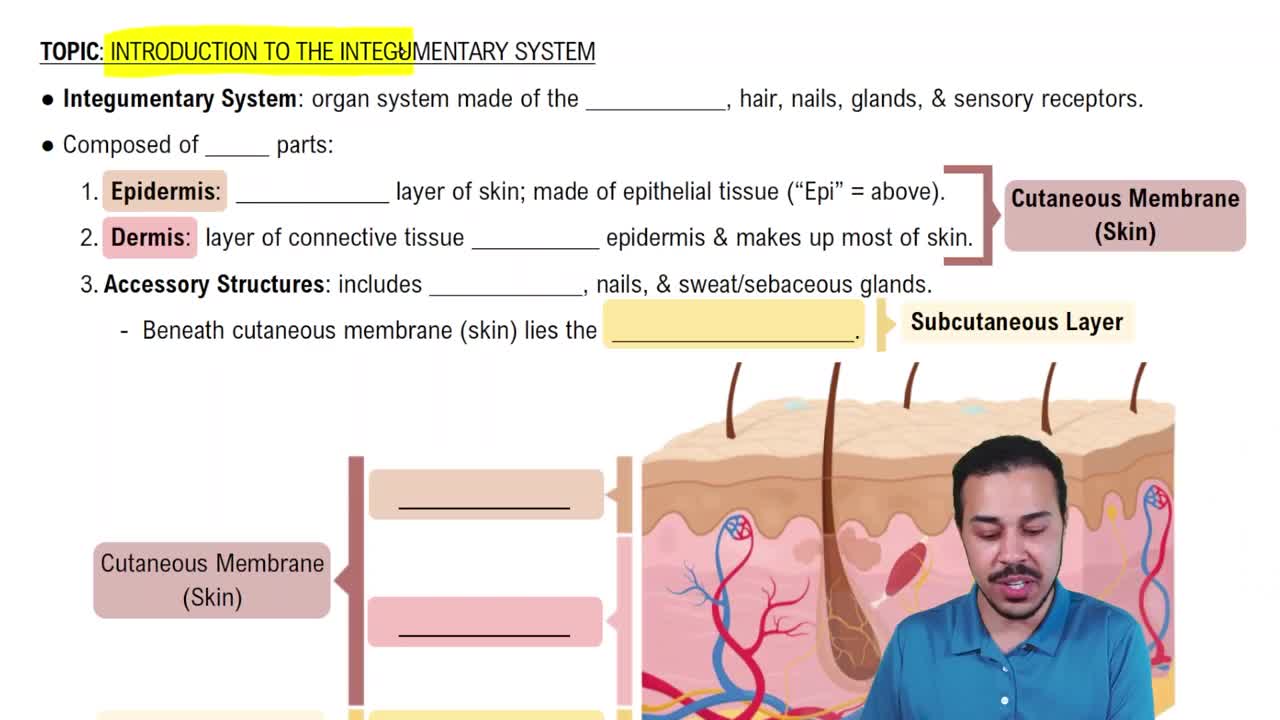
The top layer of skin that provides protection.
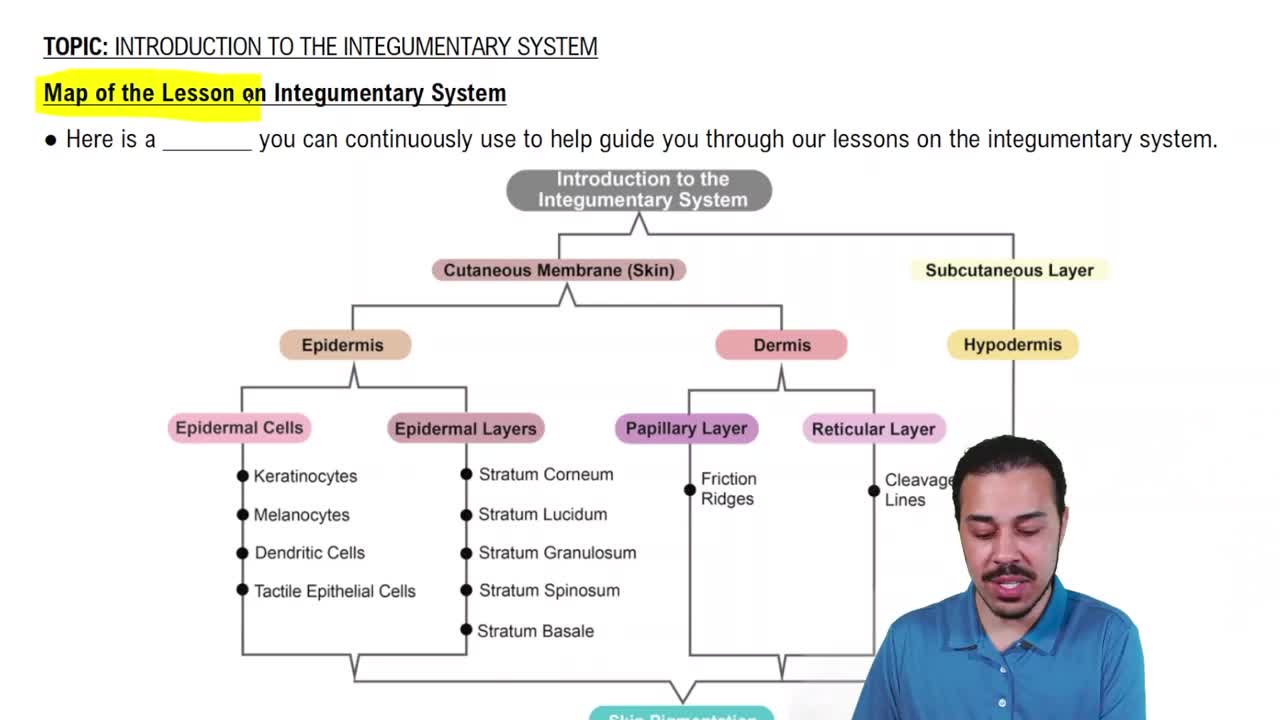
The primary structural cell of the epidermis.
A star-shaped cell located in the deepest layer of the epidermis responsible for pigment production.
The outermost surface layer of the epidermis composed of dead cells.
A thin, clear, translucent layer of dead skin cells found in thick skin.
The middle layer of the epidermis where cells have a grainy appearance.
The 'spiny layer' of the epidermis located above the basal layer.
The deepest single layer of the epidermis where new cells are generated.
Layer beneath the epidermis composed of papillary and reticular layers; supports and nourishes the epidermis and contains sensory receptors and blood vessels.
Tiny nipple-like projections of the dermis that extend into the epidermis.
Large onion-shaped sensory receptor located deep in the dermis or hypodermis that detects pressure and vibration.
Small sensory nerve ending located high in the dermal papillae that detects light touch.
The bottom layer beneath the skin; not technically part of the integumentary system.
The gland responsible for producing sweat.
A small sac-like exocrine gland in the dermis that secretes sebum (oil).
Structure that protects the skull and provides delicate touch sensations on the body surface.
Protect and support the tips of fingers and toes.
A tiny band of smooth muscle attached to the base of a hair follicle that causes hair to stand up.
Because it consists of multiple tissues working together to perform life-sustaining functions.
Downward projections of the epidermis into the dermis that create unique patterns visible on fingerprints, palmprints, and footprints.
They are 100% unique to each person and remain permanent throughout life, making them reliable for identification.