 Back
BackLymphatic System - Anatomy & Physiology
 3:32
3:32
Terms in this set (21)
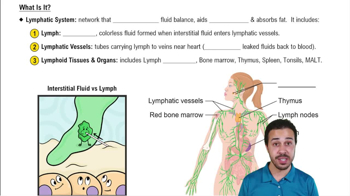
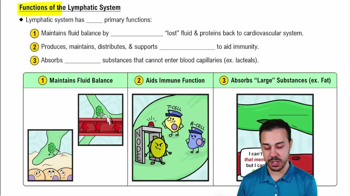
Returns excess interstitial fluid to the bloodstream, absorbs dietary fats via lacteals, and provides immune defense by filtering lymph and housing lymphocytes.
Blind-ended lymphatic capillaries located in tissues.
They have thin walls with valves that prevent lymph from flowing backward.
Into lymphatic trunks and ducts, specifically the right lymphatic duct and thoracic duct, which empty into subclavian veins.
Avascular tissues such as cartilage, cornea, bone marrow, and the central nervous system.
Interstitial fluid that leaks out of blood capillaries into surrounding tissues.
Interstitial fluid → lymphatic capillaries → lymphatic vessels → lymph nodes → lymphatic trunks → lymphatic ducts → venous circulation.
Skeletal muscle contractions, respiratory movements, and valves in lymphatic vessels.
Filter lymph, house lymphocytes, and initiate immune responses.
Cervical, axillary, and inguinal regions.
Trap pathogens entering through the mouth and nose; located in the pharyngeal region (palatine, pharyngeal, lingual tonsils).
Filters blood, removes old red blood cells, stores platelets, and initiates immune responses.
Site of T cell maturation, located superior to the heart.
Peyer’s patches in intestines and the appendix.
Diffuse tissue has loosely arranged lymphocytes; follicular tissue has densely packed lymphocytes with germinal centers for B cell proliferation.
Consists of a capsule, cortex with follicles, and medulla containing cords and sinuses.
Spleen filters blood and removes old RBCs; lymph nodes filter lymph and activate lymphocytes.
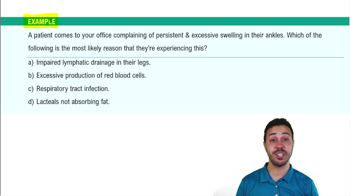
Swelling caused by accumulation of lymph due to impaired lymphatic drainage.
Enlargement of lymph nodes often due to infection or cancer.
Cancer originating in lymphatic tissue.
Enlargement of the spleen caused by infection or blood disorders.