Skip to main content
Anatomy & Physiology
My Course
Learn
Exam Prep
AI Tutor
Study Guides
Textbook Solutions
Flashcards
Explore
Try the app
My Course
Learn
Exam Prep
AI Tutor
Study Guides
Textbook Solutions
Flashcards
Explore
Try the app
Back
Skeletal Muscles of the Lumbopelvic Region
You can tap to flip the card.
Erector spinae group muscles
You can tap to flip the card.
👆
Erector spinae group muscles
Includes iliocostalis, longissimus, and spinalis; they extend and laterally flex the vertebral column and help maintain posture.
Track progress
Control buttons has been changed to "navigation" mode.
1/20
Recommended videos
Guided course
6:31
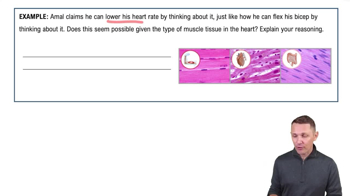
Types of Muscle Tissue
15327
views
421
rank
1
comments
Guided course
2:00
Introduction to Muscles and Muscle Tissue Example 1
12610
views
264
rank
Guided course
4:36
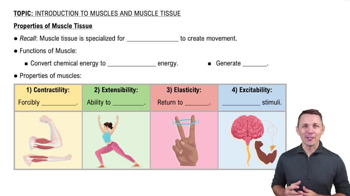
Properties of Muscle Tissue
21082
views
603
rank
2
comments
Terms in this set (20)
Hide definitions
Erector spinae group muscles
Includes iliocostalis, longissimus, and spinalis; they extend and laterally flex the vertebral column and help maintain posture.
Function of the quadratus lumborum
Laterally flexes the vertebral column, helps with lower back extension, and stabilizes the pelvis.
Role of the iliopsoas muscle
Flexes the hip joint and trunk; important for walking, running, and sitting up from lying down.
Primary actions of the gluteus maximus
Extends and laterally rotates the hip; important for rising from sitting, climbing, and running.
Functions of gluteus medius and minimus
Abduct and medially rotate the thigh; stabilize the pelvis during walking.
Pelvic floor muscles and their functions
Includes levator ani and coccygeus; support pelvic organs, assist in continence, and aid childbirth.
Main functions of lumbopelvic muscles
Stabilize and move the lower back and pelvis, enable hip movements, and support pelvic organs.
Muscle group responsible for vertebral column extension
Erector spinae group (iliocostalis, longissimus, spinalis).
Muscle that stabilizes the pelvis during walking
Gluteus medius and minimus.
Muscle important for hip flexion and trunk movement
Iliopsoas (psoas major and iliacus).
Muscle group that helps maintain posture in the lower back
Erector spinae group.
Muscle that laterally flexes the vertebral column and stabilizes the pelvis
Quadratus lumborum.
Muscle group that supports pelvic organs and assists in continence
Pelvic floor muscles (levator ani, coccygeus).
Muscle action important for rising from a sitting position
Gluteus maximus extends and laterally rotates the hip.
Muscles involved in hip abduction
Gluteus medius and minimus.
Muscle group that flexes the hip joint
Iliopsoas.
Muscle that helps with lateral flexion of the vertebral column
Quadratus lumborum.
Muscle group that extends and laterally flexes the vertebral column
Erector spinae group.
Pelvic floor muscles role in childbirth
They support pelvic organs and play a role in childbirth.
Importance of lumbopelvic muscles for core stability
They are essential for posture, core stability, and movements like bending, lifting, and walking.
 BackBack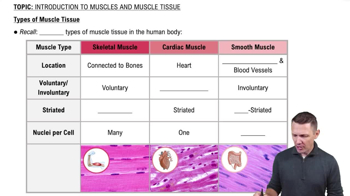
 6:31
6:31