 Back
BackTypes of Leukocytes in Anatomy & Physiology
 3:26
3:26
Terms in this set (20)
Leukocytes are white blood cells involved in the body's immune response.
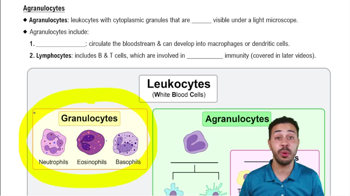
Granulocytes and agranulocytes.
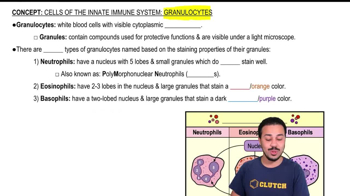
Leukocytes with visible granules in their cytoplasm, including neutrophils, eosinophils, and basophils.
Leukocytes without visible granules, including lymphocytes and monocytes.
Neutrophils are the most abundant leukocytes and act as first responders to bacterial infection by phagocytosis.
Eosinophils combat parasitic infections and participate in allergic reactions.
Basophils release histamine and other chemicals during inflammatory and allergic responses.
Lymphocytes are key in adaptive immunity, including B cells, T cells, and natural killer cells.
Monocytes differentiate into macrophages and dendritic cells to phagocytize pathogens and present antigens.
Neutrophils are the most abundant type of leukocytes in the blood.
Eosinophils and basophils play major roles in allergic responses.
Lymphocytes (B cells and T cells) are central to adaptive immunity.
To phagocytize pathogens and dead cells and present antigens to lymphocytes.
By releasing histamine and other mediators that increase blood vessel permeability.
Eosinophils target parasitic worms and modulate allergic inflammation.
Granulocytes have visible cytoplasmic granules; agranulocytes do not.
Monocytes can differentiate into dendritic cells for antigen presentation.
Neutrophils typically live for a few hours to a few days in tissues.
Memory B cells and memory T cells provide long-term immunity.
NK cells destroy virus-infected and tumor cells without prior sensitization.