
Textbook Question
Which neurotransmitter(s) is/are used by sympathetic postganglionic neurons?
a. Epinephrine
b. Norepinephrine
c. Acetylcholine
d. Both a and b
e. All of the above
773
views

 Verified step by step guidance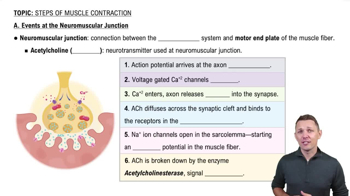
 5:56
5:56
 2:47
2:47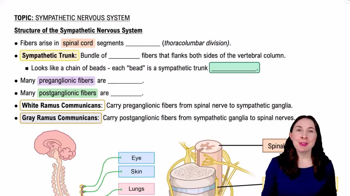 7:55
7:55Which neurotransmitter(s) is/are used by sympathetic postganglionic neurons?
a. Epinephrine
b. Norepinephrine
c. Acetylcholine
d. Both a and b
e. All of the above
Many chemical warfare agents, such as the poisonous gas sarin, block the enzyme acetylcholinesterase in the synaptic cleft. What effects will this poison have on muscle contraction? What effects will it have on the autonomic nervous system? What symptoms would you expect to see from this poison?
Which cranial nerves would be affected by a drug that stimulates the parasympathetic nervous system? Predict potential adverse effects that one might experience.
A patient, Dr. Young, has both asthma and high blood pressure. Her physician prescribed the drug propranolol to treat her hypertension; this drug blocks all types of β-adrenergic receptors. She also takes the drug albuterol for asthma, which activates β2 receptors on bronchial smooth muscle. Will the pairing of these two drugs cause problems for Dr. Young? Explain.
Mr. Chevalier has been diagnosed with Horner syndrome, which is caused by dysfunction of the sympathetic neurons in the superior cervical ganglion that innervate structures of the head, face, and neck. What symptoms is Mr. Chevalier likely to face due to his disease? Explain.
Differentiate between adrenergic and cholinergic receptors.