Ch. 16 The Endocrine System
Amerman - Human Anatomy & Physiology 2nd Edition
Amerman2nd EditionHuman Anatomy & PhysiologyISBN: 9780136873822Not the one you use?Change textbook
Chapter 16, Problem 7

The thyroid gland consists of:
a. Follicle cells that secrete calcitonin
b. Spherical thyroid follicles that contain iodine-containing colloid
c. Parafollicular cells that produce thyroid hormones
d. Spherical thyroid follicles that surround parathyroid hormone–secreting cells

Verified step by step guidance
1
Step 1: Begin by identifying the primary components of the thyroid gland. The thyroid gland is an endocrine organ located in the neck, and its main functional units are the thyroid follicles and parafollicular cells.
Step 2: Understand the role of thyroid follicles. These spherical structures are lined by follicle cells, which are responsible for producing thyroid hormones (T3 and T4). Inside the follicles, there is a colloid substance that contains iodine, essential for hormone synthesis.
Step 3: Clarify the function of parafollicular cells (also known as C cells). These cells are located outside the thyroid follicles and are responsible for secreting calcitonin, a hormone involved in calcium homeostasis.
Step 4: Eliminate incorrect options based on the anatomy and physiology of the thyroid gland. For example, follicle cells do not secrete calcitonin, and parathyroid hormone is secreted by the parathyroid glands, not the thyroid follicles.
Step 5: Match the correct description of the thyroid gland to the options provided. Focus on the accurate anatomical and functional details, such as spherical thyroid follicles containing iodine-rich colloid and parafollicular cells producing calcitonin.

Verified video answer for a similar problem:

This video solution was recommended by our tutors as helpful for the problem above.
Was this helpful?

Key Concepts

Here are the essential concepts you must grasp in order to answer the question correctly.

Thyroid Gland Structure

The thyroid gland is composed of spherical structures called thyroid follicles, which are lined with follicle cells. These cells are responsible for synthesizing and secreting thyroid hormones, primarily thyroxine (T4) and triiodothyronine (T3), which regulate metabolism. The follicles contain a colloid rich in thyroglobulin, a precursor to these hormones, and iodine is essential for their production.
Recommended video:
Guided course
3:02
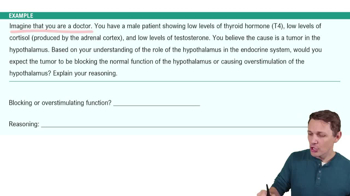
The Hypothalamus and Pituitary Gland Example 2

Calcitonin and Parafollicular Cells

Parafollicular cells, also known as C cells, are located in the thyroid gland and produce calcitonin, a hormone that helps regulate calcium levels in the blood. Calcitonin lowers blood calcium levels by inhibiting osteoclast activity in bones and promoting calcium excretion in the kidneys. Understanding the role of these cells is crucial for comprehending calcium homeostasis.
Recommended video:
05:33
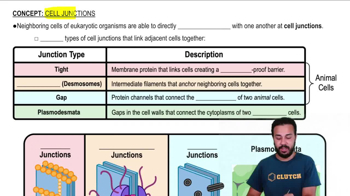
Cell Junctions

Parathyroid Hormone

Parathyroid hormone (PTH) is secreted by the parathyroid glands, which are separate from the thyroid gland but often discussed together due to their proximity. PTH plays a critical role in regulating calcium levels in the body by increasing calcium absorption in the intestines, reabsorption in the kidneys, and releasing calcium from bones. This balance between PTH and calcitonin is vital for maintaining calcium homeostasis.
Recommended video:
Guided course
13:06
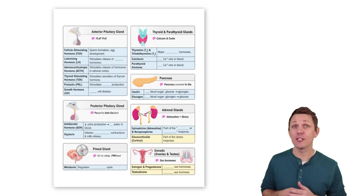
Review of Major Hormones