
The pericardial cavity is located between:
a. The parietal pericardium and the fibrous pericardium.
b. The fibrous pericardium and the myocardium.
c. The parietal pericardium and the visceral pericardium.
d. The epicardium and the endocardium.
Verified step by step guidance
The pericardial cavity is located between:
a. The parietal pericardium and the fibrous pericardium.
b. The fibrous pericardium and the myocardium.
c. The parietal pericardium and the visceral pericardium.
d. The epicardium and the endocardium.
Mark the following statements as true or false. If a statement is false, correct it to make a true statement.
The heart consists of two superior ventricles and two inferior atria.
Mark the following statements as true or false. If a statement is false, correct it to make a true statement.
The heart plays a role in the regulation of blood pressure and secretes the hormone atrial natriuretic peptide.
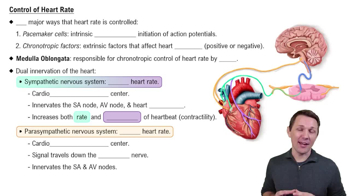
A newer drug, ivabradine, lowers the heart rate by blocking the nonselective HCN cation channels. Why would this action decrease the heart rate? Would this drug have an effect on pacemaker cells, contractile cells, or both? Explain.
An experimental toxin makes the refractory period of cardiac muscle cells equal in length to that of skeletal muscle fibers. Predict the consequences of this toxin.
You are an athletic trainer who is working with someone planning to run a marathon. Your trainee tells you to give him a workout that will make his heart 'beat faster than ever before.' What do you tell him about the effects of too rapid a heart rate?