Ch. 4 Histology
Amerman - Human Anatomy & Physiology 2nd Edition
Amerman2nd EditionHuman Anatomy & PhysiologyISBN: 9780136873822Not the one you use?Change textbook
Chapter 4, Problem L2.1

If you were to cut through epithelial tissue without penetrating the basement membrane, would you expect bleeding to occur? Why or why not?

Verified step by step guidance
1
Understand the structure of epithelial tissue: Epithelial tissue is composed of tightly packed cells that form a protective layer. It is avascular, meaning it does not contain blood vessels, and is supported by an underlying basement membrane.
Recognize the role of the basement membrane: The basement membrane separates the epithelial tissue from the connective tissue beneath it. Blood vessels are located in the connective tissue, not within the epithelial layer itself.
Analyze the scenario: If you cut through the epithelial tissue without penetrating the basement membrane, you are only affecting the avascular epithelial layer and not reaching the blood vessels in the connective tissue.
Conclude whether bleeding would occur: Since blood vessels are absent in the epithelial tissue and are located below the basement membrane, cutting through the epithelial tissue alone would not result in bleeding.
Summarize the reasoning: Bleeding requires damage to blood vessels, which are located in the connective tissue beneath the basement membrane. Therefore, as long as the basement membrane remains intact, bleeding will not occur.

Verified video answer for a similar problem:

This video solution was recommended by our tutors as helpful for the problem above.
Video duration:
2m
Was this helpful?

Key Concepts

Here are the essential concepts you must grasp in order to answer the question correctly.

Epithelial Tissue Structure

Epithelial tissue is composed of closely packed cells that form protective layers on body surfaces and cavities. It is characterized by its polarity, with an apical surface facing the external environment and a basal surface attached to the basement membrane. This structure allows epithelial tissue to serve various functions, including protection, absorption, and secretion.
Recommended video:
Guided course
02:41
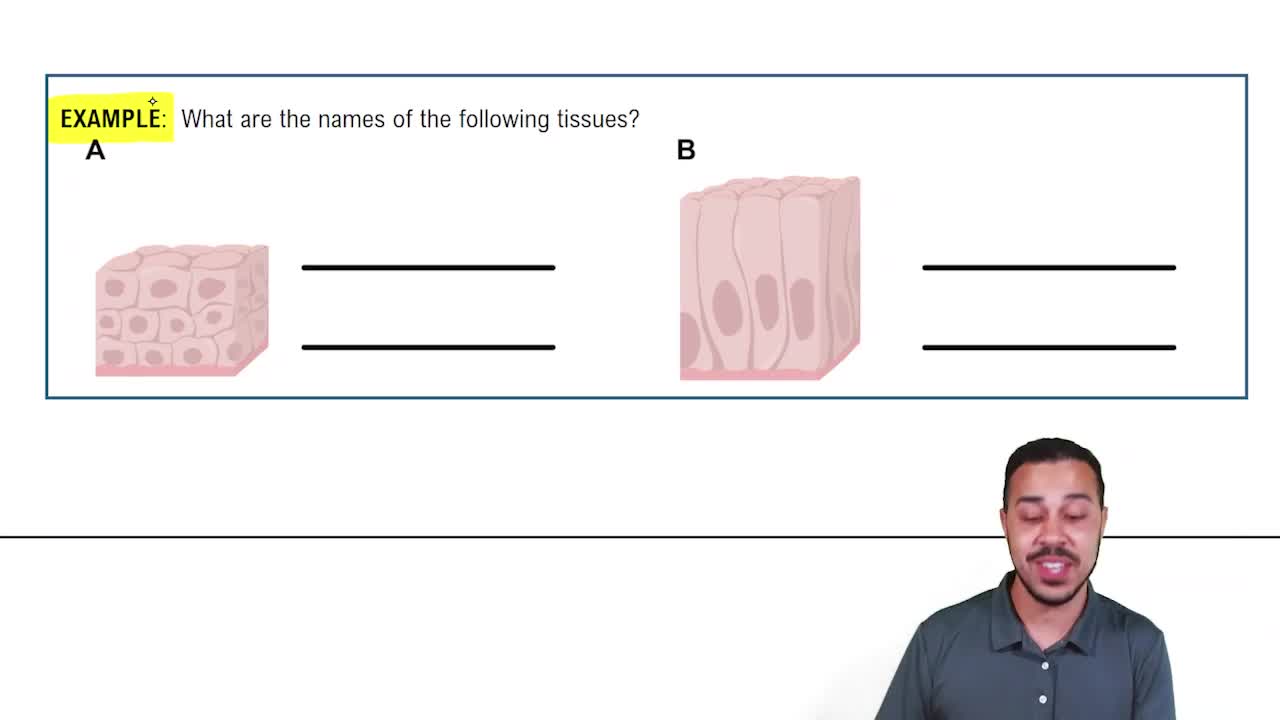
Structural Naming of Epithelial Tissue Example 1

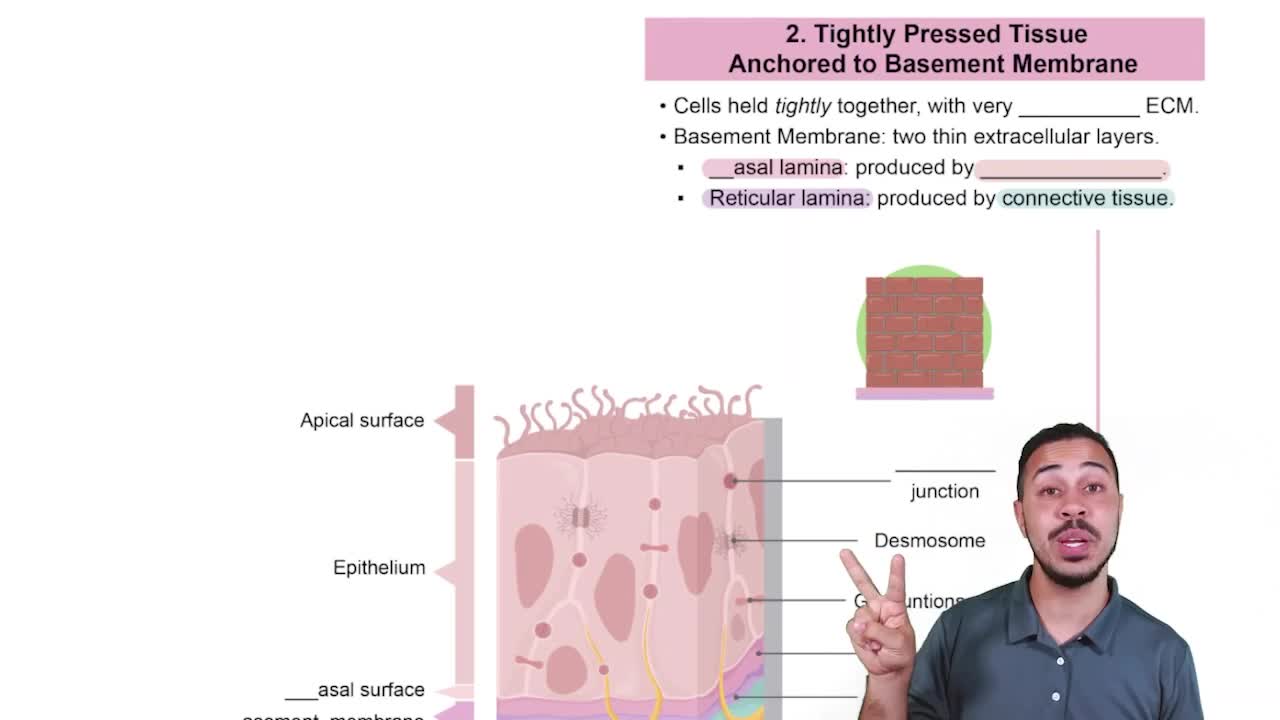
Basement Membrane

The basement membrane is a thin, fibrous layer that separates epithelial tissue from underlying connective tissue. It provides structural support and acts as a barrier to regulate the movement of substances between the epithelium and the underlying tissues. Importantly, it is avascular, meaning it does not contain blood vessels, which is crucial for understanding why cutting through epithelial tissue without penetrating this layer would not cause bleeding.
Recommended video:
Guided course
06:01
Characteristic 2: Tightly Pressed Tissue Anchored to Basement Membrane

Vascularization and Bleeding

Bleeding occurs when blood vessels are damaged, allowing blood to escape into surrounding tissues. Epithelial tissues are generally avascular, relying on diffusion from nearby blood vessels in the connective tissue for nutrients and waste removal. Since the basement membrane separates the epithelium from the vascularized connective tissue, cutting through the epithelium without breaching the basement membrane would not damage blood vessels, thus preventing bleeding.
Recommended video:
Guided course
6:55
Vascular Layer