
Ch. 5 The Integumentary System
Amerman - Human Anatomy & Physiology 2nd Edition
Amerman2nd EditionHuman Anatomy & PhysiologyISBN: 9780136873822Not the one you use?Change textbook
Chapter 5, Problem L3.5

Another feature of CIPA is anhidrosis, or the inability to sweat. Explain why Maria's inability to produce sweat could potentially be life-threatening.

Verified step by step guidance
1
Understand the role of sweat in thermoregulation: Sweat is produced by sweat glands and helps cool the body through evaporative cooling. This process is essential for maintaining a stable internal temperature, especially in hot environments or during physical activity.
Recognize the consequences of anhidrosis: Without the ability to sweat, Maria's body cannot effectively dissipate heat. This can lead to a dangerous rise in core body temperature, known as hyperthermia.
Explain the physiological impact of hyperthermia: Elevated body temperature can disrupt enzyme function, impair cellular processes, and lead to heat-related illnesses such as heat exhaustion or heat stroke. Severe hyperthermia can cause organ failure and be life-threatening.
Discuss the importance of alternative cooling mechanisms: Since Maria cannot sweat, her body must rely on other methods to regulate temperature, such as increased blood flow to the skin (vasodilation) or external cooling measures like drinking cold fluids or using fans and cooling packs.
Highlight the need for preventive measures: Maria must avoid situations that could lead to overheating, such as prolonged exposure to high temperatures or intense physical activity. She should monitor her body temperature closely and take proactive steps to stay cool and hydrated.

Verified video answer for a similar problem:

This video solution was recommended by our tutors as helpful for the problem above.
Was this helpful?

Key Concepts

Here are the essential concepts you must grasp in order to answer the question correctly.

Anhidrosis

Anhidrosis is a medical condition characterized by the inability to sweat, which is essential for regulating body temperature. When the body cannot produce sweat, it loses a critical mechanism for cooling itself, leading to an increased risk of overheating, especially in hot environments or during physical exertion.

Thermoregulation

Thermoregulation is the process by which the body maintains its core internal temperature within a narrow, optimal range. This involves various physiological responses, including sweating, to dissipate heat. Failure in thermoregulation due to anhidrosis can result in hyperthermia, which can cause heat exhaustion or heat stroke, potentially leading to serious health complications.
Recommended video:
01:07
Introduction to Thermoregulation

Heat-Related Illnesses

Heat-related illnesses encompass a range of conditions that occur when the body overheats, including heat exhaustion and heat stroke. These conditions can be life-threatening if not addressed promptly, as they can lead to organ failure, neurological damage, or death. Individuals with anhidrosis are particularly vulnerable to these illnesses due to their impaired ability to cool down.
Recommended video:
03:25
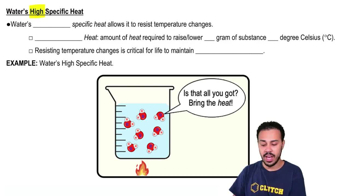
Water’s High Specific Heat
Related Practice
Textbook Question

Many antiaging skin creams contain collagen and hyaluronic acid. Manufacturers claim that the collagen and hyaluronic acid applied to the surface of the skin will be absorbed into the dermis, where they will be incorporated into dermal tissue.

Predict the effectiveness of the creams.

633
views
Textbook Question

After Ramon's skin came into contact with a poison ivy plant in biology lab, he developed a painful, itchy rash. However, after the skin of his colleague Cathy came into contact with snake venom in the lab, she developed no skin irritation. Poison ivy plants contain lipid-soluble oils, whereas snake venoms contain mostly water-soluble peptides. Explain why Ramon developed a rash, whereas Cathy did not.

853
views
Textbook Question

Many antiaging skin creams contain collagen and hyaluronic acid. Manufacturers claim that the collagen and hyaluronic acid applied to the surface of the skin will be absorbed into the dermis, where they will be incorporated into dermal tissue.

What are collagen and hyaluronic acid, and what are their functions?

810
views
1
rank
Textbook Question

You are working in the emergency department when paramedics rush in with an unconscious patient. You notice that the patient is wearing athletic clothing and the skin on his face and elsewhere on his body is bright red. The paramedics tell you that he was picked up after collapsing during a bike race. What does the color of the patient's skin tell you about the probable cause of his illness? Explain.

750
views
Textbook Question

Many antiaging skin creams contain collagen and hyaluronic acid. Manufacturers claim that the collagen and hyaluronic acid applied to the surface of the skin will be absorbed into the dermis, where they will be incorporated into dermal tissue.

Are these substances polar or nonpolar?

626
views
Textbook Question

Nguyen comes to your clinic with a mole that has recently changed in appearance. You examine the mole and note that its borders are irregular, it has a deep blue-black color, and the color is unevenly distributed throughout the mole.

Nguyen tells you that she has used a tanning booth once per week for the past several years and that the tanning salon advertises it as safe. What do you tell her about the tanning salon's claim? How does any UV exposure affect keratinocytes and melanocytes? Explain.

705
views