
Ch. 5 The Integumentary System
Amerman- Human Anatomy & Physiology 3e
Amerman3rd EditionHuman Anatomy & PhysiologyISBN: 9780138247201, 9780138247928, 9780138201814Not the one you use?Change textbook
Chapter 5, Problem 9

What are the functions of the dermal papillae?

Verified step by step guidance
1
Understand that dermal papillae are small, finger-like projections located in the dermis layer of the skin, specifically at the interface between the dermis and epidermis.
Learn that one primary function of dermal papillae is to increase the surface area for the exchange of nutrients, oxygen, and waste products between the dermis and the avascular epidermis.
Recognize that dermal papillae play a role in strengthening the connection between the dermis and epidermis, reducing the risk of separation or damage under mechanical stress.
Explore how dermal papillae contribute to the formation of fingerprints and footprints by creating ridges on the skin surface, which enhance grip and tactile sensitivity.
Understand that dermal papillae house capillaries and sensory nerve endings, which are essential for thermoregulation and detecting sensory stimuli such as touch, pressure, and pain.

Verified video answer for a similar problem:

This video solution was recommended by our tutors as helpful for the problem above.
Was this helpful?

Key Concepts

Here are the essential concepts you must grasp in order to answer the question correctly.

Dermal Papillae Structure

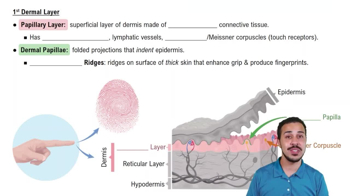
Dermal papillae are small, nipple-like projections located at the interface between the dermis and epidermis of the skin. They increase the surface area for exchange between these layers, enhancing nutrient delivery and waste removal. Their structure also contributes to the formation of fingerprints, which are unique to each individual.
Recommended video:
06:14
1st Dermal Layer

Role in Hair Growth

Dermal papillae play a crucial role in hair follicle function and hair growth. Each hair follicle is associated with a dermal papilla that supplies essential nutrients and signals for hair development. This interaction is vital for the hair growth cycle, influencing the thickness and health of hair.
Recommended video:
04:02
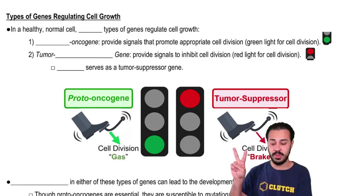
Types of Genes Regulating Cell Growth

Sensory Function

Dermal papillae contain a rich supply of nerve endings, making them important for sensory perception. They contribute to the skin's ability to detect touch, pressure, and temperature changes. This sensory function is essential for the body's response to environmental stimuli and overall protective mechanisms.
Recommended video:
2:47
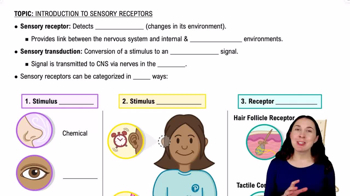
Sensory Receptors
Related Practice
Textbook Question

Epidermal ridges are created by:

a. The epidermal papillae

b. Mounds of papillary dermis arranged into dermal ridges

c. Gaps between collagen bundles in the reticular layer

d. Tight binding of the reticular layer to deeper structures

1225
views
Textbook Question

Mark the following statements as true or false. If a statement is false, correct it to make a true statement.

Tactile cells produce the pigment melanin.

74
views
Textbook Question

Mark the following statements as true or false. If a statement is false, correct it to make a true statement.

The primary skin pigment is melanin, which is derived from the amino acid tyrosine.

867
views
Textbook Question

Mark the following statements as true or false. If a statement is false, correct it to make a true statement.

Dendritic cells are phagocytes of the immune system that protect the skin and deeper tissues from invasion by pathogens.

1107
views
2
rank
Textbook Question

Mark the following statements as true or false. If a statement is false, correct it to make a true statement.

Melanin is produced by melanocytes and covers the nuclei of neighboring dendritic cells.

898
views
Textbook Question

Which of the following statements is false?

a. Thin skin lacks the stratum lucidum, whereas thick skin has all five epidermal layers.

b. Thick skin is located on the palms, the palmar surfaces of the fingers, the soles of the feet, and the plantar surface of the toes, whereas thin skin is located everywhere else.

c. Thick skin has numerous hairs, whereas thin skin lacks hairs.

d. Thin skin has a thin stratum corneum, and the other layers are thinner than what we find in thick skin.

1427
views