
Textbook Question
Differentiate between the arrangement of elements (load, fulcrum, and effort) in first-, second-, and third-class levers.
1050
views

 Verified step by step guidance
 3:30
3:30
 03:47
03:47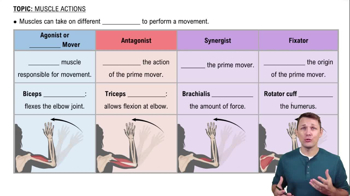 5:41
5:41Differentiate between the arrangement of elements (load, fulcrum, and effort) in first-, second-, and third-class levers.
Name four criteria used in naming muscles, and provide an example (other than those used in the text) that illustrates each criterion.
Name two muscles in each of the following compartments or regions:
a. thenar eminence (ball of thumb)
b. posterior compartment of forearm
c. anterior compartment of forearm—deep muscle group
d. anterior muscle group in the arm
e. muscles of mastication
a. Name two forearm muscles that are powerful extensors and abductors of the hand.
b. Name the sole forearm muscle that can flex the distal interphalangeal joints.
As Kendra's coach watched her sail over the high jump bar, he contracted his right orbicularis oculi muscle, raised his arm, and contracted his opponens pollicis. Was he pleased or displeased with her performance? How do you know?
When Mrs. O'Brien returned to her doctor for a follow-up visit after childbirth, she complained that she was incontinent (having problems controlling her urine flow) when she sneezed. The physician asked his nurse to give Mrs. O'Brien instructions on how to perform exercises to strengthen the muscles of the pelvic floor. To which muscles was he referring?