Ch. 16 The Endocrine System
Hoehn - Marieb Human Anatomy & Physiology, 12th edition
Hoehn, Haynes, Abbott12th EditionMarieb Human Anatomy & PhysiologyISBN: 9780138242732Not the one you use?Change textbook
Chapter 16, Problem 12

Absence of thyroid hormone would result in:
a. Increased heart rate and increased force of heart contraction
b. Depression of the CNS and lethargy
c. Exophthalmos
d. High metabolic rate

Verified step by step guidance
1
Step 1: Understand the role of thyroid hormone in the body. Thyroid hormones primarily regulate metabolism, influence heart rate and force of contraction, and affect the central nervous system (CNS).
Step 2: Analyze the effects of thyroid hormone deficiency. When thyroid hormone is absent or low, metabolic rate decreases, leading to symptoms such as lethargy and depression of CNS activity.
Step 3: Evaluate each option in the context of thyroid hormone absence: (a) Increased heart rate and force of contraction would typically be caused by excess thyroid hormone, not its absence.
Step 4: Consider option (b) Depression of the CNS and lethargy, which aligns with the known effects of hypothyroidism (low thyroid hormone levels).
Step 5: Recognize that options (c) Exophthalmos and (d) High metabolic rate are associated with hyperthyroidism (excess thyroid hormone), so they are unlikely to result from absence of thyroid hormone.

Verified video answer for a similar problem:

This video solution was recommended by our tutors as helpful for the problem above.
Video duration:
3m
Was this helpful?

Key Concepts

Here are the essential concepts you must grasp in order to answer the question correctly.

Role of Thyroid Hormones in Metabolism

Thyroid hormones regulate the body's metabolic rate by controlling how cells use energy. Their absence typically leads to a decreased metabolic rate, causing symptoms like fatigue and weight gain, rather than an increased metabolic rate.
Recommended video:
02:17
Introduction to Metabolism

Effects of Thyroid Hormones on the Central Nervous System (CNS)

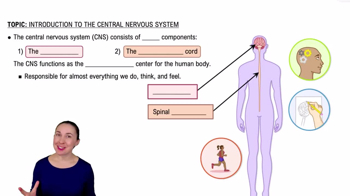
Thyroid hormones are essential for normal CNS function. A deficiency can cause CNS depression, resulting in lethargy, slowed mental processes, and reduced alertness, reflecting the hormone's role in maintaining brain activity.
Recommended video:
1:32
The Central Nervous System

Cardiovascular Effects of Thyroid Hormones

Thyroid hormones increase heart rate and the force of heart contractions by enhancing sympathetic nervous system activity. Without these hormones, heart rate and contractility decrease, leading to slower circulation and reduced cardiac output.
Recommended video:
1:32
Effects of the Complement System