Ch. 17 Blood
Hoehn - Marieb Human Anatomy & Physiology, 12th edition
Hoehn, Haynes, Abbott12th EditionMarieb Human Anatomy & PhysiologyISBN: 9780138242732Not the one you use?Change textbook
Chapter 17, Problem 5

Blood proteins play an important part in:
a. Blood clotting
b. Immunity
c. Maintenance of blood volume
d. All of the above

Verified step by step guidance
1
Step 1: Understand the role of blood proteins in the body. Blood proteins include albumins, globulins, and fibrinogen, each serving different functions.
Step 2: Recognize that fibrinogen is essential for blood clotting, as it is converted into fibrin to form clots and stop bleeding.
Step 3: Know that globulins are involved in immunity, as they include antibodies that help defend the body against pathogens.
Step 4: Remember that albumins help maintain blood volume and pressure by regulating the osmotic balance between blood and tissues.
Step 5: Conclude that since blood proteins contribute to clotting, immunity, and blood volume maintenance, the correct answer encompasses all these functions.

Verified video answer for a similar problem:

This video solution was recommended by our tutors as helpful for the problem above.
Video duration:
1m
Was this helpful?

Key Concepts

Here are the essential concepts you must grasp in order to answer the question correctly.

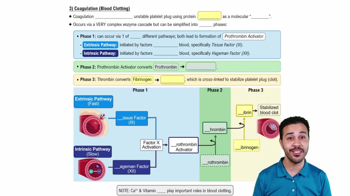
Blood Clotting

Blood clotting is a process where blood proteins, especially fibrinogen, help form clots to stop bleeding. When a blood vessel is injured, these proteins activate to create a mesh that seals the wound, preventing excessive blood loss.
Recommended video:
10:05
Coagulation (Blood Clotting)

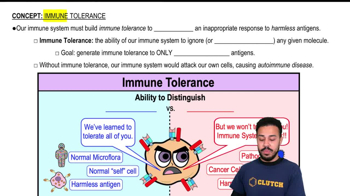
Immunity

Certain blood proteins, such as antibodies, play a crucial role in immunity by identifying and neutralizing pathogens like bacteria and viruses. These proteins are part of the body's defense system, helping to protect against infections.
Recommended video:
3:19
Immune Tolerance

Maintenance of Blood Volume

Blood proteins like albumin help maintain blood volume and pressure by regulating the osmotic balance between blood and tissues. This prevents excessive fluid loss from blood vessels, ensuring proper circulation and tissue hydration.
Recommended video:
Guided course
6:28
Lung Volumes