Ch. 23 The Digestive System
Hoehn - Marieb Human Anatomy & Physiology, 12th edition
Hoehn, Haynes, Abbott12th EditionMarieb Human Anatomy & PhysiologyISBN: 9780138242732Not the one you use?Change textbook
Chapter 23, Problem 13

Someone has eaten a meal of buttered toast, cream, and eggs. Which of the following would you expect to happen?
a. Compared to the period shortly after the meal, gastric motility and secretion of HCl decrease when the food reaches the duodenum
b. Gastric motility increases even as the person is chewing the food (before swallowing)
c. Fat will be emulsified in the duodenum by the action of bile
d. All of these

Verified step by step guidance
1
Step 1: Understand the process of digestion starting from the mouth to the duodenum. When chewing food, the body prepares for digestion, which can include increased gastric motility even before swallowing.
Step 2: Recall that once food reaches the duodenum, the stomach's motility and secretion of hydrochloric acid (HCl) typically decrease to regulate the digestive process and prevent overloading the small intestine.
Step 3: Recognize that fats, such as those in butter and cream, are emulsified in the duodenum by bile, which is secreted by the liver and stored in the gallbladder, aiding in fat digestion.
Step 4: Analyze each option in the question based on these physiological facts: (a) decrease in gastric motility and HCl secretion after food reaches the duodenum, (b) increase in gastric motility during chewing, and (c) fat emulsification by bile in the duodenum.
Step 5: Conclude that since all these physiological responses are correct and occur during digestion of a fatty meal, the best answer is the option that includes all these events.

Verified video answer for a similar problem:

This video solution was recommended by our tutors as helpful for the problem above.
Video duration:
2m
Was this helpful?

Key Concepts

Here are the essential concepts you must grasp in order to answer the question correctly.

Gastric Motility and Secretion Regulation

Gastric motility and hydrochloric acid (HCl) secretion are high during the initial phases of digestion in the stomach but decrease when chyme enters the duodenum. This reduction helps regulate the digestive process, preventing excessive acid and motility that could damage the intestine and allowing time for nutrient absorption.
Recommended video:
01:33
Protein Secretion

Cephalic Phase of Digestion

The cephalic phase occurs before food enters the stomach, triggered by the sight, smell, or thought of food. During this phase, gastric motility and secretion increase even while chewing, preparing the stomach for incoming food and enhancing digestive efficiency.
Recommended video:
03:21
Phases of Mitosis

Fat Emulsification by Bile in the Duodenum

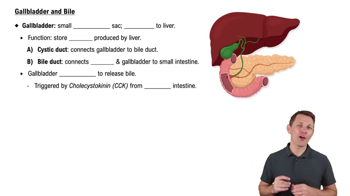
Fats consumed in a meal are not digested in the stomach but emulsified in the duodenum by bile salts produced by the liver. This emulsification breaks large fat droplets into smaller ones, increasing the surface area for pancreatic lipase to effectively digest fats.
Recommended video:
Guided course
6:54
Gallbladder and Bile