
Ch. 27 The Reproductive System
Hoehn - Marieb Human Anatomy & Physiology, 12th edition
Hoehn, Haynes, Abbott12th EditionMarieb Human Anatomy & PhysiologyISBN: 9780138242732Not the one you use?Change textbook
Chapter 27, Problem 4

The usual site of embryo implantation is:
a. The uterine tube
b. The peritoneal cavity
c. The vagina
d. The uterus

Verified step by step guidance
1
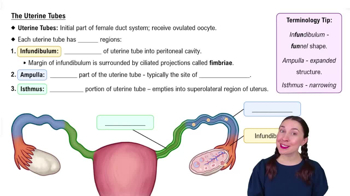
Understand the process of fertilization and implantation: After fertilization occurs in the uterine tube (fallopian tube), the zygote undergoes several rounds of cell division to form a blastocyst, which travels to the uterus for implantation.
Review the anatomy of the female reproductive system: The uterus is a muscular organ designed to support the development of the embryo and fetus. It has a specialized lining called the endometrium, which thickens during the menstrual cycle to prepare for potential implantation.
Eliminate incorrect options: The uterine tube (fallopian tube) is the site of fertilization, not implantation. The peritoneal cavity is outside the reproductive tract and is not a normal site for implantation. The vagina is part of the birth canal and does not support implantation.
Focus on the correct site: The uterus is the usual site of implantation because its endometrial lining provides the necessary nutrients and environment for the blastocyst to attach and develop.
Conclude: Based on the anatomy and physiology of the female reproductive system, the correct answer is the uterus, as it is the organ specifically designed for embryo implantation and development.

Verified video answer for a similar problem:

This video solution was recommended by our tutors as helpful for the problem above.
Video duration:
2m
Was this helpful?

Key Concepts

Here are the essential concepts you must grasp in order to answer the question correctly.

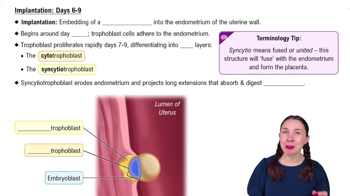
Embryo Implantation

Embryo implantation is the process by which a fertilized egg attaches itself to the lining of the uterus. This is a critical step in establishing a pregnancy, as it allows the embryo to receive nutrients and support from the mother's body. Successful implantation typically occurs about six to ten days after fertilization.
Recommended video:
2:34
Implantation: Days 6-9

Uterine Anatomy

The uterus is a hollow, muscular organ located in the female pelvis, designed to house and nourish a developing fetus. Its inner lining, known as the endometrium, thickens in preparation for potential implantation of an embryo. Understanding the structure and function of the uterus is essential for comprehending where implantation occurs.
Recommended video:
3:58
The Uterine Tubes

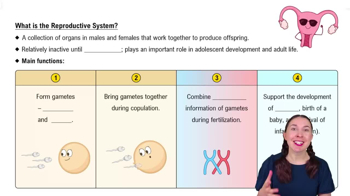
Reproductive System

The reproductive system encompasses all the organs involved in reproduction, including the ovaries, fallopian tubes, uterus, and vagina. Each component plays a vital role in the processes of ovulation, fertilization, and implantation. A solid grasp of the reproductive system's anatomy and functions is necessary to answer questions related to embryo implantation.
Recommended video:
2:08
What is the Reproductive System?