Ch. 12 The Central Nervous System
Marieb - Human Anatomy & Physiology 11th Edition
Marieb, Hoehn11th EditionHuman Anatomy & PhysiologyISBN: 9780136874034Not the one you use?Change textbook
Chapter 12, Problem 7

A professor unexpectedly blew a loud horn in his anatomy and physiology class. The students looked up, startled. The reflexive movements of their eyes were mediated by the:
a. Cerebral cortex
b. Inferior olives
c. Raphe nuclei
d. Superior colliculi
e. Nucleus gracilis

Verified step by step guidance
1
Step 1: Understand the question is asking about the neural structure responsible for reflexive eye movements in response to a sudden stimulus, such as a loud horn.
Step 2: Recall that reflexive eye movements are rapid, involuntary responses that help orient the eyes toward a stimulus, often mediated by midbrain structures.
Step 3: Review the functions of the listed options: the cerebral cortex is involved in voluntary movement and higher processing; inferior olives are related to motor coordination; raphe nuclei are involved in serotonin production and mood regulation; nucleus gracilis processes sensory information from the body.
Step 4: Identify that the superior colliculi, part of the midbrain tectum, play a key role in visual reflexes and orienting movements of the eyes and head toward stimuli.
Step 5: Conclude that the reflexive eye movements in response to the loud horn are mediated by the superior colliculi.

Verified video answer for a similar problem:

This video solution was recommended by our tutors as helpful for the problem above.
Video duration:
2m
Was this helpful?

Key Concepts

Here are the essential concepts you must grasp in order to answer the question correctly.

Reflexive Eye Movements

Reflexive eye movements are automatic responses to sudden stimuli, such as a loud noise or a bright light. These movements help orient the eyes toward the source of the stimulus without conscious effort, enabling quick attention shifts to potential threats or important events.
Recommended video:
3:01
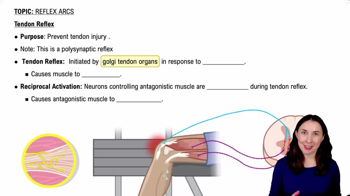
Tendon Reflex

Superior Colliculi

The superior colliculi are paired structures in the midbrain involved in processing visual and auditory information to coordinate reflexive eye and head movements. They play a key role in directing gaze and attention toward sudden stimuli, making them essential for reflexive eye movements.
Recommended video:
Guided course
03:39
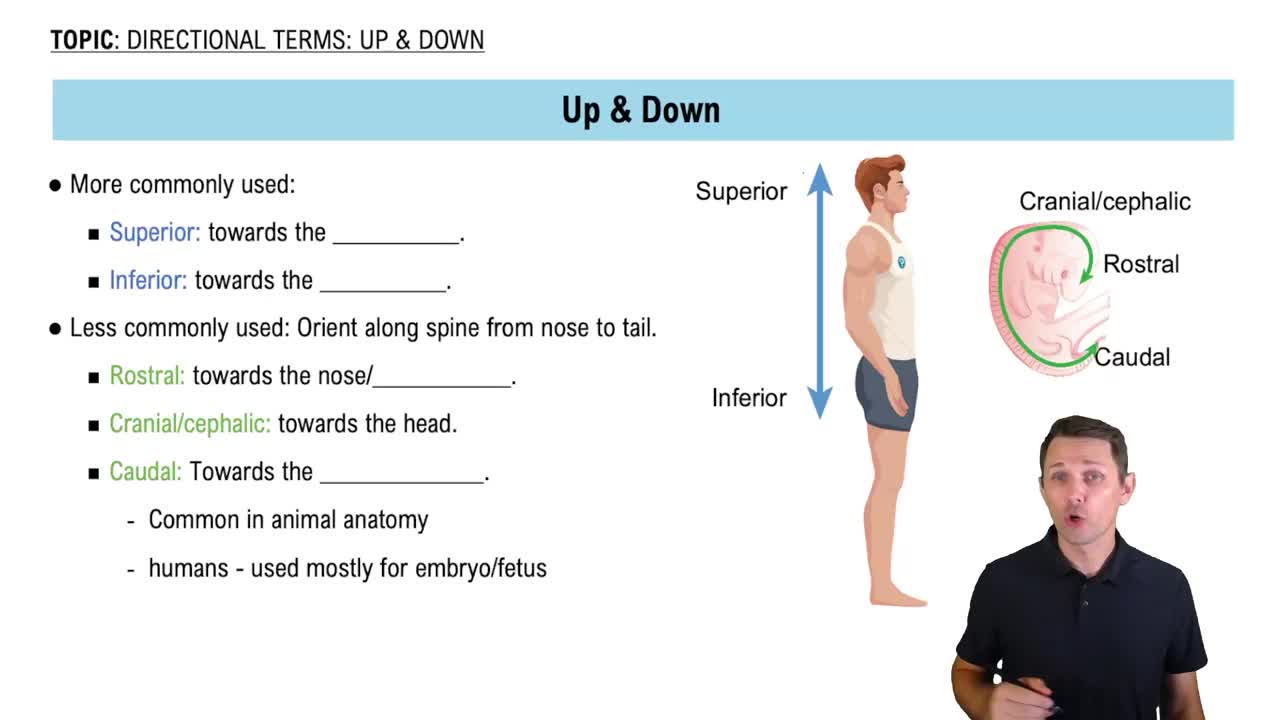
Superior and Inferior

Role of Other Brain Structures in Reflexes

While structures like the cerebral cortex, inferior olives, raphe nuclei, and nucleus gracilis have important functions, they are not primarily responsible for reflexive eye movements. The cerebral cortex manages voluntary actions, inferior olives assist motor learning, raphe nuclei regulate mood, and nucleus gracilis processes somatosensory information.
Recommended video:
1:09
Reflex Arcs Example 1
Related Practice
Textbook Question

Fiber tracts that allow neurons within the same cerebral hemisphere to communicate are:

a. Association fibers

b. Commissures

c. Projection fibers

121
views
Textbook Question

Choose the correct term from the key to respond to the statements describing various brain areas.

Key:

a. Cerebellum

b. Corpora quadrigemina

c. Corpus callosum

d. Striatum

e. Hypothalamus

f. Medulla

g. Midbrain

h. Pons

i. Thalamus 

________ (1) basal nuclei involved in fine control of motor activities  

________ (2) region where there is a crossover of fibers of descending pyramidal tracts  

________ (3) control of temperature, autonomic nervous system reflexes, hunger, and water balance 

________ (4) houses the substantia nigra and cerebral aqueduct 

________ (5) relay stations for visual and auditory stimuli input; found in midbrain 

________ (6) houses vital centers for control of the heart, respiration, and blood pressure 

________ (7) brain area through which all the sensory input is relayed to get to the cerebral cortex 

________ (8) brain area most concerned with equilibrium, body posture, and coordination of motor activity

1038
views
Textbook Question

a. What is the function of the basal nuclei?

b. Which basal nuclei form the striatum?

c. Which arches over the diencephalon?

37
views
Textbook Question

What constitutes the blood brain barrier?

1182
views
Textbook Question

List four ways in which the CNS is protected.

1056
views
Textbook Question

Destruction of the ventral horn cells of the spinal cord results in loss of

a. Integrating impulses

b. Sensory impulses

c. Voluntary motor impulses

d. All of these

699
views