Ch. 16 The Endocrine System
Marieb - Human Anatomy & Physiology 11th Edition
Marieb, Hoehn11th EditionHuman Anatomy & PhysiologyISBN: 9780136874034Not the one you use?Change textbook
Chapter 16, Problem 26

Aaron, a 42-year-old single father, goes to his physician complaining of nausea and chronic fatigue. He reports having felt fatigued and listless for about half a year, but he had attributed this to stress. He has lost considerable weight and, strangely, his skin looks tanned, even though he spends long hours at work and rarely ventures outside. His doctor finds very low blood pressure and a rapid, weak pulse. Blood tests show that Aaron does not have anemia, but his plasma glucose, cortisol, and Na⁺ are low, and his plasma K⁺ is high. His doctor orders an ACTH stimulation test, in which Aaron's secretion of cortisol is measured after he is given a synthetic form of ACTH.
(a) What would account for Aaron's low plasma Na⁺ and high plasma K⁺ ?
(b) What is the reason for doing an ACTH stimulation test?
(c) Which gland is primarily affected if ACTH does not cause a normal elevation of cortisol secretion? What is this abnormality called?
(d) Which gland is primarily affected if ACTH does cause an elevation of cortisol secretion?

Verified step by step guidance
1
Step 1: Understand the physiological roles of sodium (Na⁺) and potassium (K⁺) in the body, particularly how aldosterone, a hormone produced by the adrenal cortex, regulates their plasma levels by promoting Na⁺ retention and K⁺ excretion in the kidneys. Low plasma Na⁺ and high plasma K⁺ suggest a deficiency in aldosterone secretion or action.
Step 2: Recognize that the ACTH stimulation test is used to evaluate the function of the adrenal cortex by measuring cortisol secretion in response to synthetic ACTH. This helps differentiate whether the problem lies in the adrenal glands themselves or in the pituitary gland that produces ACTH.
Step 3: If ACTH administration does not increase cortisol secretion, it indicates a primary adrenal gland problem (adrenal insufficiency), where the adrenal cortex is damaged or dysfunctional and cannot produce cortisol properly. This condition is known as Addison's disease.
Step 4: If ACTH administration does cause an increase in cortisol secretion, it suggests that the adrenal glands are functioning normally, and the problem is likely secondary, originating from the pituitary gland (which may not be producing enough ACTH under normal conditions).
Step 5: Summarize the clinical picture: Aaron's symptoms and lab results (low cortisol, low Na⁺, high K⁺, low blood pressure, weight loss, and hyperpigmentation) point toward primary adrenal insufficiency, where aldosterone deficiency explains the electrolyte imbalance, and the ACTH stimulation test helps confirm the diagnosis and localize the dysfunction.

Verified video answer for a similar problem:

This video solution was recommended by our tutors as helpful for the problem above.
Video duration:
2m
Was this helpful?

Key Concepts

Here are the essential concepts you must grasp in order to answer the question correctly.

Adrenal Cortex Function and Electrolyte Balance

The adrenal cortex produces hormones like cortisol and aldosterone, which regulate metabolism and electrolyte balance. Aldosterone controls sodium (Na⁺) retention and potassium (K⁺) excretion in the kidneys. Low aldosterone leads to decreased Na⁺ and increased K⁺ in plasma, causing symptoms like low blood pressure and fatigue.
Recommended video:
07:59
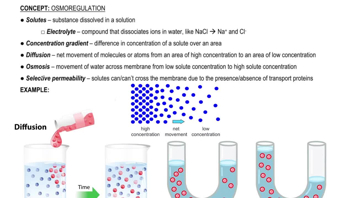
Osmosis and Osmolarity

ACTH Stimulation Test and Its Diagnostic Role

The ACTH stimulation test measures cortisol response after administering synthetic ACTH. It helps determine if the adrenal glands can produce cortisol properly. A normal rise indicates functional adrenal glands, while a blunted or absent response suggests adrenal insufficiency or damage.
Recommended video:
Guided course
3:02
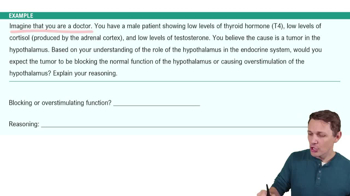
The Hypothalamus and Pituitary Gland Example 2

Primary vs. Secondary Adrenal Insufficiency

Primary adrenal insufficiency (Addison's disease) involves direct adrenal gland failure, causing low cortisol and aldosterone despite high ACTH. Secondary insufficiency results from pituitary failure to produce ACTH, leading to low cortisol but normal aldosterone. Differentiating these helps identify the affected gland.
Recommended video:
6:59
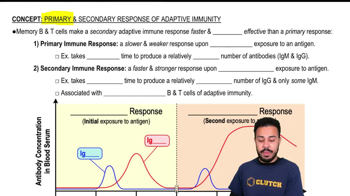
Primary and Secondary Response of Adaptive Immunity