Ch. 17 Blood
Marieb - Human Anatomy & Physiology 11th Edition
Marieb, Hoehn11th EditionHuman Anatomy & PhysiologyISBN: 9780136874034Not the one you use?Change textbook
Chapter 17, Problem 4

The most numerous WBC is:
a. Eosinophil
b. Neutrophil
c. Monocyte
d. Lymphocyte

Verified step by step guidance
1
Step 1: Understand that WBC stands for white blood cells, which are part of the immune system and help defend the body against infections.
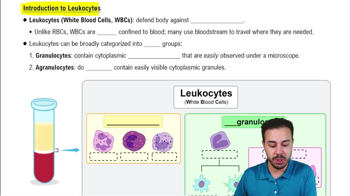
Step 2: Recall the main types of white blood cells: neutrophils, eosinophils, monocytes, lymphocytes, and basophils.
Step 3: Recognize that the question asks for the most numerous type of WBC in normal human blood.
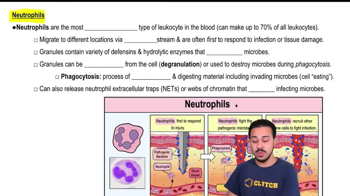
Step 4: Remember that neutrophils typically make up the largest percentage of white blood cells, usually around 50-70% of the total WBC count.
Step 5: Compare the options given (eosinophil, neutrophil, monocyte, lymphocyte) and identify neutrophils as the most abundant type.

Verified video answer for a similar problem:

This video solution was recommended by our tutors as helpful for the problem above.
Video duration:
5m
Was this helpful?

Key Concepts

Here are the essential concepts you must grasp in order to answer the question correctly.

White Blood Cells (WBCs)

White blood cells are immune cells that protect the body against infections and foreign substances. They are classified into different types based on their structure and function, including neutrophils, eosinophils, monocytes, and lymphocytes.
Recommended video:
7:49
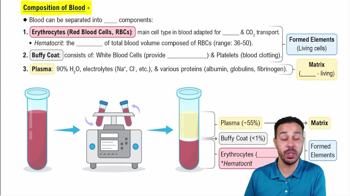
Composition of Blood

Neutrophils

Neutrophils are the most abundant type of white blood cells in the bloodstream. They play a key role in the innate immune response by quickly responding to infections, especially bacterial, through phagocytosis and releasing enzymes to destroy pathogens.
Recommended video:
5:23
Neutrophils

Differential WBC Count

A differential WBC count measures the percentage of each type of white blood cell in the blood. It helps identify which WBC is most numerous and can indicate the body's immune status or presence of disease.
Recommended video:
4:50
Introduction to Leukocytes