Ch. 22 The Respiratory System
Marieb - Human Anatomy & Physiology 11th Edition
Marieb, Hoehn11th EditionHuman Anatomy & PhysiologyISBN: 9780136874034Not the one you use?Change textbook
Chapter 22, Problem 12

A baby holding its breath will:
a. Have brain cells damaged because of low blood oxygen levels
b. Automatically start to breathe again when the carbon dioxide levels in the blood reach a high enough value
c. Suffer heart damage because of increased pressure in the carotid sinus and aortic arch areas
d. Be called a 'blue baby'

Verified step by step guidance
1
Understand the physiological control of breathing: Breathing is primarily regulated by the levels of carbon dioxide (CO2) in the blood, not oxygen. The brain's respiratory centers, located in the medulla oblongata, monitor CO2 levels and trigger breathing when they rise above a certain threshold.
Consider the role of chemoreceptors: Chemoreceptors in the carotid bodies and aortic arch detect changes in blood CO2 and pH levels. When CO2 levels increase, these chemoreceptors send signals to the brain to stimulate breathing.
Analyze the options provided: Option (a) suggests brain cell damage due to low oxygen, but this is unlikely in the short term as CO2 levels will trigger breathing before oxygen deprivation becomes critical. Option (c) mentions heart damage due to pressure changes, which is not directly related to holding breath. Option (d) refers to a 'blue baby,' which is a term typically used for congenital heart defects, not breath-holding.
Focus on option (b): When a baby holds its breath, CO2 levels in the blood rise. This increase stimulates the brain's respiratory centers, causing the baby to automatically resume breathing. This is a protective mechanism to prevent prolonged oxygen deprivation.
Conclude that the correct physiological response aligns with option (b): The baby will automatically start to breathe again when CO2 levels reach a high enough value, ensuring proper oxygenation and preventing damage.

Verified video answer for a similar problem:

This video solution was recommended by our tutors as helpful for the problem above.
Video duration:
2m
Was this helpful?

Key Concepts

Here are the essential concepts you must grasp in order to answer the question correctly.

Hypoxia and Brain Damage

Hypoxia refers to a deficiency in the amount of oxygen reaching the tissues. In infants, prolonged low blood oxygen levels can lead to brain cell damage, as the brain is highly sensitive to oxygen deprivation. Understanding the effects of hypoxia is crucial in assessing the risks associated with a baby holding its breath.
Recommended video:
2:10
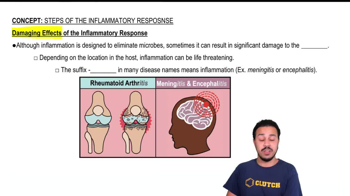
Damaging Effects of the Inflammatory Response

Carbon Dioxide and Breathing Reflex

The body has a natural reflex to breathe triggered by rising levels of carbon dioxide (CO2) in the blood. When CO2 levels increase, it stimulates the respiratory center in the brain, prompting the individual to resume breathing. This concept is essential for understanding why a baby will automatically start to breathe again after holding its breath.
Recommended video:
04:19
Carbon

Physiological Responses to Breath-Holding

When a baby holds its breath, various physiological responses occur, including changes in heart rate and blood pressure. Increased pressure in areas like the carotid sinus and aortic arch can affect cardiovascular function. Recognizing these responses helps explain the potential risks and consequences of breath-holding in infants.
Recommended video:
9:59
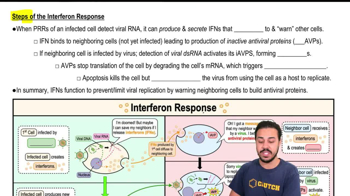
Steps of the Interferon Response
Related Practice
Textbook Question

Differentiate clearly between minute ventilation and alveolar ventilation rate

Which provides a more accurate measure of ventilatory efficiency, and why?

1383
views
Textbook Question

In mouth-to-mouth artificial respiration, the rescuer blows air from his or her own respiratory system into that of the victim. Which of the following statements are correct?

(1) Expansion of the victim's lungs is brought about by blowing air in at higher than atmospheric pressure (positive-pressure breathing).

(2) During inflation of the lungs, the intrapleural pressure increases.

(3) This technique will not work if the victim has a hole in the chest wall, even if the lungs are intact.

(4) Expiration during this procedure depends on the elasticity of the alveolar and thoracic walls.

a. All of these

b. 1, 2, 4

c. 1, 2, 3

d. 1, 4

166
views
Textbook Question

The bulk of carbon dioxide is carried:

a. Chemically combined with the amino acids of hemoglobin as carbaminohemoglobin in the red blood cells

b. As the ion HCO₃⁻ in the plasma after first entering the red blood cell

c. As carbonic acid in the plasma

d. Chemically combined with the heme portion of Hb

107
views
Textbook Question

Briefly explain the anatomical 'reason' why most men have deeper voices than boys or women.

114
views
Textbook Question

Most oxygen carried in the blood is:

a. In solution in the plasma

b. Combined with plasma proteins

c. Chemically combined with the heme in red blood cells

d. In solution in the red blood cells

109
views
Textbook Question

Which of the following has the greatest stimulating effect on the respiratory centers in the brain?

a. Oxygen

b. Carbon dioxide

c. Calcium

d. Willpower

124
views