Describe the mechanisms that contribute to renal autoregulation.
Ch. 25 The Urinary System

Marieb, Hoehn11th EditionHuman Anatomy & PhysiologyISBN: 9780136874034Not the one you use?Change textbook
Chapter 25, Problem 9
Which of the following is/are true about ADH?
a. It promotes obligatory water reabsorption
b. It is secreted in response to an increase in extracellular fluid osmolality
c. It causes insertion of aquaporins in the PCT
d. It promotes Na⁺ reabsorption
Verified step by step guidance1
Step 1: Understand the role of ADH (antidiuretic hormone), also known as vasopressin, which primarily regulates water balance in the body by controlling water reabsorption in the kidneys.
Step 2: Analyze option (a): ADH promotes water reabsorption, but specifically in the collecting ducts, not the proximal convoluted tubule (PCT). It mainly affects facultative water reabsorption rather than obligatory water reabsorption, which occurs in the PCT regardless of ADH.
Step 3: Analyze option (b): ADH secretion is stimulated by an increase in extracellular fluid osmolality, meaning when the body detects higher solute concentration, ADH is released to conserve water and dilute the plasma.
Step 4: Analyze option (c): ADH causes insertion of aquaporin-2 water channels in the collecting ducts, not in the PCT. Aquaporins in the PCT are constitutively present and not regulated by ADH.
Step 5: Analyze option (d): ADH does not directly promote sodium (Na⁺) reabsorption; its main effect is on water permeability. Sodium reabsorption is primarily regulated by aldosterone and other mechanisms.

Verified video answer for a similar problem:
This video solution was recommended by our tutors as helpful for the problem above.
Video duration:
2mWas this helpful?
Key Concepts
Here are the essential concepts you must grasp in order to answer the question correctly.
Antidiuretic Hormone (ADH) Function
ADH, also known as vasopressin, primarily regulates water balance by increasing water reabsorption in the kidneys. It acts mainly on the collecting ducts, making them more permeable to water, which helps concentrate urine and reduce water loss.
Recommended video:
Guided course
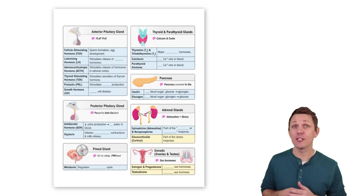
Review of Major Hormones
Regulation of ADH Secretion
ADH secretion is triggered by increased plasma osmolality, detected by osmoreceptors in the hypothalamus. When extracellular fluid becomes more concentrated, ADH release increases to conserve water and restore osmotic balance.
Recommended video:
Protein Secretion
Aquaporin Insertion and Site of Action
ADH promotes the insertion of aquaporin-2 water channels into the apical membrane of collecting duct cells, enhancing water reabsorption. This effect does not occur in the proximal convoluted tubule (PCT), where water reabsorption is mostly obligatory and not regulated by ADH.
Recommended video:
Guided course
Origin and Insertion
Related Practice
Textbook Question
1100
views
Textbook Question
Tubular reabsorption
a. Of glucose and many other substances is a Tm - limited active transport process
b. Of chloride is always linked to the passive transport of Na⁺
c. Is the movement of substances from the blood into the nephron
d. Of sodium occurs only in the proximal tubule
1061
views
Textbook Question
Filtration at the glomerulus is inversely related to
a. Water reabsorption
b. Capsular hydrostatic pressure
c. Arterial blood pressure
d. Acidity of the urine
1051
views
Textbook Question
Define micturition and describe the micturition reflex.
1365
views
Textbook Question
If a freshly voided urine sample contains excessive amounts of urochrome, it has
a. An ammonia-like odor
b. A pH below normal
c. A dark yellow color
d. A pH above normal
899
views
Textbook Question
What is the importance of the perirenal fat capsule that surrounds the kidney?
1405
views