Ch. 26 Fluid, Electrolyte, and Acid-Base Balance
Marieb - Human Anatomy & Physiology 11th Edition
Marieb, Hoehn11th EditionHuman Anatomy & PhysiologyISBN: 9780136874034Not the one you use?Change textbook
Chapter 26, Problem 19

Explain the relationship of the following to renal secretion and excretion of hydrogen ions:
Plasma carbon dioxide levels
Phosphate
Sodium bicarbonate reabsorption

Verified step by step guidance
1
Understand that renal secretion and excretion of hydrogen ions (H\_+) are crucial for maintaining acid-base balance in the body by regulating blood pH.
Recognize that plasma carbon dioxide (CO\_2) levels influence H\_+ secretion because CO\_2 reacts with water to form carbonic acid (H\_2CO\_3), which dissociates into H\_+ and bicarbonate (HCO\_3\^-). Increased CO\_2 raises H\_+ concentration, stimulating renal secretion of H\_+ to maintain pH balance.
Know that phosphate acts as a urinary buffer in the renal tubules by combining with secreted H\_+ to form dihydrogen phosphate (H\_2PO\_4\^-), which is then excreted. This process helps trap H\_+ in the urine, facilitating its removal from the body.
Understand that sodium bicarbonate reabsorption in the proximal tubule helps reclaim filtered bicarbonate, which buffers H\_+ in the blood. Efficient reabsorption reduces the need for excessive H\_+ secretion, as bicarbonate neutralizes acid in the plasma.
Integrate these concepts by explaining that elevated plasma CO\_2 increases H\_+ secretion, phosphate buffers secreted H\_+ in urine aiding excretion, and sodium bicarbonate reabsorption conserves base to maintain acid-base homeostasis, all working together in renal regulation of hydrogen ions.

Verified video answer for a similar problem:

This video solution was recommended by our tutors as helpful for the problem above.
Video duration:
3m
Was this helpful?

Key Concepts

Here are the essential concepts you must grasp in order to answer the question correctly.

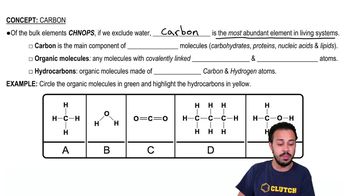
Plasma Carbon Dioxide Levels

Plasma carbon dioxide (CO2) levels influence the acid-base balance by affecting hydrogen ion concentration. CO2 reacts with water to form carbonic acid, which dissociates into hydrogen ions and bicarbonate. Increased CO2 raises hydrogen ion concentration, stimulating renal secretion of H+ to maintain pH balance.
Recommended video:
04:19
Carbon

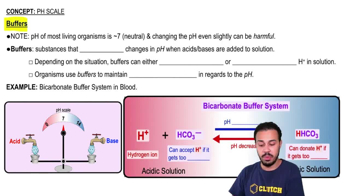
Phosphate Buffer System

Phosphate acts as a urinary buffer by combining with secreted hydrogen ions to form dihydrogen phosphate, which is excreted in urine. This process helps remove excess H+ from the body, aiding in acid-base regulation during renal excretion.
Recommended video:
05:38
Buffers

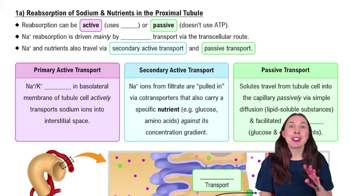
Sodium Bicarbonate Reabsorption

Sodium bicarbonate reabsorption in the renal tubules helps reclaim filtered bicarbonate, a key base that neutralizes hydrogen ions. This process reduces hydrogen ion concentration in plasma, indirectly influencing renal secretion of H+ to maintain acid-base homeostasis.
Recommended video:
6:51
1a) Reabsorption of Sodium & Nutrients in the Proximal Tubule