Ch. 26 Fluid, Electrolyte, and Acid-Base Balance
Marieb - Human Anatomy & Physiology 11th Edition
Marieb, Hoehn11th EditionHuman Anatomy & PhysiologyISBN: 9780136874034Not the one you use?Change textbook
Chapter 26, Problem 3

Sodium balance is regulated primarily by control of amount(s):
a. Ingested
b. Excreted in urine
c. Lost in perspiration
d. Lost in feces

Verified step by step guidance
1
Understand that sodium balance in the body is maintained by regulating the amount of sodium entering and leaving the body.
Recognize that sodium intake primarily comes from ingestion through diet, but the body has limited control over how much sodium is ingested.
Identify that the kidneys play a crucial role in regulating sodium balance by adjusting the amount of sodium excreted in urine.
Consider that sodium lost through perspiration and feces occurs but these routes are less significant and less tightly regulated compared to urinary excretion.
Conclude that the primary mechanism for sodium balance regulation is the control of sodium excretion in urine.

Verified video answer for a similar problem:

This video solution was recommended by our tutors as helpful for the problem above.
Video duration:
4m
Was this helpful?

Key Concepts

Here are the essential concepts you must grasp in order to answer the question correctly.

Sodium Homeostasis

Sodium homeostasis refers to the body's regulation of sodium levels to maintain fluid balance, blood pressure, and nerve function. The body adjusts sodium through intake, excretion, and distribution to keep levels within a narrow range.
Recommended video:
Guided course
01:59
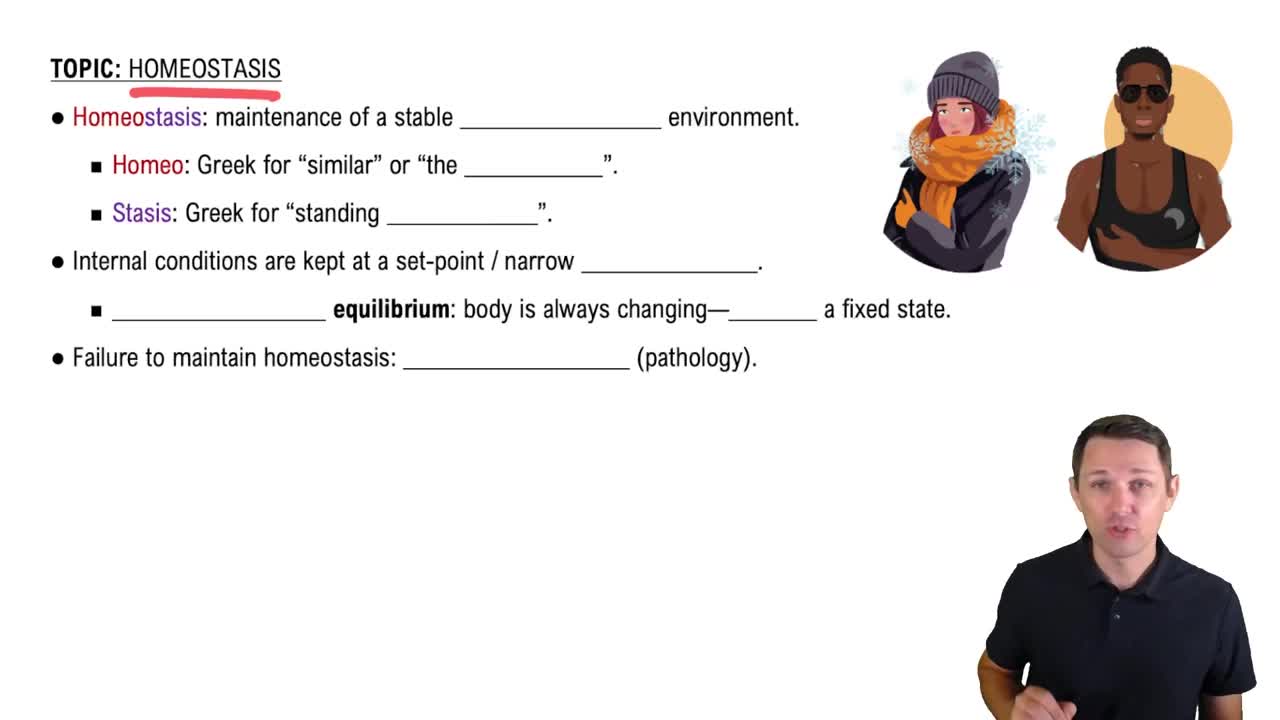
Introduction to Homeostasis

Renal Sodium Excretion

The kidneys play a central role in sodium balance by filtering blood and selectively reabsorbing or excreting sodium in urine. This process is influenced by hormones like aldosterone, which increase sodium reabsorption to conserve sodium when needed.
Recommended video:
03:40
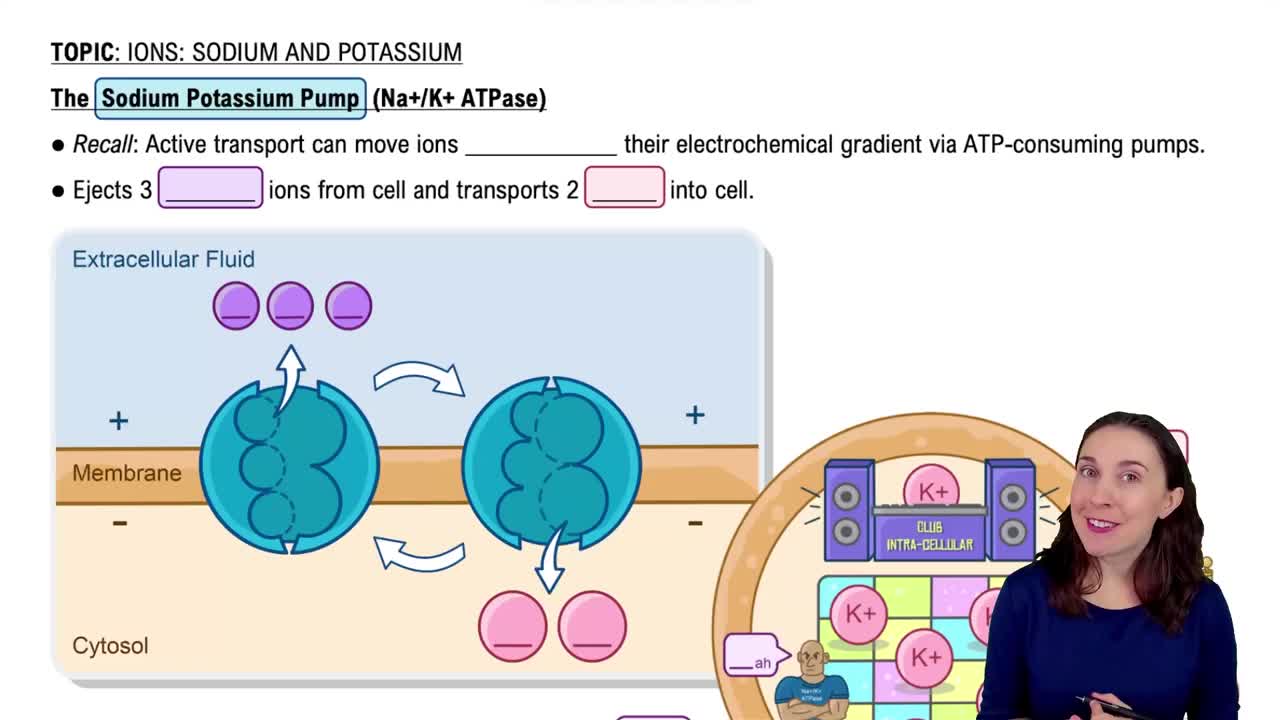
The Sodium Potassium Pump

Non-Renal Sodium Losses

Sodium can also be lost through perspiration and feces, but these routes contribute less significantly to overall sodium balance compared to renal excretion. Understanding these minor losses helps clarify why urine sodium control is primary.
Recommended video:
03:40
The Sodium Potassium Pump