Ch. 26 Fluid, Electrolyte, and Acid-Base Balance
Marieb - Human Anatomy & Physiology 11th Edition
Marieb, Hoehn11th EditionHuman Anatomy & PhysiologyISBN: 9780136874034Not the one you use?Change textbook
Chapter 26, Problem 11

Which of the following factors will enhance ADH release?
a. Increase in ECF volume
b. Decrease in ECF volume
c. Decrease in ECF osmolality
d. Increase in ECF osmolality

Verified step by step guidance
1
Understand that ADH (antidiuretic hormone) release is primarily regulated by changes in extracellular fluid (ECF) osmolality and volume.
Recall that an increase in ECF osmolality means the blood is more concentrated, which typically stimulates ADH release to promote water retention and dilute the blood.
Recognize that a decrease in ECF volume (such as from blood loss or dehydration) also stimulates ADH release to conserve water and maintain blood pressure.
Note that an increase in ECF volume usually suppresses ADH release because the body has enough fluid and does not need to retain more water.
Understand that a decrease in ECF osmolality (more dilute blood) reduces the need for ADH release, as the body does not need to conserve water.

Verified video answer for a similar problem:

This video solution was recommended by our tutors as helpful for the problem above.
Video duration:
2m
Was this helpful?

Key Concepts

Here are the essential concepts you must grasp in order to answer the question correctly.

Antidiuretic Hormone (ADH) Function

ADH, also known as vasopressin, regulates water balance by increasing water reabsorption in the kidneys. It is released in response to changes in blood volume and osmolality to maintain homeostasis, preventing dehydration or overhydration.
Recommended video:
Guided course
13:06
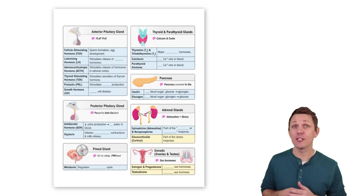
Review of Major Hormones

Extracellular Fluid (ECF) Volume and ADH Release

A decrease in ECF volume, such as during blood loss or dehydration, stimulates ADH release to conserve water and restore volume. Conversely, an increase in ECF volume typically suppresses ADH secretion since the body has sufficient fluid.
Recommended video:
11:30
Renin-Angiotensin-Aldosterone-System

ECF Osmolality and ADH Regulation

ADH release is highly sensitive to ECF osmolality; an increase in osmolality (higher solute concentration) triggers ADH secretion to retain water and dilute the solutes. A decrease in osmolality reduces ADH release, promoting water excretion.
Recommended video:
03:31
Cell Cycle Regulation