Ch. 10 Blood
Marieb - Essentials of Human Anatomy & Physiology 13th Edition
Marieb13th EditionEssentials of Human Anatomy & PhysiologyISBN: 9780135624340Not the one you use?Change textbook
Chapter 10, Problem 24

A middle-aged college professor from Boston is in the Swiss Alps studying astronomy. He arrived two days ago and plans to stay the entire year. However, he notices that he is short of breath when he walks up steps and that he tires easily with any physical activity. His symptoms gradually disappear; after two months, he feels fine. Upon returning to the United States, he has a complete physical exam and is told that his erythrocyte count is higher than normal.
(a) Attempt to explain this finding.
(b) Will his RBC count remain at this higher-than-normal level? Why or why not?

Verified step by step guidance
1
Step 1: Understand the physiological challenge presented in the problem. The professor is experiencing shortness of breath and fatigue due to the high altitude of the Swiss Alps, where oxygen levels are lower compared to sea level. This condition is known as hypoxia, which triggers the body to adapt to the reduced oxygen availability.
Step 2: Explain the body's response to hypoxia. The kidneys detect the lower oxygen levels and release erythropoietin (EPO), a hormone that stimulates the bone marrow to produce more erythrocytes (red blood cells). This increase in RBC count enhances the oxygen-carrying capacity of the blood, helping the body adapt to the high-altitude environment.
Step 3: Address part (a) of the question. The professor's higher-than-normal erythrocyte count is a result of the body's adaptation to the hypoxic conditions in the Swiss Alps. The increased RBC count compensates for the reduced oxygen availability by improving oxygen transport to tissues.
Step 4: Address part (b) of the question. Upon returning to the United States, where oxygen levels are higher at sea level, the professor's body no longer needs the elevated RBC count. Over time, the kidneys will reduce erythropoietin production, and the bone marrow will decrease RBC production, returning the count to normal levels.
Step 5: Summarize the adaptive process. The professor's elevated RBC count is a temporary physiological response to high-altitude hypoxia. Once he returns to a lower altitude with normal oxygen levels, his RBC count will gradually normalize as the stimulus for increased erythropoiesis is removed.

Verified video answer for a similar problem:

This video solution was recommended by our tutors as helpful for the problem above.
Video duration:
4m
Was this helpful?

Key Concepts

Here are the essential concepts you must grasp in order to answer the question correctly.

Erythropoiesis

Erythropoiesis is the process of producing red blood cells (RBCs) in the bone marrow. It is stimulated by erythropoietin, a hormone released by the kidneys in response to low oxygen levels in the blood. In high-altitude environments, like the Swiss Alps, the reduced oxygen availability triggers increased erythropoiesis, leading to a higher RBC count to enhance oxygen transport in the body.
Recommended video:
2:57
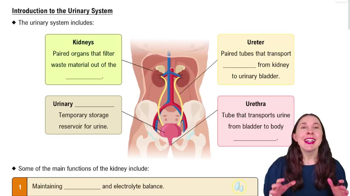
The Urinary System

Acclimatization

Acclimatization refers to the physiological adjustments that occur in response to changes in the environment, such as altitude. When a person moves to a higher altitude, their body gradually adapts to lower oxygen levels by increasing RBC production and improving oxygen utilization. This process can take weeks to months, which explains why the professor's symptoms improved over two months as his body adjusted.

Homeostasis

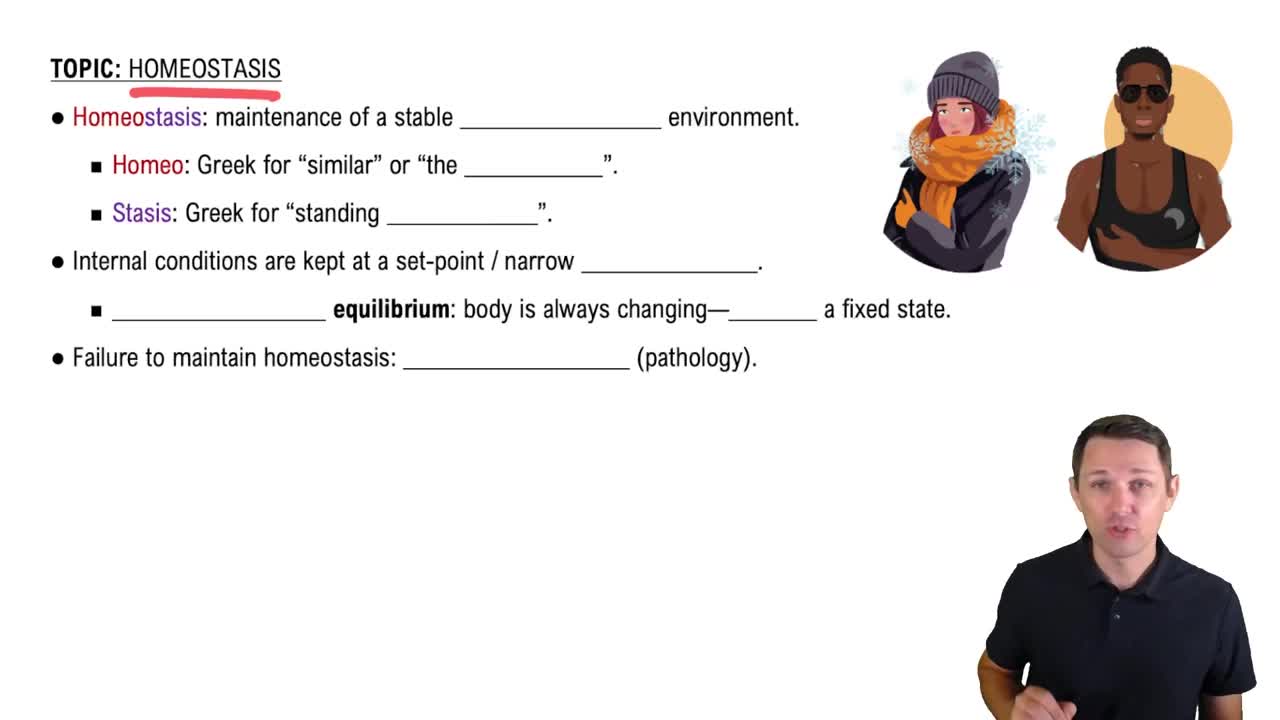
Homeostasis is the body's ability to maintain stable internal conditions despite external changes. After returning to lower altitudes, the professor's body will likely readjust to the normal oxygen levels, leading to a decrease in erythropoietin production and a subsequent reduction in RBC count. This process ensures that the body does not maintain an unnecessarily high RBC count, which could lead to complications such as increased blood viscosity.
Recommended video:
Guided course
01:59
Introduction to Homeostasis