Ch. 14 The Digestive System and Body Metabolism
Marieb - Essentials of Human Anatomy & Physiology 13th Edition
Marieb13th EditionEssentials of Human Anatomy & PhysiologyISBN: 9780135624340Not the one you use?Change textbook
Chapter 14, Problem 22

A young woman is put through an extensive battery of tests to determine the cause of her stomach pains. She is diagnosed with gastric ulcers. An antihistamine drug is prescribed, and she is sent home. What is the mechanism of her medication? What life-threatening problems can result from a poorly managed ulcer? Why did the clinic doctor warn the woman not to take aspirin?

Verified step by step guidance
1
Understand the mechanism of antihistamine drugs: Antihistamines prescribed for gastric ulcers typically work by blocking histamine receptors (specifically H2 receptors) in the stomach lining. Histamine stimulates the parietal cells to secrete hydrochloric acid (HCl). By inhibiting these receptors, the drug reduces acid production, allowing the ulcer to heal.
Identify life-threatening complications of poorly managed ulcers: Gastric ulcers can lead to severe complications if untreated or poorly managed. These include perforation of the stomach wall, which can cause peritonitis (inflammation of the abdominal cavity), and gastrointestinal bleeding, which can result in anemia or hypovolemic shock.
Explain why aspirin is contraindicated: Aspirin is a nonsteroidal anti-inflammatory drug (NSAID) that inhibits cyclooxygenase (COX) enzymes, reducing the production of prostaglandins. Prostaglandins play a protective role in the stomach lining by promoting mucus and bicarbonate secretion and maintaining blood flow. Without adequate prostaglandins, the stomach lining becomes more vulnerable to damage from stomach acid, worsening the ulcer.
Discuss the importance of lifestyle modifications: In addition to medication, the patient should avoid smoking, alcohol, and stress, as these factors can exacerbate ulcer formation and delay healing. Dietary changes, such as avoiding spicy or acidic foods, may also help reduce symptoms.
Highlight the need for follow-up care: Regular follow-up appointments are essential to monitor the healing process and ensure the ulcer does not progress to more severe complications. If symptoms persist or worsen, further diagnostic tests may be required to rule out other conditions, such as Helicobacter pylori infection or stomach cancer.

Verified video answer for a similar problem:

This video solution was recommended by our tutors as helpful for the problem above.
Video duration:
2m
Was this helpful?

Key Concepts

Here are the essential concepts you must grasp in order to answer the question correctly.

Mechanism of Antihistamines

Antihistamines work by blocking the action of histamine, a chemical in the body that is involved in allergic reactions and gastric acid secretion. In the context of gastric ulcers, certain antihistamines can reduce stomach acid production, thereby alleviating pain and promoting healing of the ulcer. Understanding this mechanism is crucial for grasping how the medication addresses the symptoms and underlying issues of gastric ulcers.
Recommended video:
3:02
Internal Regulation - The Myogenic Mechanism

Complications of Poorly Managed Ulcers

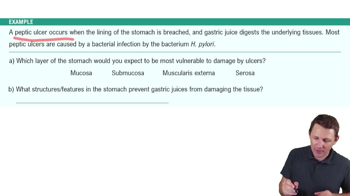
Poorly managed gastric ulcers can lead to serious complications, including perforation, which is a hole in the stomach wall that can cause peritonitis, a life-threatening infection. Other potential issues include bleeding ulcers, which can result in significant blood loss and anemia, and gastric obstruction, where the ulcer causes a blockage in the digestive tract. Recognizing these risks emphasizes the importance of effective ulcer management.
Recommended video:
Guided course
1:14
The Stomach Example 2

Aspirin and Ulcer Risk

Aspirin is a nonsteroidal anti-inflammatory drug (NSAID) that can irritate the stomach lining and increase the risk of bleeding, particularly in individuals with existing gastric ulcers. The clinic doctor likely warned against aspirin use to prevent exacerbating the ulcer and to avoid complications such as gastrointestinal bleeding. Understanding the relationship between NSAIDs and ulcer risk is essential for safe medication practices.
Recommended video:
Guided course
1:14
The Stomach Example 2