Ch. 5 The Skeletal System
Marieb - Essentials of Human Anatomy & Physiology 13th Edition
Marieb13th EditionEssentials of Human Anatomy & PhysiologyISBN: 9780135624340Not the one you use?Change textbook
Chapter 5, Problem 8

Which of the following bones or bone parts articulate with the femur?
a. Ischial tuberosity
b. Pubis
c. Patella
d. Fibula
e. Tibia

Verified step by step guidance
1
Step 1: Understand the anatomy of the femur and its articulations. The femur is the longest and strongest bone in the body, located in the thigh. It articulates with the hip bone proximally and the tibia and patella distally.
Step 2: Analyze each option provided in the question. Determine whether each bone or bone part listed has a direct articulation with the femur based on anatomical relationships.
Step 3: Option a (Ischial tuberosity): The ischial tuberosity is part of the pelvis and serves as an attachment site for muscles, but it does not directly articulate with the femur.
Step 4: Option b (Pubis): The pubis is another part of the pelvis, but it does not directly articulate with the femur. The femur articulates with the acetabulum of the pelvis, which is formed by the ilium, ischium, and pubis collectively.
Step 5: Option c (Patella), d (Fibula), and e (Tibia): The patella articulates with the femur at the knee joint. The tibia articulates with the femur at the knee joint as well. The fibula does not directly articulate with the femur; it articulates with the tibia instead.

Verified video answer for a similar problem:

This video solution was recommended by our tutors as helpful for the problem above.
Video duration:
3m
Was this helpful?

Key Concepts

Here are the essential concepts you must grasp in order to answer the question correctly.

Articulation

Articulation refers to the connection between two bones at a joint, allowing for movement and support. Understanding which bones articulate with the femur is crucial for comprehending the knee and hip joint mechanics. The femur, being the longest bone in the body, plays a significant role in weight-bearing and mobility.
Recommended video:
Guided course
6:23
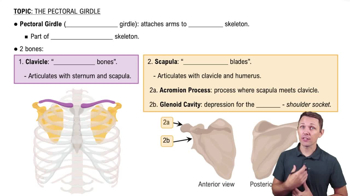
Pectoral Girdle

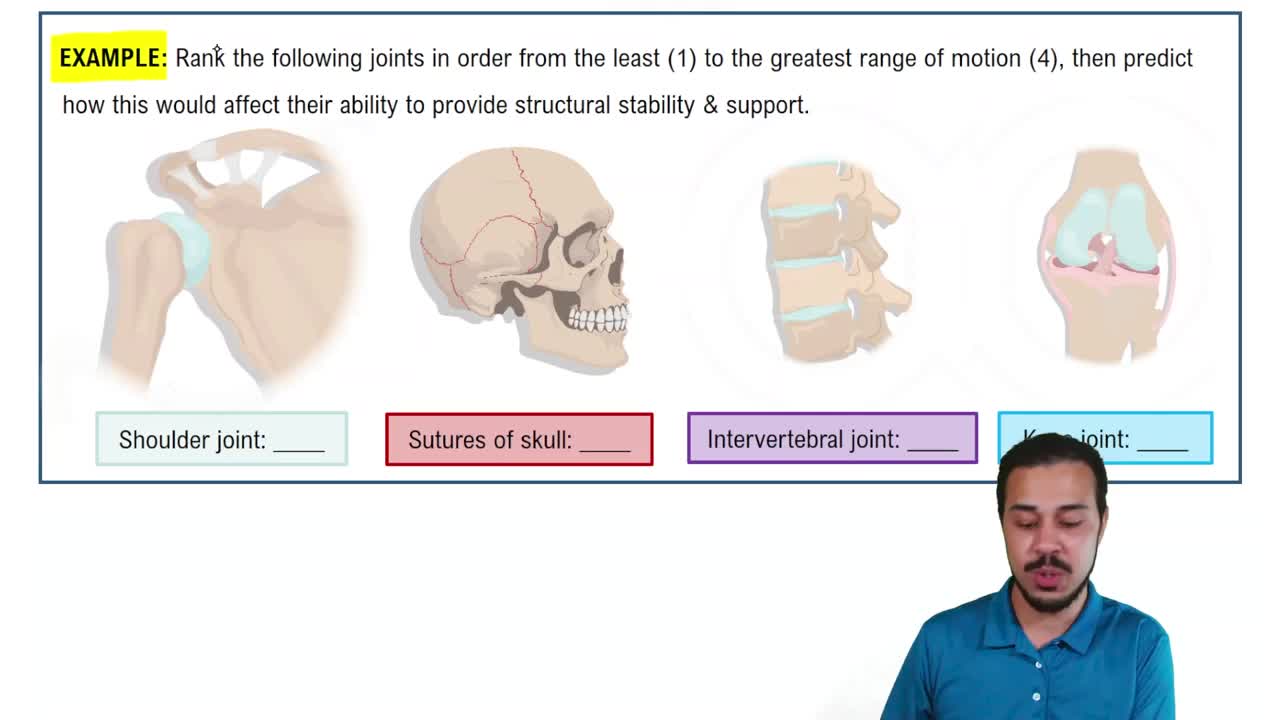
Knee Joint Anatomy

The knee joint is primarily formed by the femur, tibia, and patella. The femur articulates with the tibia at the knee, allowing for flexion and extension. The patella, or kneecap, also articulates with the femur, providing protection and improving leverage during movement.
Recommended video:
04:06
Introduction to Joints Example 1

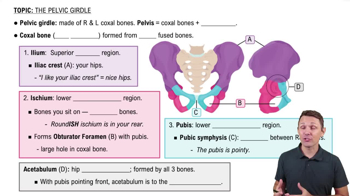
Pelvic Girdle

The pelvic girdle consists of the ilium, ischium, and pubis, which support the femur at the hip joint. While the ischial tuberosity and pubis are parts of the pelvic girdle, they do not directly articulate with the femur. Understanding the pelvic anatomy is essential for recognizing how the femur connects to the body and its role in locomotion.
Recommended video:
Guided course
8:07
Pelvic Girdle