Ch. 5 The Skeletal System
Marieb - Essentials of Human Anatomy & Physiology 13th Edition
Marieb13th EditionEssentials of Human Anatomy & PhysiologyISBN: 9780135624340Not the one you use?Change textbook
Chapter 5, Problem 16

Name two ways in which the fetal skull differs from the adult skull. A certain short-day plant flowers only when days are less than 12 hours long. Which of the following would cause it to flower?
a. A 9-hour night and 15-hour day with 1 minute of darkness after 7 hours
b. An 8-hour day and 16-hour night with a flash of white light after 8 hours
c. A 13-hour night and 11-hour day with 1 minute of darkness after 6 hours
d. A 12-hour day and 12-hour night with a flash of red light after 6 hours

Verified step by step guidance
1
Step 1: To address the first part of the problem, consider the structural differences between the fetal skull and the adult skull. The fetal skull has fontanelles, which are soft spots made of fibrous connective tissue that allow for flexibility during birth and brain growth. In contrast, the adult skull has fully fused sutures, which are rigid and provide protection to the brain.
Step 2: Another difference is the proportion of the skull to the body. The fetal skull is relatively larger compared to the rest of the body, while the adult skull is proportionally smaller in relation to the body size.
Step 3: For the second part of the problem, understand the concept of photoperiodism in plants. Short-day plants require nights longer than a critical length to flower. Interruptions in the dark period with light can reset the plant's internal clock, preventing flowering.
Step 4: Analyze each option provided. For example, in option (a), the 9-hour night is interrupted by 1 minute of darkness after 7 hours, which disrupts the required long night, preventing flowering. Similarly, in option (b), the flash of white light during the 16-hour night resets the clock, also preventing flowering.
Step 5: Evaluate the remaining options. Option (c) provides a 13-hour uninterrupted night, which meets the requirement for flowering in short-day plants. Option (d) includes a flash of red light during the 12-hour night, disrupting the dark period and preventing flowering. Therefore, option (c) is the correct condition for the plant to flower.

Verified video answer for a similar problem:

This video solution was recommended by our tutors as helpful for the problem above.
Video duration:
1m
Was this helpful?

Key Concepts

Here are the essential concepts you must grasp in order to answer the question correctly.

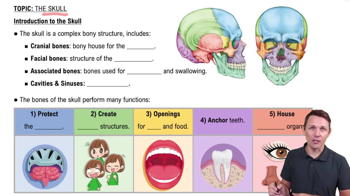
Fetal Skull Characteristics

The fetal skull is structurally different from the adult skull in several ways. Notably, it has fontanelles, or soft spots, which allow for flexibility during birth and accommodate rapid brain growth. Additionally, the proportions of the fetal skull are different, with a larger cranium relative to the face, reflecting the developmental needs of the brain in early life.
Recommended video:
Guided course
4:42
Introduction to the Skull

Photoperiodism in Plants

Photoperiodism is the physiological reaction of organisms to the length of day or night. In plants, it determines flowering time based on light exposure. Short-day plants, like the one mentioned, require longer nights to trigger flowering, meaning they will bloom only when the duration of darkness exceeds a certain threshold, typically 12 hours.
Recommended video:
03:20
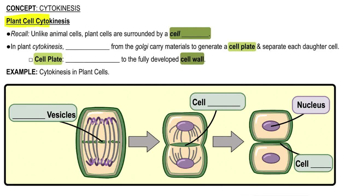
Plant Cell Cytokinesis

Light Interruption Effects

Light interruption can significantly affect flowering in short-day plants. A brief exposure to light during the night can disrupt the dark period required for flowering. For instance, a flash of light after a certain duration of darkness can reset the plant's internal clock, potentially preventing it from recognizing the night length necessary for blooming.
Recommended video:
1:32
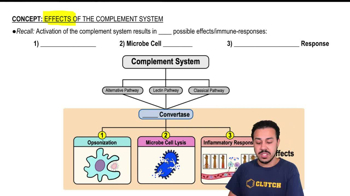
Effects of the Complement System