Ch. 7 The Nervous System
Marieb - Essentials of Human Anatomy & Physiology 13th Edition
Marieb13th EditionEssentials of Human Anatomy & PhysiologyISBN: 9780135624340Not the one you use?Change textbook
Chapter 7, Problem 22

A semiconscious young woman is brought to the hospital by friends after falling from a roof. She did not lose consciousness immediately, and she was initially lucid. After a while, though, she became confused and then unresponsive. What is a likely explanation of her condition?

Verified step by step guidance
1
Step 1: Recognize the symptoms described in the problem. The patient initially did not lose consciousness, was lucid, but later became confused and unresponsive. This progression suggests a neurological issue, possibly related to trauma from the fall.
Step 2: Consider the mechanism of injury. Falling from a roof could result in head trauma, which may cause internal bleeding or damage to the brain. Specifically, this pattern of symptoms is often associated with an epidural hematoma, where bleeding occurs between the dura mater and the skull.
Step 3: Understand the pathophysiology of an epidural hematoma. Trauma can rupture an artery, such as the middle meningeal artery, leading to a buildup of blood that compresses brain tissue. Initially, the patient may appear lucid due to the slow accumulation of blood, but as pressure increases, neurological symptoms worsen.
Step 4: Relate the symptoms to intracranial pressure. As the hematoma grows, it increases intracranial pressure, which can lead to confusion, loss of consciousness, and potentially life-threatening brain herniation if untreated.
Step 5: Highlight the importance of immediate medical intervention. Diagnostic imaging, such as a CT scan, is crucial to confirm the presence of a hematoma. Surgical intervention, such as craniotomy, may be required to relieve pressure and prevent further brain damage.

Verified video answer for a similar problem:

This video solution was recommended by our tutors as helpful for the problem above.
Video duration:
2m
Was this helpful?

Key Concepts

Here are the essential concepts you must grasp in order to answer the question correctly.

Traumatic Brain Injury (TBI)

Traumatic Brain Injury refers to damage to the brain resulting from an external force, such as a fall. Symptoms can vary widely, including confusion, loss of consciousness, and changes in responsiveness. In this case, the young woman's initial lucidity followed by confusion suggests a possible concussion or more severe brain injury.
Recommended video:
3:10
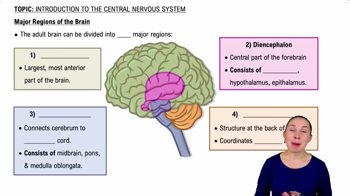
Major Regions of the Brain

Cerebral Edema

Cerebral edema is the swelling of the brain due to injury, which can occur after trauma. This swelling can increase intracranial pressure, leading to further neurological impairment. The progression from confusion to unresponsiveness in the patient may indicate that edema is affecting brain function.
Recommended video:
3:13
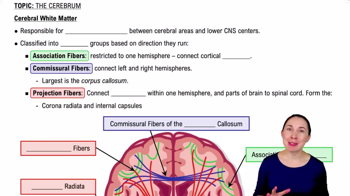
Cerebral White Matter

Glasgow Coma Scale (GCS)

The Glasgow Coma Scale is a clinical scale used to assess a person's level of consciousness after a brain injury. It evaluates three aspects: eye opening, verbal response, and motor response. Understanding the GCS is crucial for determining the severity of the young woman's condition and guiding further medical intervention.
Recommended video:
07:58
pH Scale