Ch. 1 The Human Body: An Orientation
Marieb - Human Anatomy & Physiology 7th Edition
Marieb, Hoehn7th EditionHuman Anatomy & PhysiologyISBN: 9780805359091Not the one you use?Change textbook
Chapter 1, Problem 9

Construct a table that lists the 11 systems of the body, names two organs of each system (if appropriate), and describes the overall or major function of each system.

Verified step by step guidance
1
Step 1: Identify the 11 major organ systems of the human body. These typically include: Integumentary, Skeletal, Muscular, Nervous, Endocrine, Cardiovascular, Lymphatic, Respiratory, Digestive, Urinary, and Reproductive systems.
Step 2: For each system, list two representative organs. For example, for the Respiratory system, you might list the lungs and trachea; for the Digestive system, the stomach and intestines.
Step 3: Write a brief description of the major or overall function of each system. For instance, the Cardiovascular system's function is to transport blood, nutrients, gases, and wastes throughout the body.
Step 4: Organize this information into a table format with three columns: System Name, Two Organs, and Major Function. This will help clearly present the information in a structured way.
Step 5: Review your table to ensure accuracy and completeness, making sure each system's organs and functions are correctly matched and clearly described.

Verified video answer for a similar problem:

This video solution was recommended by our tutors as helpful for the problem above.
Video duration:
2m
Was this helpful?

Key Concepts

Here are the essential concepts you must grasp in order to answer the question correctly.

Human Body Systems

The human body is organized into 11 major systems, each responsible for specific functions essential to survival and health. These systems include the circulatory, respiratory, digestive, nervous, muscular, skeletal, endocrine, lymphatic, urinary, reproductive, and integumentary systems.
Recommended video:
4:48
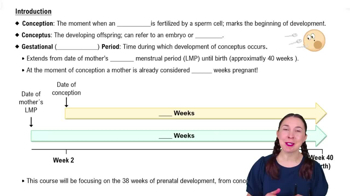
Introduction to Human Development

Organs within Each System

Each body system comprises various organs that work together to perform the system's functions. For example, the respiratory system includes the lungs and trachea, while the digestive system includes the stomach and intestines. Identifying key organs helps understand how the system operates.
Recommended video:
Guided course
02:29
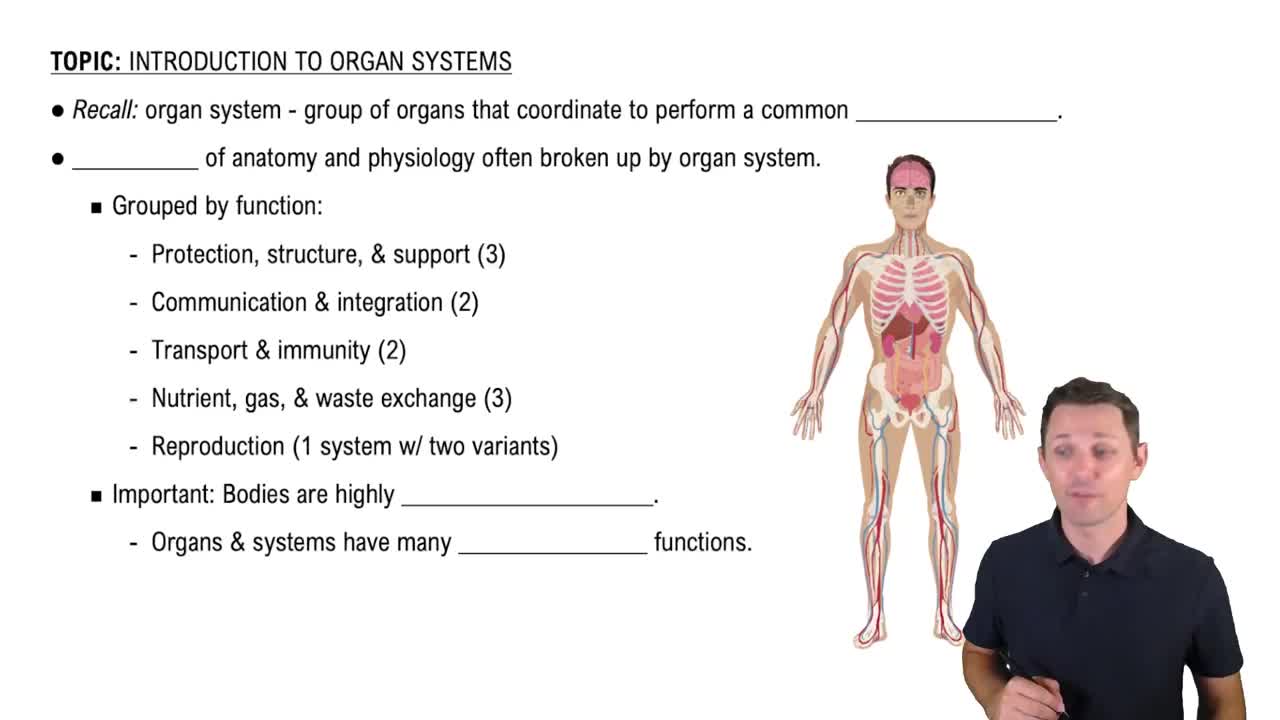
Introduction to Organ Systems

Functions of Body Systems

Each body system has a major function that contributes to the body's overall health and homeostasis. For instance, the circulatory system transports blood and nutrients, while the nervous system controls body activities through electrical signals. Understanding these functions clarifies the role of each system.
Recommended video:
06:04
Functional Groups