Ch. 13 The Peripheral Nervous System and Reflex Activity
Marieb - Human Anatomy & Physiology 7th Edition
Marieb, Hoehn7th EditionHuman Anatomy & PhysiologyISBN: 9780805359091Not the one you use?Change textbook
Chapter 13, Problem 26

Where are the olfactory sensory neurons, and why is that site poorly suited for their job?

Verified step by step guidance
1
Identify the location of the olfactory sensory neurons: they are found in the olfactory epithelium, which is a specialized tissue inside the nasal cavity, specifically on the roof of the nasal cavity.
Understand the function of olfactory sensory neurons: they detect odor molecules and transmit signals to the brain to perceive smell.
Consider the environment of the olfactory epithelium: it is exposed to the external environment through the nasal passages, which means it is vulnerable to damage from inhaled particles, pathogens, and drying out.
Recognize why this site is poorly suited for their job: the olfactory neurons are directly exposed to the external environment, making them susceptible to injury and requiring frequent regeneration, which can limit their long-term stability and sensitivity.
Summarize that despite being the primary site for smell detection, the olfactory epithelium's exposure to environmental hazards makes it a challenging location for maintaining delicate sensory neurons.

Verified video answer for a similar problem:

This video solution was recommended by our tutors as helpful for the problem above.
Video duration:
1m
Was this helpful?

Key Concepts

Here are the essential concepts you must grasp in order to answer the question correctly.

Location of Olfactory Sensory Neurons

Olfactory sensory neurons are located in the olfactory epithelium, a specialized tissue inside the nasal cavity. This area is situated at the roof of the nasal passage, where odor molecules first enter the nose.
Recommended video:
3:49
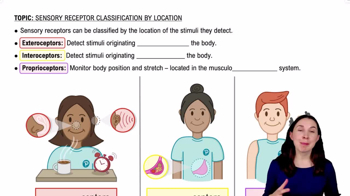
Sensory Receptor Classification by Location

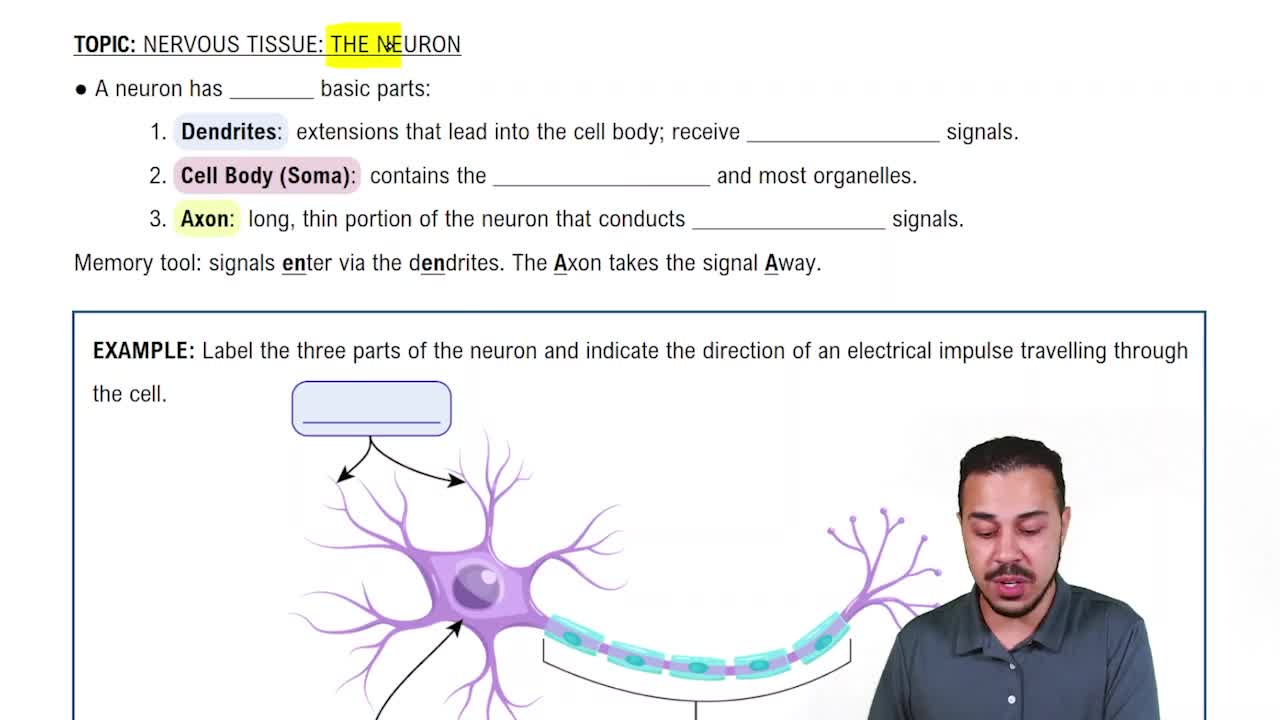
Function of Olfactory Sensory Neurons

These neurons detect odor molecules and convert chemical signals into electrical signals that the brain interprets as smells. Their role is crucial for the sense of smell and involves direct interaction with airborne chemicals.
Recommended video:

Challenges of the Olfactory Epithelium Environment

The olfactory epithelium is exposed to air, mucus, and potential toxins, making it vulnerable to damage and infection. Its location is poorly suited because it is delicate, has limited protection, and neurons must regenerate frequently due to environmental stress.
Recommended video:
Guided course
16:19
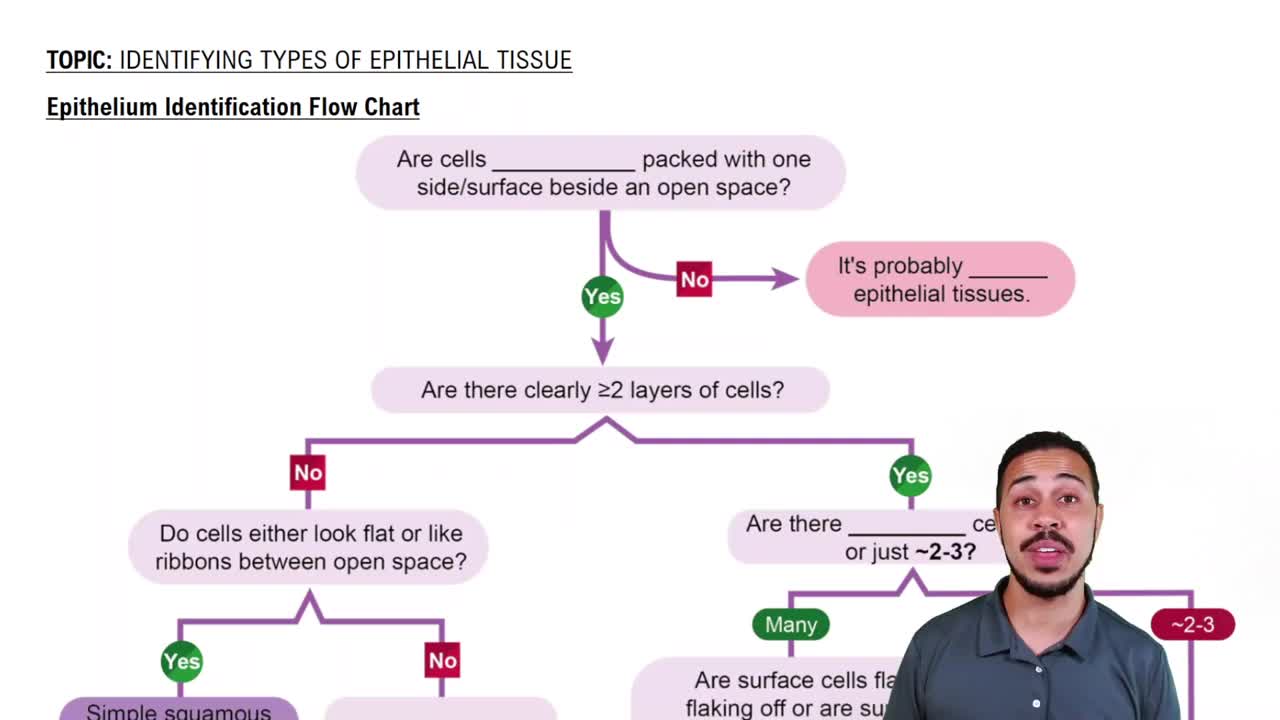
Epithelium Identification Flow Chart