Cancer patients being treated with chemotherapeutic drugs designed to destroy rapidly dividing cells are monitored closely for changes in their red and white blood counts. Why so?
Ch. 17 Blood

Marieb, Hoehn7th EditionHuman Anatomy & PhysiologyISBN: 9780805359091Not the one you use?Change textbook
Chapter 16, Problem 21
Alan Forsythe, a middle-aged college professor from Boston, is in the Swiss Alps studying astronomy during his sabbatical leave. He has been there for two days and plans to stay the entire year. However, he notices that he is short of breath when he walks up steps and tires easily with any physical activity. His symptoms gradually disappear, and he feels fine after less than a month. Upon returning to the United States, he has a complete physical exam and is told that his erythrocyte count is higher than normal.
a. Attempt to explain this finding.
b. Will his RBC count remain at this higher-than-normal level? Why or why not?
Verified step by step guidance1
Step 1: Understand the physiological context. Alan was at high altitude in the Swiss Alps, where the oxygen level in the air is lower than at sea level. This causes a condition called hypoxia, meaning less oxygen is available for the body’s tissues.
Step 2: Explain the body's response to hypoxia. To compensate for lower oxygen availability, the kidneys release more erythropoietin (EPO), a hormone that stimulates the bone marrow to produce more red blood cells (RBCs). This increase in RBCs helps improve oxygen transport in the blood.
Step 3: Connect the symptoms to the physiological changes. Alan’s shortness of breath and fatigue are typical initial responses to hypoxia as his body adjusts. As his RBC count increases, oxygen delivery improves, and his symptoms resolve.
Step 4: Address the erythrocyte count after returning to sea level. Once Alan returns to a normal oxygen environment, the stimulus for increased EPO production decreases. Consequently, RBC production slows down, and the elevated RBC count will gradually return to normal.
Step 5: Summarize the overall process. The higher RBC count is a temporary adaptation to high altitude hypoxia, which reverses when the oxygen level normalizes, explaining both the initial symptoms and the later blood test findings.

Verified video answer for a similar problem:
This video solution was recommended by our tutors as helpful for the problem above.
Video duration:
2mWas this helpful?
Key Concepts
Here are the essential concepts you must grasp in order to answer the question correctly.
Altitude and Oxygen Availability
At high altitudes, such as the Swiss Alps, the atmospheric pressure is lower, resulting in reduced oxygen availability. This lower oxygen level causes the body to experience hypoxia, which triggers physiological adaptations to improve oxygen delivery to tissues.
Recommended video:
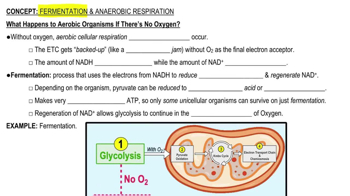
What Happens to Aerobic Organisms if There's No Oxygen?
Erythropoiesis and Red Blood Cell Production
In response to hypoxia, the kidneys release erythropoietin, a hormone that stimulates the bone marrow to produce more red blood cells (RBCs). This increase in RBCs enhances the blood's oxygen-carrying capacity, helping to alleviate symptoms like shortness of breath and fatigue.
Recommended video:
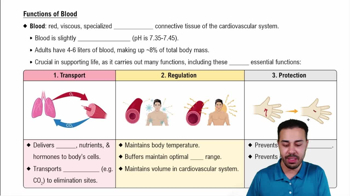
Functions of Blood
Reversibility of Altitude-Induced Polycythemia
When returning to lower altitudes with normal oxygen levels, the stimulus for increased RBC production diminishes. Consequently, the elevated RBC count gradually returns to baseline as the body reduces erythropoietin production and removes excess red blood cells.
Recommended video:
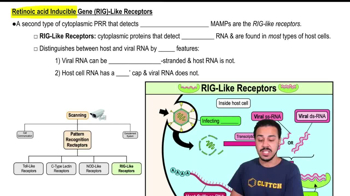
Retinoic Acid Inducible Gene (RIG)-Like Receptors
Related Practice
Textbook Question
1057
views
Textbook Question
Define fibrinolysis
What is the importance of this process?
909
views
Textbook Question
Define hemostasis
List the three major phases of coagulation. Explain what initiates each phase and what the phase accomplishes
In what general way do the intrinsic and extrinsic mechanisms of clotting differ?
Which ion is essential to virtually all stages of coagulation?
1117
views
Textbook Question
How is clot overgrowth usually prevented?
List two conditions that may lead to unnecessary (and undesirable) clot formation.
707
views
Textbook Question
How can poor nutrition lead to anemia?
761
views
Textbook Question
Discuss hemoglobin relative to its chemical structure, its function, and the color changes it undergoes during loading and unloading of oxygen.
1264
views