Ch. 20 The Lymphatic System and Lymphoid Organs and Tissues
Marieb - Human Anatomy & Physiology 7th Edition
Marieb, Hoehn7th EditionHuman Anatomy & PhysiologyISBN: 9780805359091Not the one you use?Change textbook
Chapter 19, Problem 15

Mrs. Jackson, a 59-year-old woman, has undergone a left radical mastectomy (removal of the left breast and left axillary lymph nodes and vessels). Her left arm is severely swollen and painful, and she is unable to raise it to more than shoulder height.
Explain her signs and symptoms.
Can she expect to have relief from these symptoms in time? How so?

Verified step by step guidance
1
Step 1: Understand the surgical procedure and its consequences. A left radical mastectomy involves removal of the left breast along with the left axillary lymph nodes and vessels. These lymph nodes and vessels are crucial for draining lymph fluid from the left arm and surrounding tissues.
Step 2: Explain the cause of swelling (lymphedema). Since the lymph nodes and vessels on the left side have been removed, lymph fluid cannot drain properly from the left arm, leading to accumulation of fluid in the tissues. This causes swelling (lymphedema), which also results in pain and limited mobility.
Step 3: Connect the swelling to the limited arm movement. The severe swelling increases tissue pressure and discomfort, making it difficult and painful for Mrs. Jackson to raise her left arm above shoulder height.
Step 4: Discuss the potential for symptom relief over time. Some relief may occur as the body develops collateral lymphatic pathways to bypass the removed nodes, improving lymph drainage gradually. Additionally, physical therapy and compression garments can help reduce swelling and improve arm function.
Step 5: Emphasize the importance of ongoing management. While some improvement is possible, lymphedema can be chronic and may require lifelong care to manage symptoms and prevent complications such as infections.

Verified video answer for a similar problem:

This video solution was recommended by our tutors as helpful for the problem above.
Video duration:
1m
Was this helpful?

Key Concepts

Here are the essential concepts you must grasp in order to answer the question correctly.

Lymphedema

Lymphedema is swelling caused by the accumulation of lymph fluid, often occurring after lymph node removal or damage. In Mrs. Jackson's case, removal of axillary lymph nodes disrupts normal lymph drainage from the left arm, leading to fluid buildup, swelling, and pain.
Recommended video:
3:32
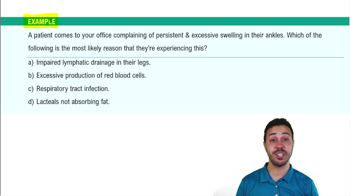
Introduction to the Lymphatic System Example 2

Radical Mastectomy and Its Complications

A radical mastectomy involves removing the breast tissue along with axillary lymph nodes and vessels, which can damage lymphatic pathways. This surgery increases the risk of complications like lymphedema and restricted arm movement due to tissue scarring and nerve injury.

Management and Prognosis of Post-Mastectomy Lymphedema

While lymphedema can be chronic, symptoms may improve with treatments such as physical therapy, compression garments, and lymphatic drainage massage. Early intervention helps reduce swelling and pain, improving arm mobility and quality of life over time.
Recommended video:
04:26
Post-Translational Modification