Ch. 23 The Digestive System
Marieb - Human Anatomy & Physiology 7th Edition
Marieb, Hoehn7th EditionHuman Anatomy & PhysiologyISBN: 9780805359091Not the one you use?Change textbook
Chapter 22, Problem 20

a. Describe the boundaries of the oral cavity.
b. Why do you suppose its mucosa is stratified squamous epithelium rather than the more typical simple columnar epithelium?

Verified step by step guidance
1
The oral cavity is bounded by several anatomical structures: the lips (anterior boundary), the cheeks (lateral boundaries), the palate (superior boundary), the tongue and floor of the mouth (inferior boundary), and the oropharynx (posterior boundary). These boundaries define the space where food is ingested and initial digestion begins.
The mucosa of the oral cavity is composed of stratified squamous epithelium. This type of epithelium consists of multiple layers of cells, with the outermost layer being flat and scale-like (squamous).
Stratified squamous epithelium is better suited for areas subject to mechanical stress, such as chewing, biting, and friction from food particles. The multiple layers provide protection against abrasion and minor injuries.
In contrast, simple columnar epithelium, which is typically found in areas like the stomach and intestines, is specialized for absorption and secretion. It is a single layer of tall, column-like cells, which would not provide sufficient protection in the oral cavity.
The choice of stratified squamous epithelium in the oral cavity reflects its functional need for durability and protection, as this region is exposed to constant mechanical and chemical stress during eating and speaking.

Verified video answer for a similar problem:

This video solution was recommended by our tutors as helpful for the problem above.
Video duration:
2m
Was this helpful?

Key Concepts

Here are the essential concepts you must grasp in order to answer the question correctly.

Boundaries of the Oral Cavity

The oral cavity is defined by its anatomical boundaries, which include the lips anteriorly, the cheeks laterally, the hard and soft palates superiorly, and the floor of the mouth inferiorly. It extends posteriorly to the oropharynx. Understanding these boundaries is crucial for comprehending the oral cavity's role in digestion, speech, and respiration.
Recommended video:
Guided course
2:51
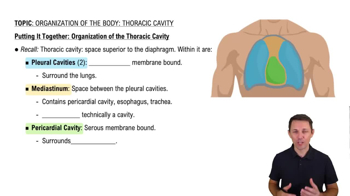
Organization of the Thoracic Cavity

Mucosal Epithelium Types

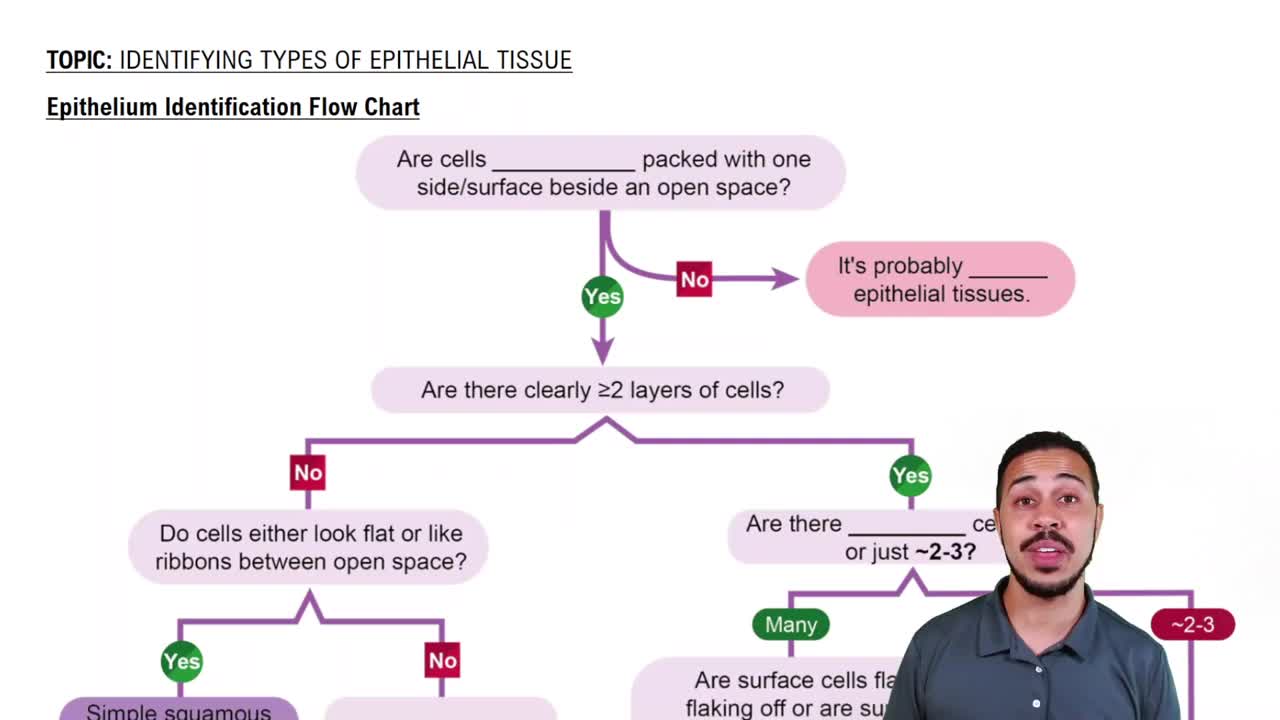
The oral cavity is lined with stratified squamous epithelium, which provides protection against mechanical stress, abrasion, and pathogens. In contrast, simple columnar epithelium is typically found in areas requiring absorption and secretion, such as the intestines. The choice of epithelium in the oral cavity reflects its functional demands, emphasizing protection over absorption.
Recommended video:
Guided course
16:19
Epithelium Identification Flow Chart

Functional Adaptations of Epithelium

The stratified squamous epithelium in the oral cavity is an adaptation to its environment, where food intake and mechanical forces are prevalent. This type of epithelium can withstand wear and tear, making it suitable for the oral cavity's functions, including mastication and the initial stages of digestion. Understanding these adaptations helps explain the structural differences between various epithelial types in the body.
Recommended video:
4:49
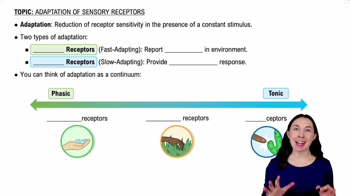
Adaptation