Ch. 25 The Urinary System
Marieb - Human Anatomy & Physiology 7th Edition
Marieb, Hoehn7th EditionHuman Anatomy & PhysiologyISBN: 9780805359091Not the one you use?Change textbook
Chapter 24, Problem 6

Filtration at the glomerulus is inversely related to
a. Water reabsorption
b. Capsular hydrostatic pressure
c. Arterial blood pressure
d. Acidity of the urine

Verified step by step guidance
1
Step 1: Understand the concept of glomerular filtration. Filtration at the glomerulus depends on the balance of pressures across the glomerular capillary walls, primarily hydrostatic and osmotic pressures.
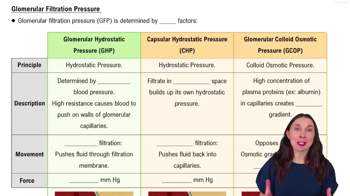
Step 2: Identify the pressures involved in glomerular filtration: glomerular capillary hydrostatic pressure (which promotes filtration), capsular hydrostatic pressure (which opposes filtration), and blood colloid osmotic pressure (which also opposes filtration).
Step 3: Recognize that filtration is inversely related to any pressure that opposes the movement of fluid from the glomerulus into Bowman's capsule. Capsular hydrostatic pressure is one such opposing force.
Step 4: Analyze each option: (a) Water reabsorption occurs after filtration and does not directly affect filtration rate; (b) Capsular hydrostatic pressure opposes filtration, so filtration is inversely related to it; (c) Arterial blood pressure increases glomerular hydrostatic pressure, promoting filtration; (d) Acidity of the urine does not directly affect filtration at the glomerulus.
Step 5: Conclude that the correct answer is the factor that increases pressure opposing filtration, which is capsular hydrostatic pressure.

Verified video answer for a similar problem:

This video solution was recommended by our tutors as helpful for the problem above.
Video duration:
2m
Was this helpful?

Key Concepts

Here are the essential concepts you must grasp in order to answer the question correctly.

Glomerular Filtration Rate (GFR)

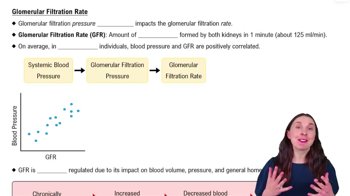
GFR is the rate at which blood is filtered through the glomeruli in the kidneys. It depends on the balance of pressures across the glomerular capillaries, including blood pressure and opposing pressures. Understanding GFR helps explain how different factors affect filtration efficiency.
Recommended video:
3:15
Glomerular Filtration Rate

Capsular Hydrostatic Pressure

Capsular hydrostatic pressure is the pressure exerted by fluid in the Bowman's capsule opposing filtration. An increase in this pressure reduces the net filtration pressure, thereby decreasing the glomerular filtration rate. It acts inversely to filtration at the glomerulus.
Recommended video:
Guided course
6:12
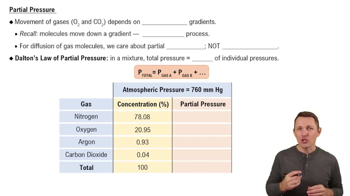
Partial Pressure

Factors Affecting Filtration Pressure

Filtration pressure is influenced by arterial blood pressure, osmotic pressure, and capsular hydrostatic pressure. While arterial blood pressure promotes filtration, increased capsular pressure or osmotic pressure opposes it. Understanding these factors clarifies how filtration is regulated.
Recommended video:
3:49
Glomerular Filtration Pressure